Laser displacement sensors represent a cornerstone technology in modern industrial metrology, offering non-contact, high-precision, and high-speed measurement capabilities. At their core, these devices operate on fundamental optical principles, primarily triangulation and time-of-flight (ToF), to determine the distance between the sensor and a target object with remarkable accuracy. Understanding the optical engineering behind these sensors is crucial for selecting the right tool for specific industrial applications, from quality control on assembly lines to precision alignment in semiconductor manufacturing.
The most common optical method employed in laser displacement sensors is laser triangulation. In this configuration, a laser diode emits a focused beam of coherent light onto the target surface. The diffusely reflected light from this spot is then collected by a receiving lens at a known angle relative to the emission axis and focused onto a position-sensitive detector, typically a CMOS or CCD linear array. The core optical principle is simple: as the target distance changes, the position of the reflected light spot shifts linearly across the detector plane. By precisely calculating this shift using trigonometric relationships, the sensor's onboard processor can compute the exact distance to the target. The design of the optical system—including laser wavelength (commonly 650nm red or 780nm infrared), lens quality, and detector resolution—directly impacts the sensor's measuring range, resolution, and spot size. For instance, a blue-violet laser (405nm) may be used for measurements on shiny metals due to its shorter wavelength and different reflective properties.
An alternative optical principle is used in time-of-flight (ToF) laser sensors, which are better suited for longer ranges. These sensors measure the time delay between the emission of a laser pulse and the detection of its reflection. Using the constant speed of light, the distance is calculated as D = (c * Δt) / 2, where c is the speed of light and Δt is the measured time interval. This method requires extremely fast and precise electronic circuitry to measure nanosecond delays. A related interferometric method, used in ultra-high-precision sensors, analyzes the phase shift between the emitted and reflected coherent light waves.

The performance of a laser displacement sensor is heavily influenced by optical considerations related to the target surface. Specular (mirror-like) surfaces can reflect the laser beam away from the receiver lens, causing measurement dropout, while rough, diffuse surfaces scatter light effectively back to the detector. To combat challenges posed by varied surface finishes, advanced sensors incorporate optical techniques like using diffuse reflection methods with coaxial optics (where the emission and reception paths are aligned), or employing specialized algorithms to filter out noise. The choice of laser wavelength is also an optical engineering decision; infrared lasers are less visible and can be more powerful for long-range applications, while red lasers provide a visible spot for easy alignment.
In practical industrial settings, the optical design dictates the sensor's form factor and capability. Confocal chromatic sensors use white light and a set of lenses to create a wavelength-dependent focal point, allowing for measurements on transparent or multi-layered materials. Laser line triangulation projects a line instead of a dot, enabling profile measurement of an entire cross-section in a single scan. These optical innovations expand the utility of displacement sensing into 3D scanning and complex contour analysis.
From an application perspective, the precise, non-contact nature of laser optical measurement is indispensable. It is used for real-time thickness monitoring of rolled metals, vibration analysis of rotating machinery, coplanarity inspection of electronic components, and weld seam tracking in robotic arms. The key advantage lies in the optical system's ability to capture data without applying force, making it ideal for measuring soft, hot, fast-moving, or otherwise inaccessible targets.
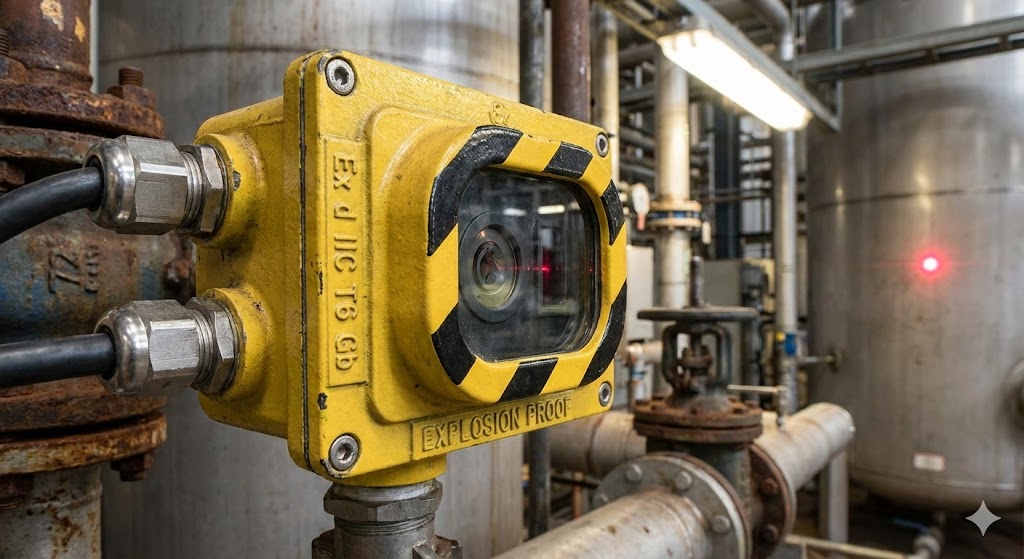
Future trends in the optical technology of these sensors point towards miniaturization, increased speed via faster detectors, and enhanced robustness against environmental interference like ambient light. The integration of smarter optics with AI-driven data processing will further automate complex inspection tasks. In conclusion, the sophisticated optical principles embedded within laser displacement sensors translate directly into their unparalleled utility across the industrial landscape. A deep understanding of these principles—triangulation, ToF, spectral response, and lens design—empowers engineers to push the boundaries of precision measurement, ensuring quality, efficiency, and innovation in manufacturing processes worldwide.