Capacitive proximity sensors represent a cornerstone technology in modern industrial automation, offering non-contact detection of a wide range of materials. Unlike their inductive counterparts, which detect only metals, capacitive sensors can sense liquids, plastics, wood, and granular substances by measuring changes in capacitance. This article delves into the analog design principles, operational characteristics, and practical application considerations of these versatile devices.
At the heart of a capacitive proximity sensor lies an oscillator circuit. The sensor's active face, or sensing electrode, forms one plate of a capacitor. The target object acts as the other plate, with the air gap serving as the dielectric. When a target enters the sensor's electrostatic field, it alters the total capacitance of the system. This change in capacitance (ΔC) is typically in the picofarad range. The core analog circuitry is designed to detect this minute change. A high-frequency oscillator, often in the range of 100 kHz to 1 MHz, is connected to this capacitive network. The presence of a target increases the capacitance, which in turn loads the oscillator, causing a decrease in its amplitude or a shift in its frequency.
The analog front-end is critical for sensitivity and stability. It must amplify the tiny signal change from the oscillator while rejecting noise from the often harsh industrial environment. This is commonly achieved through a synchronous demodulation or a phase-locked loop (PLL) circuit. The demodulated signal, now a DC voltage proportional to the capacitance change, is fed into a comparator. A potentiometer or digital trim allows adjustment of the switching threshold, setting the precise sensing distance (Sn). The output is then conditioned to drive a solid-state switch (PNP/NPN) or an analog output stage (0-10V, 4-20mA).
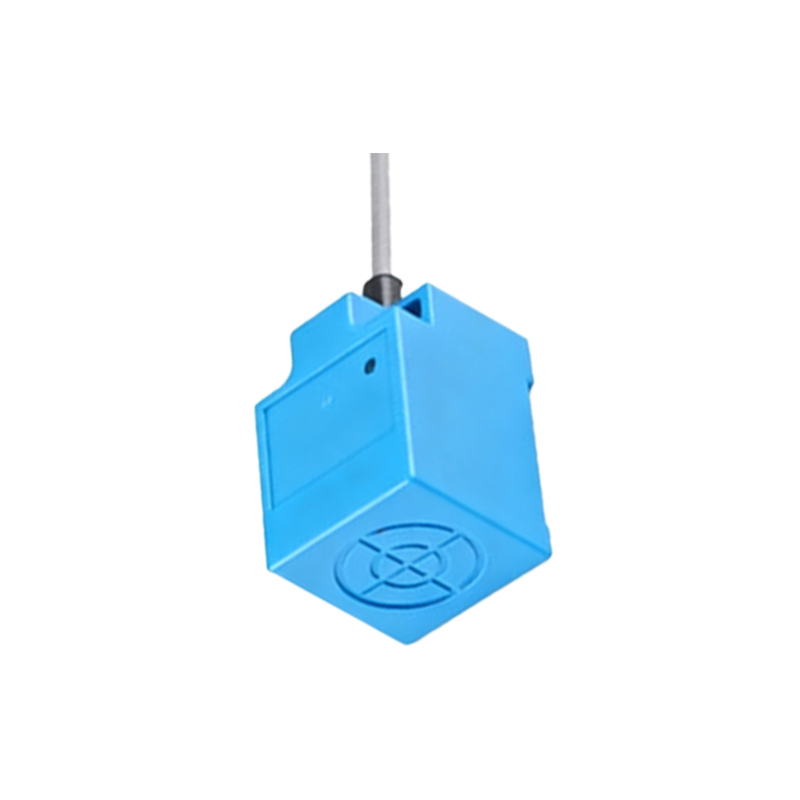
Key analog design challenges include compensating for parasitic capacitance and environmental drift. The sensor's housing, mounting bracket, and even nearby stationary objects create a baseline parasitic capacitance (Cp). Advanced designs incorporate guard ring electrodes—a driven shield surrounding the active electrode—to shape the electric field and nullify the effects of Cp, ensuring the sensor only reacts to targets in its frontal lobe. Temperature and humidity changes also affect dielectric constant. Temperature-compensated components and humidity-resistant conformal coatings are standard in robust industrial sensors.
The sensing range is a function of the electrode size, oscillator power, and the target's dielectric constant (εr). A standard sensor might have a nominal sensing distance of 10 mm for metals. For materials like water (εr ~80), the effective range is similar. For plastics (εr ~3-5), the range reduces, often requiring a reduction factor of 0.3 to 0.7. This must be carefully accounted for during system design. Analog-output sensors provide a continuous voltage or current signal proportional to the target distance, enabling applications like level sensing of liquids or bulk solids in tanks, or monitoring the thickness of non-metallic materials.
Installation and tuning are paramount. Metallic objects in the sensor's lateral or rear fields can cause false triggering. Maintaining the recommended clearance from surrounding metal is essential. For flush-mounted sensors, this is less critical as the field is focused forward. The sensitivity adjustment should be set so the sensor reliably detects the desired target at the required distance but does not trigger on background objects or changes in ambient conditions. For level control, the sensor is often tuned to the empty-tank state (no target) and triggers when the material rises into the sensing field.
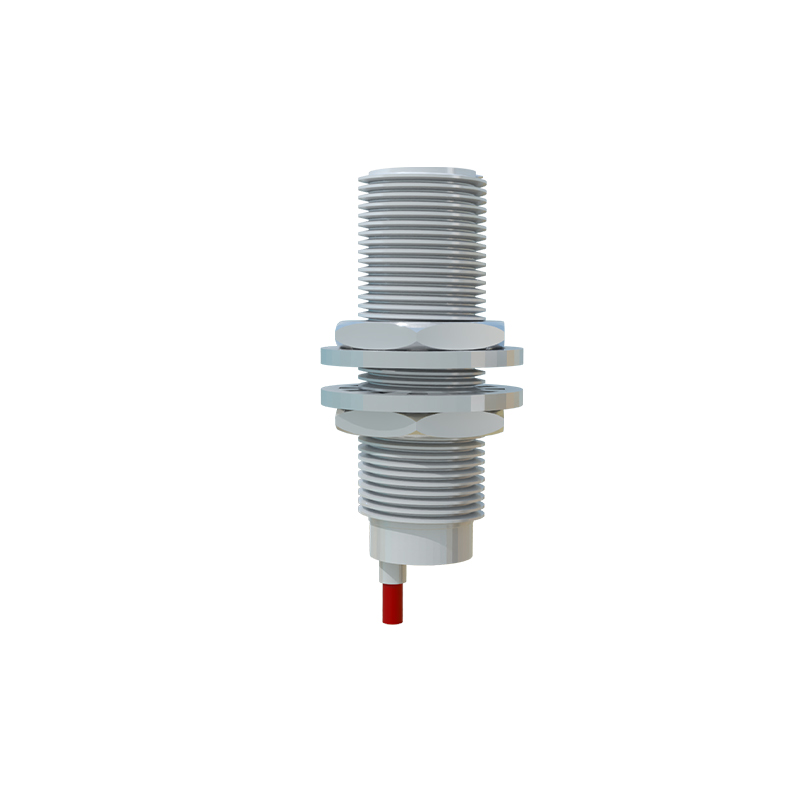
In summary, the performance of a capacitive proximity sensor hinges on its analog electronics' ability to reliably convert a minuscule capacitive variation into a stable, noise-immune output signal. Understanding the principles of the oscillating circuit, field shaping, and environmental compensation allows engineers to effectively deploy these sensors for complex detection tasks beyond the capability of other proximity technologies, enhancing flexibility and reliability in automated systems.