Inductive proximity sensors are fundamental components in modern industrial automation, offering non-contact detection of metallic objects. Their reliability, durability, and precision make them indispensable across manufacturing, packaging, material handling, and robotics. This guide delves into their operational principles, key characteristics, selection criteria, and application best practices.
Core Operating Principle
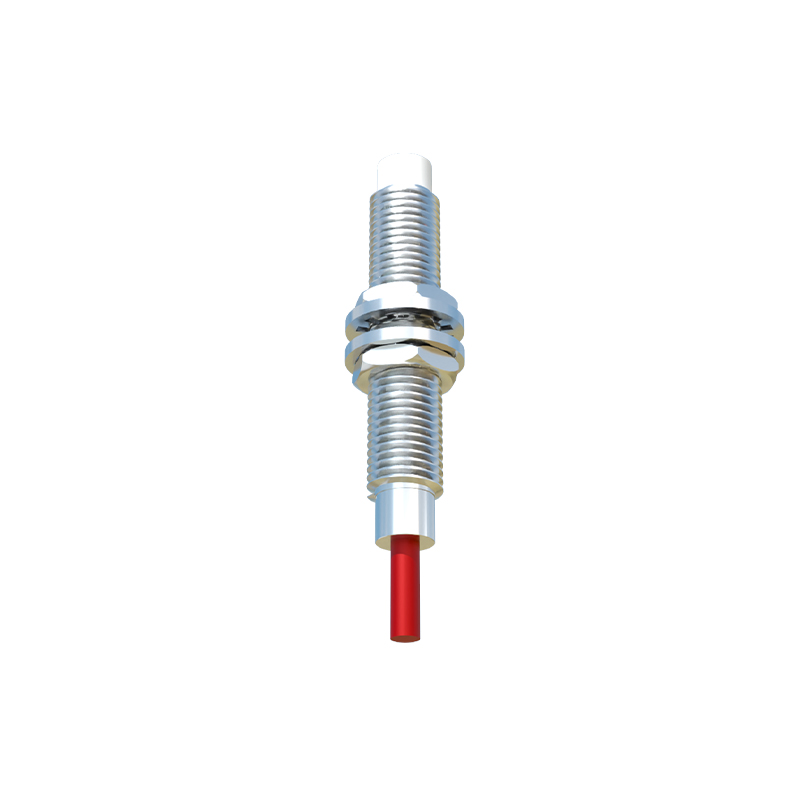
The functionality of an inductive proximity sensor is based on the principle of electromagnetic induction. The sensor's active face contains a coil that is part of an oscillator circuit, generating a high-frequency electromagnetic field. When a metallic object (the "target") enters this field, eddy currents are induced on the target's surface. These eddy currents draw energy from the oscillator, causing a reduction in its oscillation amplitude. An integrated evaluation circuit detects this amplitude change and triggers a solid-state output switch (PNP or NPN). This entire process occurs without any physical contact, ensuring zero wear on the sensor itself.
Key Performance Characteristics
Understanding the following specifications is crucial for proper sensor selection:
Sensing Range (Sn): The nominal operating distance at which a standard target (typically a 1mm thick square of mild steel) will reliably trigger the sensor. Ranges vary from a few millimeters to about 60mm. The effective sensing distance can be affected by the target material.
Target Material Factor: Different metals affect the sensing range differently due to their varying electrical conductivity and magnetic permeability. Mild steel is the reference (factor 1.0). Stainless steel (non-magnetic) typically reduces the range to 0.6-0.8 times Sn, while copper or aluminum reduces it further to 0.3-0.5 times Sn.
Hysteresis: The difference between the switch-on point (as the target approaches) and the switch-off point (as it recedes). Hysteresis prevents output chatter when a target is positioned at the exact sensing limit, ensuring stable switching.
Switching Frequency: The maximum number of on/off cycles the sensor can perform per second. Critical for high-speed applications like counting small parts on a conveyor.
Output Type: Common configurations include DC 3-wire (PNP or NNP sourcing/sinking), analog (4-20 mA or 0-10 V), and IO-Link for smart sensor capabilities with digital parameterization and diagnostics.
Enclosure Rating: Industrial sensors are typically rated IP67 or IP69K, providing robust protection against dust ingress and high-pressure water jets, essential for harsh environments.
Shielded vs. Unshielded Design: Shielded (flush-mountable) sensors have a metallic ring around the sensing face, allowing installation flush in metal without interference. Unshielded sensors offer a longer sensing range but require a non-metallic mounting zone.
Advantages and Limitations
Advantages:
Long Service Life: No moving parts or mechanical contacts subject to wear.
High Reliability & Speed: Capable of millions of operations with fast response times, often in microseconds.
Robust Construction: Resistant to vibration, shock, and environmental contaminants like oil, coolant, and dust.
Insensitive to Ambient Conditions: Unaffected by light, sound, or most non-metallic materials (e.g., dust, chips, liquids).
Limitations:
Metallic Targets Only: Cannot detect non-metallic objects like plastic, wood, or glass.
Limited Sensing Range: Compared to ultrasonic or photoelectric sensors, their range is relatively short.
Material Dependence: Performance varies with target metal type and size.
Selection and Application Guidelines
1. Define the Target: Identify the metal type, shape, and minimum expected size.
2. Determine Required Range: Choose a sensor with a nominal range (Sn) 20-30% greater than the required installation gap to account for tolerances and material factors.
3. Choose the Housing: Cylindrical (M8, M12, M18, M30) or rectangular blocks, considering the available mounting space.
4. Select Electrical Interface: Match the output type (PNP/NPN) to the PLC input card. Consider analog or IO-Link for process value monitoring.
5. Consider the Environment: For washdown areas (food & beverage), specify stainless steel housing and IP69K rating.
6. Installation Best Practices: Ensure proper alignment. Maintain the recommended clearance from surrounding metal (especially for unshielded types). Use correct mounting hardware to prevent damage to the housing.
Typical Industrial Applications
Position Sensing: Detecting the presence/absence of a cylinder rod or a machine part in its end position.
Counting &