In the realm of industrial automation, machine vision, and precision manufacturing, laser autofocus sensors have become indispensable tools for ensuring accuracy and repeatability. The performance of these sophisticated systems hinges on the seamless integration and quality of their core components. This article provides a technical overview of the key accessories and components that constitute a reliable laser autofocus sensor system, delving into their functions, selection criteria, and impact on overall system performance.
At the heart of any laser autofocus system is the laser diode module. This component emits a focused beam of coherent light, typically in the visible red or infrared spectrum. The choice of wavelength, power output, and beam quality is critical. For instance, a 650nm red laser is common for general-purpose applications due to good visibility for alignment, while infrared lasers (e.g., 850nm) are preferred in environments where ambient light interference is a concern. The diode's stability and longevity directly affect measurement consistency. Paired with the laser diode is the collimating lens, which shapes the divergent laser light into a parallel beam. High-quality, anti-reflective coated lenses are essential to minimize power loss and internal reflections that could create noise in the detection system.
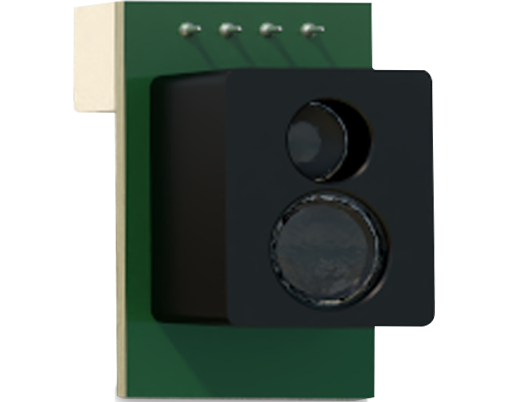
The receiving end of the system is equally crucial. The position-sensitive detector (PSD) or a complementary metal-oxide-semiconductor (CMOS) linear image sensor captures the reflected laser spot. PSDs are analog devices known for high speed and continuous position data, ideal for dynamic focusing applications. CMOS sensors, on the other hand, provide digital output and are often used in triangulation-based systems for high-resolution measurements. The choice between these detectors depends on required speed, resolution, and environmental factors like ambient light. Protecting this sensitive detector is a receiving lens, often with a narrow band-pass filter. This filter is tuned precisely to the laser's wavelength, dramatically rejecting ambient light and significantly improving the signal-to-noise ratio (SNR), which is paramount for reliable operation in challenging industrial settings.
Signal conditioning electronics form the neural network of the sensor. This includes transimpedance amplifiers to convert the photodetector's current signal into a voltage, analog-to-digital converters (ADCs), and dedicated processing circuitry or firmware. High-quality components here ensure minimal electronic noise, fast response times, and stable output. For digital sensors, the processing algorithm that calculates the focal point or distance from the raw sensor data is a critical "software component." Robust algorithms can compensate for surface reflectivity variations and minor contaminants.

Mechanical and integration accessories are the unsung heroes. Precision mounting brackets and alignment fixtures are vital for initial calibration and long-term stability, preventing misalignment due to vibration or thermal drift. For sensors used in harsh environments, protective housings with appropriate IP (Ingress Protection) ratings (e.g., IP67) are mandatory to guard against dust, coolants, and oils. Additionally, specialized optical accessories like beam expanders can modify the spot size and depth of field, while diffractive optical elements (DOEs) can create structured light patterns for enhanced surface tracking.
Cabling and connectors, though seemingly mundane, are critical for system integrity. Shielded cables with robust connectors prevent electromagnetic interference (EMI) from corrupting sensitive analog or high-speed digital signals. Choosing the correct interface—be it analog voltage/current, RS-485, EtherCAT, or Ethernet/IP—is determined by the integration needs with PLCs or host controllers.
Selecting the right components is a systems engineering task. Key parameters to consider include measurement range, repeatability, spot size, response time, and the environmental conditions (temperature, humidity, particulates). For example, a high-speed PCB drilling machine requires a sensor with ultra-fast response components and vibration-resistant mounting, while a 3D surface profiler might prioritize the highest resolution detector and most stable laser source.
In conclusion, the precision of a laser autofocus sensor is not merely a function of its stated specifications but is built upon the synergistic performance of its individual components—from the laser source and optics to the detector, electronics, and mechanical accessories. Understanding the role and specifications of these parts empowers engineers to select, integrate, and maintain systems that deliver reliable, micron-level precision critical for modern advanced manufacturing and inspection processes. Regular maintenance, including lens cleaning and calibration checks, ensures these components continue to perform at their peak throughout the sensor's operational lifecycle.