Edge detection laser sensors are critical components in modern industrial automation, enabling precise positioning, measurement, and quality control. These non-contact sensors emit a focused laser beam onto a target surface. The key operational principle lies in detecting the abrupt change in the reflected light intensity or the triangulated position when the beam crosses an edge—such as the boundary of a part, a hole, or a material step. This transition generates a highly accurate digital or analog signal that machines and robotic systems use as a reference point for alignment, cutting, assembly, or inspection tasks.
The core technology often involves laser triangulation or diffuse reflection methods. In a triangulation sensor, the laser diode projects a spot onto the target. A receiving lens focuses the reflected light onto a position-sensitive detector (PSD or CMOS array). When the spot moves from one surface level to another (crossing an edge), the position of the reflected light on the detector shifts dramatically. The sensor's internal processor calculates this displacement to determine the exact edge location with micron-level repeatability. Diffuse reflection models monitor the intensity of the reflected light, which drops significantly when the beam moves from a reflective surface to a non-reflective area or falls off an edge.
Several key specifications define sensor performance. Resolution, often down to micrometers, determines the smallest detectable edge variation. Response time, measured in microseconds, is crucial for high-speed production lines. The sensing range and spot size must be matched to the application—smaller spots allow for sharper edge detection on intricate parts. Environmental robustness is paramount; industrial-grade sensors feature rugged housings (typically IP67/IP69K ratings) to withstand dust, coolant, vibration, and electromagnetic interference common in factory settings. Many models incorporate intelligent functions like automatic background suppression, adjustable sensing windows, and teach-in programming via push-button or IO-Link digital communication, simplifying integration and setup.
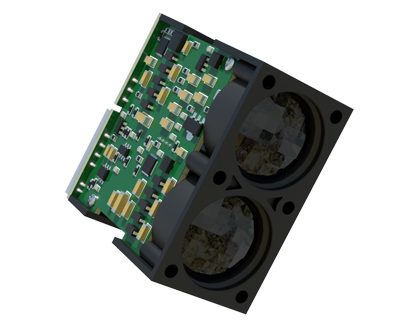
Applications are vast across manufacturing sectors. In CNC machining and sheet metal processing, these sensors precisely locate sheet edges or part boundaries before cutting or punching, eliminating material waste and ensuring dimensional accuracy. In robotic guidance, they provide exact pickup and placement coordinates for irregular components on conveyor belts. Printing and packaging machinery use them for web edge guidance and print registration control. In electronics assembly, they detect the edges of PCBs or components for precise soldering and placement. Furthermore, they are indispensable in quality inspection systems, identifying part presence, measuring feature positions, or detecting burrs and defects by scanning across edges.

Selecting the right edge detection laser sensor requires careful analysis. Engineers must consider the material properties (color, reflectivity, surface texture), the required accuracy and speed, the physical installation constraints, and the environmental conditions. For instance, detecting a clean edge on a glossy metal sheet differs from finding a fuzzy edge on dark rubber. The mounting angle and distance relative to the target also significantly impact performance. Integration with PLCs and industrial networks (like Profinet, EtherNet/IP) is now standard, enabling seamless data flow for process control and Industry 4.0 analytics.
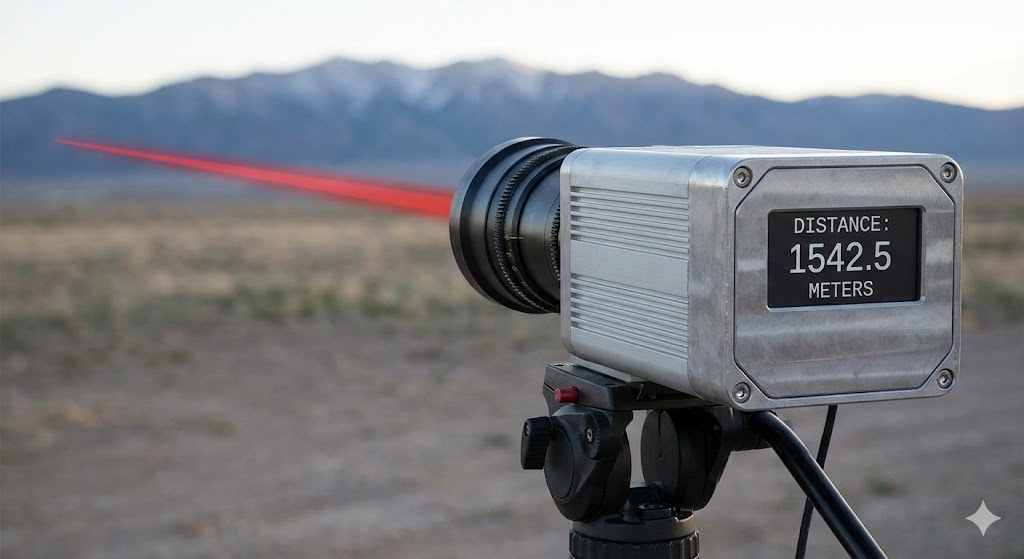
The future of edge detection sensors aligns with broader industry trends toward smarter, more connected systems. Advancements include integrated vision capabilities combining laser spot detection with camera-based pattern recognition, higher-speed processors for real-time edge profiling, and enhanced connectivity for predictive maintenance and remote diagnostics. As automation demands ever-greater precision and flexibility, the role of the reliable, high-performance edge detection laser sensor remains fundamentally secure, acting as the essential "eyes" for machines to interact accurately with the physical world.
In summary, edge detection laser sensors are sophisticated, robust tools that solve fundamental positioning challenges in automation. Their ability to provide fast, reliable, and exact edge references translates directly into improved product quality, reduced waste, higher throughput, and increased manufacturing efficiency. A thorough understanding of their operating principles and application requirements is essential for engineers to leverage their full potential in designing and optimizing automated systems.