In the realm of industrial automation, precision, reliability, and durability are non-negotiable. The TL-Q5MD1-Z proximity sensor, a prominent model within the capacitive sensing family, stands as a testament to engineering designed to meet these rigorous demands. This article provides a comprehensive technical overview of the TL-Q5MD1-Z, exploring its operating principles, key specifications, and typical applications in modern industrial environments.
At its core, the TL-Q5MD1-Z is a capacitive proximity switch. Unlike inductive sensors that detect only metals, capacitive sensors can detect a wide range of materials, including liquids, powders, plastics, glass, and wood, by measuring changes in capacitance. The sensor face and the target act as two plates of a capacitor. When a target object enters the sensor's electrostatic field, it alters the dielectric constant, leading to a change in capacitance. This change is evaluated by the internal oscillator and switching circuit, triggering a solid-state output signal. This principle grants the TL-Q5MD1-Z remarkable versatility.
The "TL-Q5MD1-Z" designation encodes critical features. The model typically indicates a cylindrical housing, with the 'M' often specifying a standard sensing distance. The '-Z' suffix commonly denotes a DC 3-wire configuration with an NPN normally-open (NO) output transistor. This is a crucial detail for electrical integration. The NPN (sourcing) output switches the negative voltage (0V) line, making it compatible with a wide array of programmable logic controllers (PLCs) and input cards prevalent in global markets. The solid-state design ensures fast switching speeds, often in the kilohertz range, and a virtually limitless mechanical lifespan, free from contact bounce or wear.
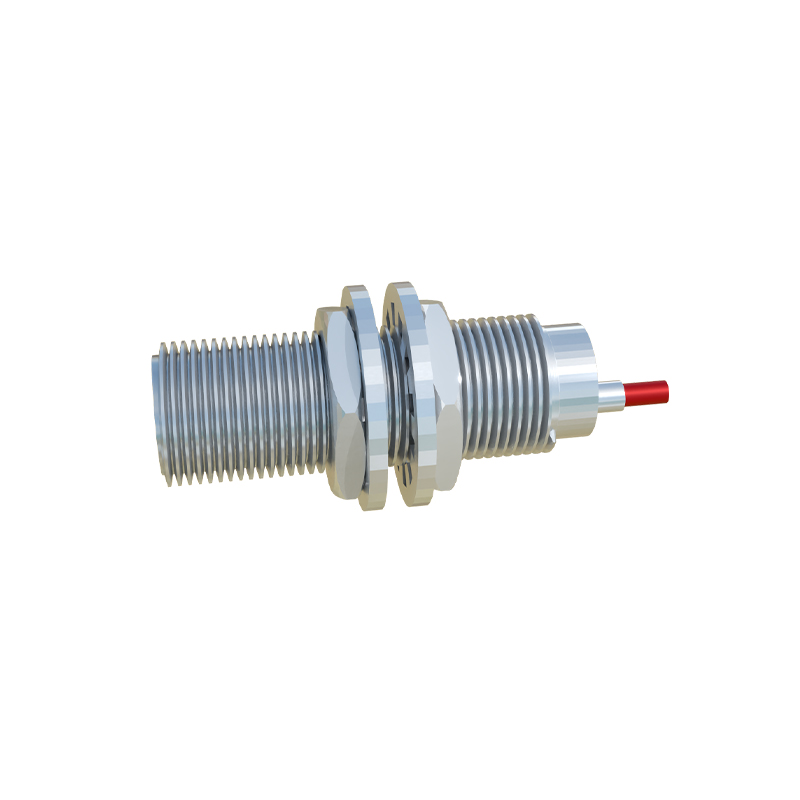
Key performance specifications define its operational envelope. The sensing distance, while dependent on the target material's dielectric properties, is typically rated for a standard target. For non-metallic materials, the effective sensing range is reduced, a factor that must be accounted for during installation and setup. The sensor operates on a DC supply voltage, commonly within a range of 10-30 VDC, offering flexibility in various control cabinet setups. Its output current rating, sufficient to drive a PLC input directly, is a standard feature. Furthermore, the TL-Q5MD1-Z is often built to withstand challenging industrial conditions, featuring housing materials resistant to common coolants and oils, and designed with ingress protection ratings like IP67. This means it is dust-tight and can withstand temporary immersion, making it suitable for washdown areas or dusty manufacturing cells.
Installation and wiring are straightforward but require attention to detail. The 3-wire system comprises a brown wire for DC positive (+V), a blue wire for DC negative (0V), and a black wire as the switched output signal. For an NPN NO sensor like the TL-Q5MD1-Z, the black wire switches the load (e.g., PLC input) to 0V when a target is detected. Proper mounting is essential; flush mounting in metal may reduce the nominal sensing distance, while non-flush mounting allows for the full range. Engineers must also consider the sensor's hysteresis—the difference between the switch-on and switch-off points—to prevent output chatter when a target is at the borderline of the sensing field.
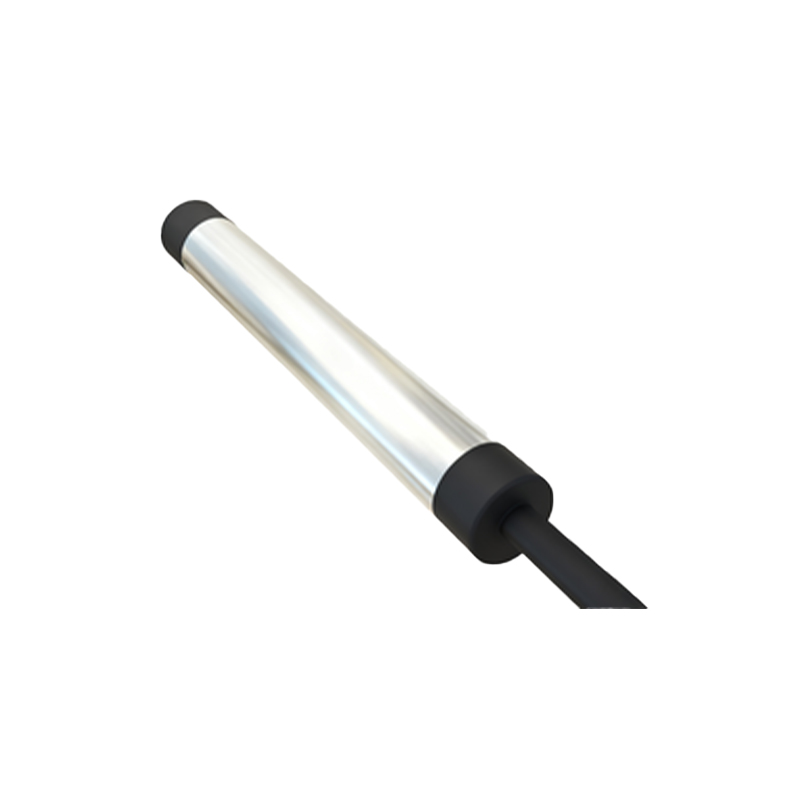
The applications for the TL-Q5MD1-Z are extensive across diverse industries. In packaging, it reliably detects the presence of plastic bottles, cardboard boxes, or foil lids on conveyor lines. In the food and beverage sector, it can monitor liquid levels in non-metallic tanks or detect plastic caps without physical contact, ensuring hygiene. In woodworking and paper processing, it senses logs, panels, or paper rolls. A common use case is in material handling systems to confirm the presence of a pallet (often wood or plastic) before a robotic arm engages. Its ability to see through certain non-metallic walls also allows for concealed detection, such as monitoring the fill level of a chemical in a plastic tube.
Troubleshooting typically involves checking the power supply LED, the output status LED, and ensuring the target material and distance are within specifications. A common pitfall is attempting to sense a material with a very low dielectric constant at too great a distance, requiring adjustment or a different sensor variant.
In conclusion, the TL-Q5MD1-Z capacitive proximity sensor is a robust and flexible solution for object detection beyond metallic targets. Its NPN output configuration, solid construction, and material-agnostic sensing capability make it an indispensable component in automated systems where reliability and versatility are paramount. Understanding its technical parameters and correct application principles is key to leveraging its full potential for enhancing operational efficiency and machine safety.