Laser displacement sensors, often referred to as laser triangulation sensors, represent a cornerstone technology in modern industrial automation and precision measurement. These non-contact devices operate on a fundamental principle: they project a focused laser beam onto a target surface, and a receiving lens captures the reflected light spot. The position of this spot on a light-sensitive detector, typically a CCD or PSD array, changes precisely with the distance to the target. By calculating this positional shift through triangulation geometry, the sensor outputs an accurate, high-resolution distance or displacement value. This method enables measurements with micron-level resolution at high sampling speeds, making it indispensable for applications where physical contact is impossible, undesirable, or would damage the target.
The advantages of laser displacement sensors are manifold. Their non-contact nature eliminates mechanical wear on both the sensor and the measured object, ensuring long-term stability and reliability. They offer exceptional speed, capable of taking thousands of measurements per second, which is critical for in-line quality control on fast-moving production lines. Furthermore, they can measure a wide variety of materials, including metals, plastics, glass, and even liquids, provided the surface reflects sufficient laser light. Modern sensors often incorporate advanced features like background suppression, which filters out ambient light and stray reflections, and multi-echo technology, which can penetrate transparent surfaces like glass to measure the target behind it or measure through dusty or steamy environments.

In practical industrial applications, the versatility of laser displacement sensors is on full display. In the automotive sector, they are used for precise gap and flush measurement between body panels, tire profile inspection, and brake disc thickness monitoring. In electronics manufacturing, they ensure the coplanarity of chip leads, measure solder paste height, and inspect component placement on PCBs. Within the metals industry, they perform vital tasks such as thickness gauging of rolled sheets, vibration analysis of machinery, and dimensional inspection of extruded profiles. They are also pivotal in robotics for precise guidance and positioning, and in logistics for package dimensioning and pallet profiling.

Selecting the appropriate laser displacement sensor requires careful consideration of several key parameters. The measuring range defines the minimum and maximum distances over which the sensor can operate accurately. Resolution indicates the smallest detectable change in distance, while linearity specifies the maximum deviation from a perfect straight-line output across the entire range. The spot size of the laser is crucial; a smaller spot allows for measurement of finer details or edges, but may struggle with rough or diffusely reflecting surfaces. The type of laser (usually red or blue-violet) matters as well; blue lasers, with their shorter wavelength, often provide better performance on organic materials or hot metals. Environmental factors such as ambient temperature, presence of dust, oil, or steam, and potential exposure to mechanical shock or vibration must also be accounted for by choosing sensors with suitable ingress protection (IP) ratings and robust housings.
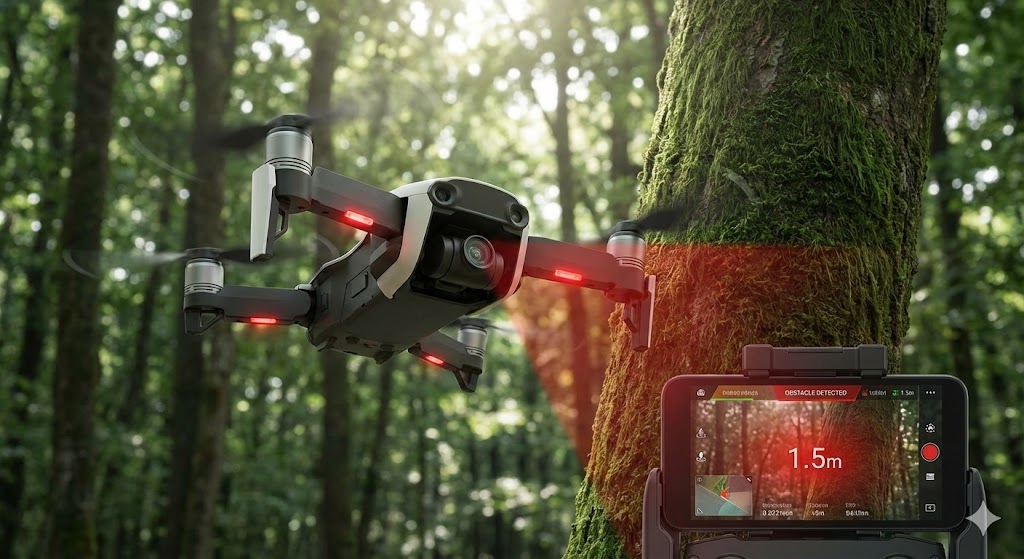
Integration into automated systems is typically straightforward, with most sensors offering analog outputs (e.g., 4-20 mA, 0-10 V), digital interfaces (RS-422, USB), or industrial fieldbus protocols (EtherCAT, PROFINET, EtherNet/IP). This allows for seamless data acquisition by PLCs (Programmable Logic Controllers) or dedicated measurement systems. For challenging surfaces—such as shiny, mirror-like metals or dark, absorbent materials—specialized models with adjustable sensitivity, controlled exposure time, or coaxial optical designs are available to ensure a stable and reliable measurement signal.
Looking ahead, the evolution of laser displacement sensing continues. Trends include miniaturization of sensor heads for integration into tighter spaces, the development of multi-point and profile sensors that capture an entire cross-section in a single scan, and enhanced data processing capabilities with built-in intelligence for direct decision-making on the factory floor. As Industry 4.0 and smart manufacturing initiatives advance, these sensors will play an increasingly critical role in providing the high-fidelity, real-time data necessary for predictive maintenance, closed-loop process control, and comprehensive digital twins of production systems. Their combination of precision, speed, and robustness solidifies their position as an essential tool for engineers striving to improve quality, efficiency, and automation across countless industries.