In the realm of industrial automation and environmental monitoring, precise and reliable water level measurement is paramount. Among the various technologies available, laser water level sensors have emerged as a sophisticated and highly accurate solution. This article delves into the working principles, key applications, and distinct advantages of these advanced sensors, offering insights for engineers and professionals in the field.
The fundamental principle behind a laser water level sensor is based on the time-of-flight (ToF) measurement technique. The sensor emits a focused pulse of laser light towards the water surface. This light beam travels at the known speed of light, reflects off the water's surface, and returns to a detector within the sensor. An internal high-precision timer measures the elapsed time between emission and reception of the reflected pulse. By calculating the distance based on this time interval (Distance = (Speed of Light × Time) / 2), the sensor accurately determines the water level. This non-contact method is a key differentiator from traditional contact sensors like floats or pressure transducers.
Several critical components ensure the optimal performance of a laser water level sensor. The laser diode, typically operating in the visible red or infrared spectrum, generates the coherent light pulse. Optics, including lenses, focus the beam into a narrow, precise spot, which is crucial for accurate targeting, especially in applications with turbulent surfaces or confined spaces. The photodetector, often an avalanche photodiode (APD), is highly sensitive to capture the weak reflected signal. Finally, sophisticated signal processing electronics filter out ambient light noise and calculate the precise distance, converting it into a standardized output signal such as 4-20 mA, 0-10 V, or digital protocols like Modbus.
The applications for laser water level sensors are diverse and span multiple industries due to their high accuracy and versatility. In water and wastewater management, they are used for monitoring reservoir levels, controlling pump stations, and measuring flow in open channels. The chemical and pharmaceutical industries utilize them for precise level control in reaction vessels and storage tanks, often where the liquid is corrosive, viscous, or requires sterile, non-contact measurement. In the power generation sector, they monitor condenser well levels or feedwater tanks. Furthermore, they are invaluable in hydrological studies for measuring river, lake, or tidal levels, even in harsh weather conditions where other sensors might fail.
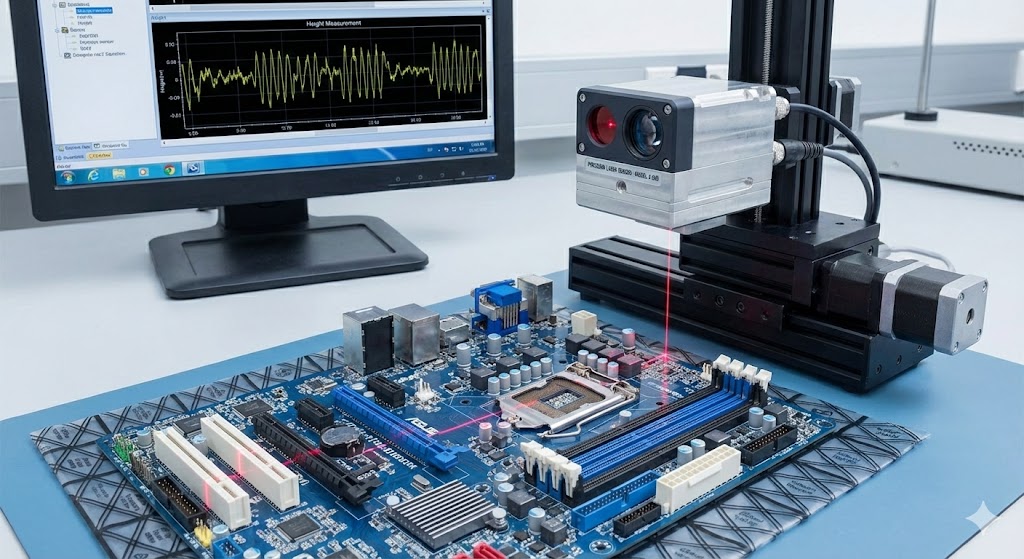
The advantages of choosing a laser water level sensor are compelling. First and foremost is exceptional accuracy, often within ±1 mm, which is superior to ultrasonic or radar sensors at short ranges. Their high resolution allows for detection of minute level changes. The non-contact nature eliminates issues like fouling, corrosion, or mechanical wear associated with probes, leading to significantly lower maintenance and longer service life. The focused laser beam allows for installation in complex geometries, such as narrow wells, pipes, or tanks with internal obstructions, where other methods are impractical. They perform reliably in environments with vapor, dust, or changing atmospheric conditions, provided the laser path remains unobstructed.
However, certain considerations are necessary for successful deployment. The sensor requires a clear line of sight to the water surface; foam, heavy mist, or debris directly in the beam path can attenuate or block the signal. While performance is generally good, extremely turbulent or frothy surfaces can scatter the laser light, potentially requiring averaging algorithms or stilling wells for stabilization. Initial cost can be higher than simpler technologies, but this is often offset by reduced lifetime maintenance costs and the value provided by ultra-precise data. Proper installation, alignment, and configuration are crucial to harness the full potential of the sensor.
In conclusion, laser water level sensors represent the high-end of liquid level measurement technology. Their principle of operation, leveraging the precise properties of light, delivers unmatched accuracy and reliability for demanding applications. For engineers specifying equipment for critical monitoring or control loops, where precision, minimal maintenance, and robust performance are non-negotiable, laser sensors offer a powerful and effective solution. As technology advances, we can expect further miniaturization, enhanced signal processing, and integration with Industrial IoT platforms, solidifying their role in the future of automated process and environmental monitoring.