Laser sensor radar, often referred to as LiDAR (Light Detection and Ranging), is a remote sensing technology that utilizes laser pulses to measure distances and create precise three-dimensional representations of objects and environments. At its core, this system operates on the time-of-flight (ToF) principle. A laser emitter generates short, focused pulses of light, typically in the near-infrared spectrum, which are directed toward a target. Upon striking the surface, the light is reflected back to a highly sensitive photodetector within the sensor. By precisely measuring the time interval between the emission of the pulse and the detection of its return echo, the sensor calculates the distance to the target with exceptional accuracy, using the fundamental equation: Distance = (Speed of Light × Time Delay) / 2.
The sophistication of laser radar extends beyond simple distance measurement. Modern systems employ scanning mechanisms, such as rotating mirrors or phased arrays, to steer the laser beam across a field of view. This scanning action allows for the collection of millions of data points per second, forming a dense "point cloud." Each point in this cloud has precise X, Y, and Z coordinates, enabling the creation of detailed 3D maps. The intensity of the returned signal is also recorded, providing additional information about the reflectivity and material properties of the scanned surfaces.
Key components defining the performance of a laser sensor radar include the laser source, the detector, and the timing circuitry. Semiconductor lasers are commonly used for their compact size, efficiency, and reliability. Avalanche photodiodes (APDs) or single-photon avalanche diodes (SPADs) serve as detectors due to their high sensitivity and fast response times. The timing circuitry, often a time-to-digital converter (TDC), must achieve picosecond-level resolution to ensure millimeter-grade distance accuracy. Furthermore, advanced signal processing algorithms filter noise, compensate for environmental factors like ambient light, and interpret the point cloud data for specific applications.
In industrial settings, the applications of laser sensor radar are vast and transformative. In autonomous guided vehicles (AGVs) and mobile robots, it provides real-time, 360-degree environmental perception for navigation, obstacle avoidance, and SLAM (Simultaneous Localization and Mapping). For industrial automation, it enables precise non-contact measurement, dimensional gauging, and quality inspection on production lines, even in challenging conditions with dust, smoke, or variable lighting. In logistics, it facilitates volume measurement, parcel sorting, and warehouse inventory management by rapidly capturing the dimensions of objects. Safety systems also leverage this technology to create reliable presence detection and intrusion prevention zones around hazardous machinery.
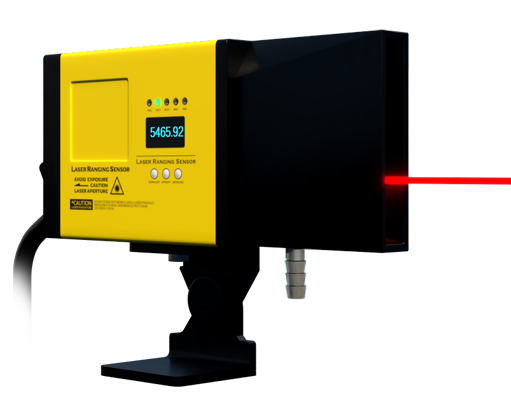
Compared to other sensing technologies like ultrasonic sensors or traditional vision cameras, laser radar offers distinct advantages. It provides superior accuracy and resolution over long ranges, operates effectively in darkness, and is less susceptible to environmental noise. However, challenges remain, such as performance degradation in heavy fog, rain, or with highly reflective or absorbent surfaces. Ongoing research focuses on solid-state LiDAR (without moving parts) for enhanced durability, the use of new wavelengths for better material discrimination, and the integration of artificial intelligence for smarter, more adaptive data interpretation.
As Industry 4.0 advances, laser sensor radar is poised to become an even more integral component of smart factories and intelligent systems. Its ability to deliver high-precision, real-time spatial data makes it a cornerstone technology for automation, robotics, and digital twin creation, driving efficiency, safety, and innovation across the electrical and industrial engineering landscape.
