In the realm of industrial automation, precision and reliability are paramount. Among the myriad of technologies driving efficiency, laser sensors have emerged as a cornerstone for counting applications. These devices, leveraging focused light beams, offer unparalleled accuracy in detecting, measuring, and tallying objects across diverse sectors—from manufacturing and logistics to packaging and pharmaceuticals. Unlike traditional mechanical or photoelectric sensors, laser sensors operate on the principle of emitting a concentrated beam of light toward a target. When this beam is interrupted or reflected by an object, the sensor's receiver detects the change, triggering a count. This method eliminates physical contact, reducing wear and tear and minimizing maintenance needs.
One of the key advantages of laser sensors is their high resolution and speed. Capable of detecting objects as small as a fraction of a millimeter, they excel in environments where minute items, such as electronic components or pharmaceutical pills, must be counted rapidly. For instance, in conveyor belt systems, laser sensors can monitor thousands of items per minute with near-zero error rates, ensuring inventory accuracy and production consistency. Their ability to function in challenging conditions—such as low light, high temperatures, or dusty atmospheres—further enhances their utility. Advanced models incorporate background suppression technology, which ignores irrelevant reflections from surfaces behind the target, thereby reducing false counts.
Integration with programmable logic controllers (PLCs) and industrial networks like Ethernet/IP or PROFINET allows laser sensors to seamlessly feed data into broader automation systems. This connectivity enables real-time monitoring and adjustments, supporting just-in-time production and lean manufacturing principles. In logistics, laser sensors automate package counting on sorting lines, optimizing warehouse throughput. In automotive assembly, they verify part quantities before installation, preventing defects. The non-invasive nature of laser beams also makes them ideal for counting fragile or sensitive items, such as glass vials or food products, without risk of contamination or damage.
Despite their benefits, implementing laser sensors requires careful consideration. Factors like object material, color, and surface texture can affect reflectivity, potentially impacting accuracy. For example, dark or matte surfaces may absorb more light, necessitating sensor calibration or the use of specialized models with adjustable sensitivity. Environmental interferences, such as ambient light or vibrations, should also be mitigated through proper shielding and mounting. Regular maintenance, though minimal, involves cleaning lenses to prevent dust accumulation that could scatter the laser beam.
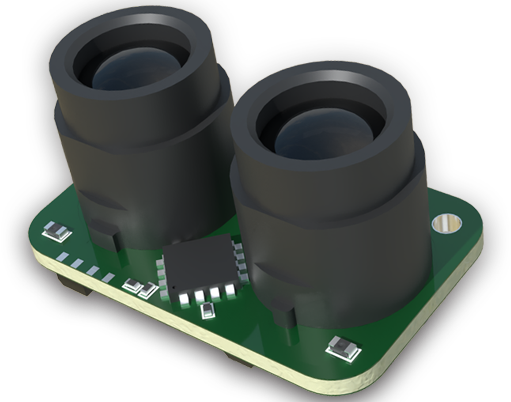
Looking ahead, innovations in laser sensor technology continue to expand their capabilities. The integration of artificial intelligence and machine learning algorithms allows sensors to adapt to varying object shapes and speeds, enhancing counting precision in dynamic settings. Miniaturization trends are enabling their use in compact spaces, while energy-efficient designs reduce operational costs. As industries increasingly embrace Industry 4.0 and the Internet of Things (IoT), laser sensors will play a pivotal role in smart factories, providing data-driven insights for predictive maintenance and process optimization.

In conclusion, laser sensors represent a transformative tool for counting in industrial automation. Their accuracy, speed, and versatility address critical challenges in modern production and logistics, driving efficiency and reducing errors. By understanding their operational principles and best practices for deployment, engineers can harness their full potential to build more resilient and intelligent automated systems. As technology evolves, these sensors will undoubtedly remain at the forefront of innovation, shaping the future of industrial counting solutions.