In the realm of modern electronics, particularly within smartphones, tablets, and various IoT devices, sensors play a pivotal role in enhancing user experience and enabling intelligent functionalities. Among these, proximity sensors and ambient light sensors are two commonly mentioned components. A frequent point of confusion, especially for those new to hardware design or system integration, is whether these are the same physical sensor or distinct units. The straightforward answer is no—they are fundamentally different sensors designed for separate purposes, though they are often co-packaged or placed in close proximity within a device.
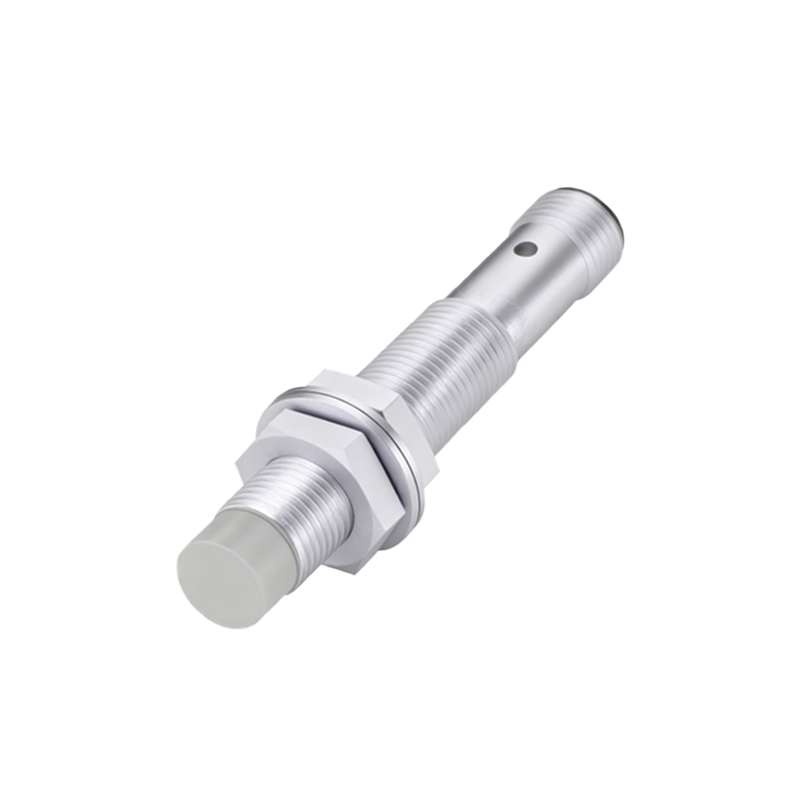
A proximity sensor is primarily used to detect the presence of nearby objects without any physical contact. The most common type found in consumer electronics is the infrared (IR) proximity sensor. It typically consists of an IR LED emitter and an IR photodiode receiver. The emitter sends out an infrared light beam; if an object is close enough, this light reflects back to the receiver. The sensor measures the intensity of the reflected light to determine the object's distance. A classic application is in smartphones: during a call, when you bring the phone close to your ear, the proximity sensor detects this and turns off the display to prevent accidental touch inputs and save power. These sensors are optimized for short-range detection, usually up to a few centimeters, and are not designed to measure precise distances but rather a simple "near" or "far" state.
In contrast, an ambient light sensor (ALS) measures the intensity of visible light in the environment. Its core function is to quantify the illuminance, typically in units of lux. It uses a photodetector, such as a photodiode or phototransistor, that is sensitive to the visible light spectrum. The sensor's output helps the device automatically adjust the brightness of the screen (auto-brightness) to match ambient lighting conditions. This improves readability in bright sunlight, reduces power consumption in dim environments, and enhances visual comfort. Some advanced ambient light sensors can also detect color temperature to adjust display white balance accordingly.
While their functions are distinct, the confusion arises from their physical integration. To save space on increasingly compact circuit boards and simplify assembly, manufacturers often combine these two sensors into a single module or package. This integrated module might share a common housing, a single IC (Integrated Circuit) with multiple sensing elements, or a unified digital interface like I2C. For instance, a popular sensor from manufacturers like AMS (ams OSRAM) or Vishay might be marketed as a "proximity and ambient light sensor" in one chip. Inside, there are separate photodiodes and signal processing circuits dedicated to each function. The IR emitter for proximity sensing might be external or included. So, while they are housed together, the sensing elements and their operational principles remain separate.
From an engineering and system architecture perspective, treating them as a single entity is a design convenience rather than a technical sameness. The driver software and system firmware must handle them independently. The proximity sensor data triggers specific system actions (like blanking the display), while the ambient light sensor data feeds into the display backlight control algorithm. Their operational parameters differ significantly: proximity sensing involves emitting and detecting specific IR wavelengths, often requiring calibration to account for reflectivity of different objects. Ambient light sensing requires spectral response that mimics human eye sensitivity (often achieved with filters) and may involve rejection of IR interference from other sources like sunlight or indoor lighting.
In summary, proximity sensors and ambient light sensors are not the same. They serve different purposes: one detects object presence via infrared light reflection, and the other measures visible environmental light intensity. However, in modern electronic design, they are frequently packaged together into a single module for space efficiency and design simplicity. Understanding this distinction is crucial for hardware engineers during component selection, for software developers when writing sensor drivers, and for technical support teams troubleshooting device behavior. As sensor fusion and miniaturization trends continue, such integrated packages will become even more prevalent, but the fundamental physical principles and application roles of each sensing element will remain uniquely their own.