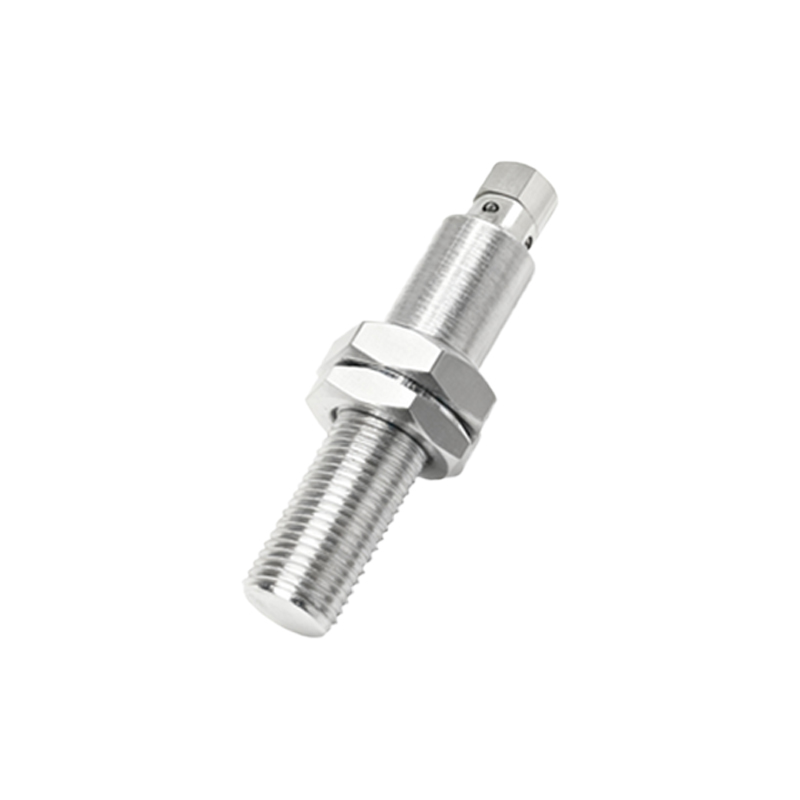
In the realm of industrial automation and machine control, the selection of precise and reliable sensing components is paramount. The M8 proximity sensor configured as a normally open (NO) limit switch, specifically engineered for a 4mm sensing distance, represents a critical solution for applications demanding accurate non-contact detection at a moderate range. This technical article delves into the operational principles, key specifications, and typical applications of this sensor variant, providing essential insights for engineers and system integrators.
Fundamentally, an M8 proximity sensor is a compact, cylindrical inductive sensor with an 8mm threaded barrel. The "normally open" designation refers to its output switching state when no target is present within its sensing field. In a NO configuration, the output switch (typically a solid-state transistor) remains in an "off" or open-circuit state. When a ferrous metal target enters the defined sensing range—in this case, up to 4mm from the active face—the internal oscillator's energy is absorbed, triggering the output to switch "on" or to a closed-circuit state. This 4mm sensing distance is considered a longer range for the compact M8 form factor, offering greater installation flexibility compared to standard 1.5mm or 2mm variants.
The core technology employed is inductive sensing. The sensor generates a high-frequency electromagnetic field from its front face. The presence of a conductive metal target, primarily ferrous metals like steel and iron, induces eddy currents on the target's surface. This causes a measurable change in the oscillation amplitude within the sensor's coil, which is detected by the subsequent evaluation circuit. The circuit then commands the output switching element to change state. It is crucial to note that the rated sensing distance (Sn) of 4mm is defined for a standard mild steel target. For other metals, such as stainless steel, aluminum, or copper, a reduction factor must be applied, effectively decreasing the usable sensing range.
Key specifications for an M8 NO limit switch with 4mm range include its housing material, often nickel-plated brass or stainless steel, ensuring robustness in harsh industrial environments. The sensing face is typically made of PBT or similar thermoplastic. Electrical characteristics are vital: operating voltage ranges are commonly 10-30V DC, with outputs being either PNP (sourcing) or NPN (sinking) transistor types. The NO configuration is explicitly chosen for fail-safe considerations in many control logic designs; a broken wire or loss of power mimics the "no target" state (output off), which can be programmed to halt a machine for safety. The 4mm distance provides a generous mounting tolerance, helping to compensate for mechanical play or misalignment in repetitive machinery.
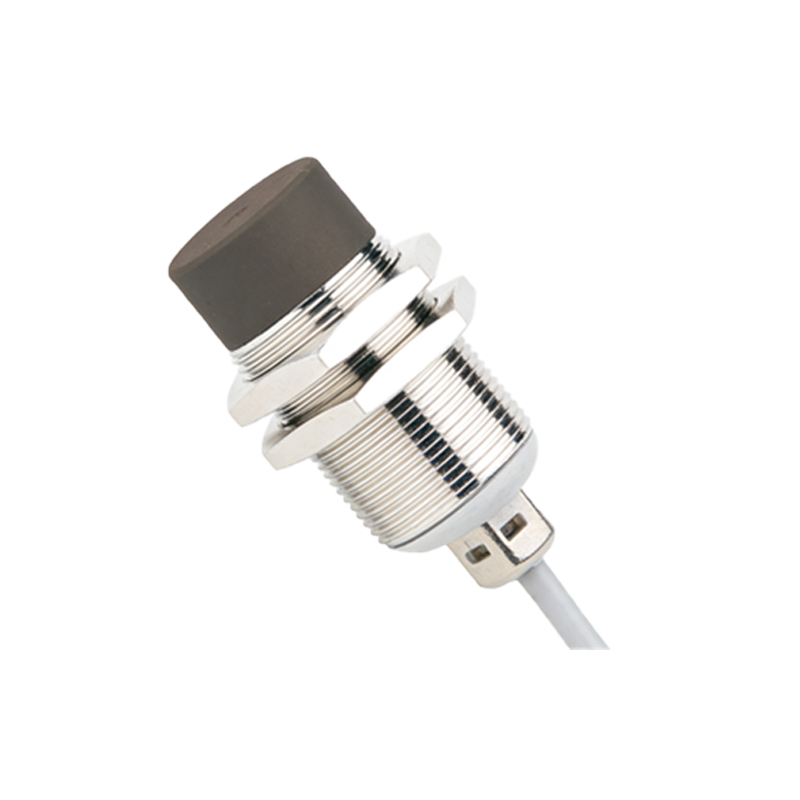
Application areas for this sensor are extensive. It is ideally suited for position verification and end-of-travel limit detection in pneumatic and hydraulic cylinders, where the piston head or a flag mounted on the rod acts as the target. In automated assembly lines, these sensors confirm the presence or passage of metal components, pallets, or fixtures. They are also deployed in packaging machinery to detect metal parts of the product or the machine itself, ensuring proper sequencing. The longer 4mm range is particularly beneficial in environments with significant vibration or where thermal expansion might alter the gap between sensor and target, providing a necessary safety margin to prevent false triggers or missed detections.
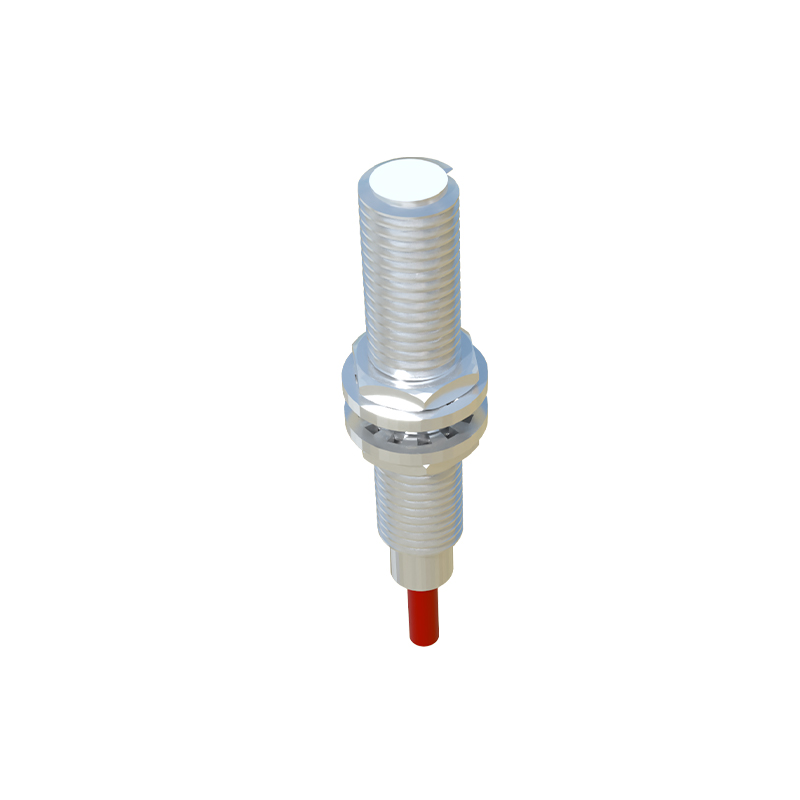
Installation and wiring require attention to detail. The sensor must be mounted securely using its M8 thread, often with a lock nut. Engineers must ensure the target approaches the sensing face axially for optimal performance. The target material, size, and approach speed should align with the sensor's datasheet recommendations. Shielding considerations are also important; mounting multiple sensors side-by-side may require a minimum separation distance to prevent mutual interference. Always refer to the manufacturer's documentation for specific wiring diagrams, ensuring correct connection of the brown wire (V+), blue wire (V-), and black wire (output signal for NO type).
In conclusion, the M8 normally open inductive proximity sensor with a 4mm sensing distance is a versatile and robust component in the electrical engineer's toolkit. Its combination of a compact form factor, a generous sensing range for its size, and the inherent reliability of non-contact inductive technology makes it a preferred choice for countless limit switching and position detection tasks. By understanding its operating principle, key parameters, and application best practices, professionals can effectively integrate this sensor to enhance the precision, safety, and efficiency of automated systems.