In the realm of industrial automation and electrical engineering, proximity sensors are ubiquitous components, prized for their ability to detect the presence or absence of an object without physical contact. Their primary function is binary: to signal "on" or "off" based on the detection of a metallic or, in some cases, non-metallic target. A common question that arises among engineers and technicians is whether these versatile devices can be repurposed or inherently possess the capability to measure a specific electrical property like resistance. The short and direct answer is no, a standard proximity sensor is not designed to function as an ohmmeter or resistance-measuring device. However, understanding the "why" behind this reveals crucial insights into sensor operation, system design, and potential workarounds for related applications.
At its core, a proximity sensor operates on distinct physical principles. Inductive sensors generate an electromagnetic field and detect changes caused by eddy currents induced in a metallic target. Capacitive sensors detect changes in capacitance caused by the proximity of any material that alters the dielectric constant of the field. Ultrasonic sensors measure the time-of-flight of sound waves. Photoelectric sensors rely on light beams. None of these fundamental operating principles are designed to measure the electrical resistance of the target material itself. The sensor's output is a clean, processed signal—typically a switched PNP/NPN transistor, a voltage pulse, or a digital IO-Link signal—indicating a state change (object present/absent), sometimes with analog information about distance, but never a direct resistance value.
The confusion often stems from the sensor's sensitivity to material properties. For instance, an inductive proximity sensor's sensing range is influenced by the target's material. A mild steel target will be detected at the sensor's nominal range, while stainless steel (with lower permeability and higher resistivity) might reduce the effective range, and copper or aluminum reduces it further. This variation is due to differences in how materials affect the electromagnetic field, which is a complex interplay of permeability, conductivity (the inverse of resistivity), and geometry. While the sensor reacts to these changes, it does not quantify them as a discrete resistance value (e.g., 10 ohms). It merely adjusts its trigger point. A sensor cannot distinguish between a small piece of high-permeability metal and a larger piece of lower-permeability metal if their combined effect on the field is identical.
So, what if you need to monitor or control a process based on material resistivity or conductivity? The solution lies not in misusing a proximity sensor, but in integrating it correctly within a broader system or selecting a specialized sensor. One practical industrial application involves sorting or identifying metals. A system can be designed where a standard inductive proximity sensor provides a "presence" signal. Then, by using the same sensor in conjunction with a controlled test setup—perhaps varying the oscillation frequency or monitoring the damping of the sensor's internal LC circuit—additional information can be inferred. More commonly, dedicated "metal identification" or "conductivity sensors" are used. These devices are explicitly engineered to measure the damping of an electromagnetic field, which correlates strongly with the conductivity (and thus resistivity) of the target metal. They provide an analog output proportional to this property, allowing for sorting between aluminum, brass, copper, and different steel grades.
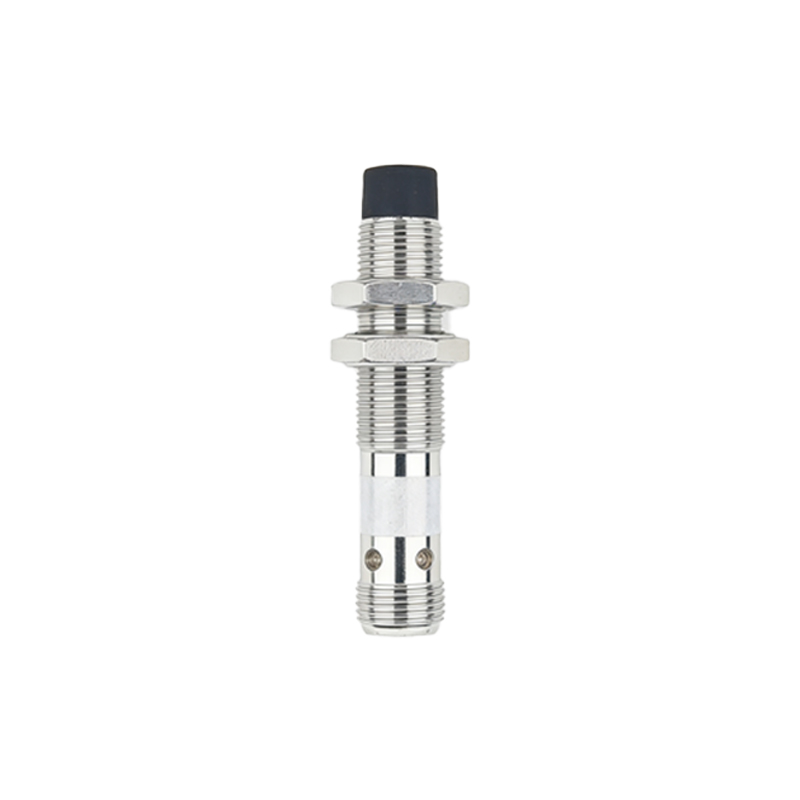
Another related concept is the use of sensors to detect faulty conditions that manifest as changes in resistance. For example, a proximity sensor might be used to verify the presence of a busbar. If corrosion or pitting increases the contact resistance at a joint, the proximity sensor will still see the metal and signal "present." It cannot measure the increased resistance. To monitor the connection's health, you would need a dedicated resistance or micro-ohmmeter instrument. However, a capacitive proximity sensor could potentially be used in a non-traditional way to detect the presence of certain non-conductive materials whose dielectric constant changes with moisture content, which indirectly affects resistivity, but again, this is not a direct resistance measurement.
In conclusion, while the standard proximity switch is an indispensable tool for detection and positioning, its function is fundamentally different from that of a multimeter. It is a state-detection device, not a property-quantification instrument for resistance. Attempting to use it as such will lead to unreliable data and system failures. For applications requiring assessment of material properties like electrical resistance or conductivity, engineers should specify purpose-built conductivity meters, metal identification sensors, or design a tailored test system that may incorporate a proximity sensor as one component of a more complex measurement chain. Recognizing this distinction is key to selecting the right tool for the job, ensuring robust and accurate automation system performance.