In the rapidly evolving landscape of industrial automation and precision measurement, array laser sensors have emerged as a cornerstone technology. Unlike traditional single-point laser sensors, these advanced devices utilize an array of laser emitters and corresponding receivers to capture detailed profiles or two-dimensional data of a target object. This capability fundamentally transforms inspection, guidance, and quality control processes across numerous sectors.
The core principle of an array laser sensor involves projecting a line or a pattern of laser light onto a target surface. The reflected light is captured by a high-resolution CMOS or CCD receiver array. Any variation in the target's height, contour, or presence causes a measurable distortion in the reflected laser line. Sophisticated onboard processors or connected systems then analyze this distortion using triangulation algorithms to generate precise, real-time dimensional data. This method allows for the simultaneous measurement of an entire cross-section, eliminating the need for mechanical scanning and dramatically increasing inspection speed.
Key advantages of array laser sensors are manifold. First and foremost is their exceptional speed, capable of performing thousands of profile measurements per second. This makes them indispensable in high-throughput manufacturing environments such as automotive assembly lines, electronics production, and pharmaceutical packaging. Secondly, they offer high resolution and accuracy, capable of detecting minute defects, subtle warpage, or precise dimensional tolerances down to the micron level. Their non-contact nature ensures there is no wear on the sensor or damage to delicate products. Furthermore, their robustness allows them to perform reliably in challenging industrial conditions with varying ambient light, dust, or vibration.
Applications are diverse and impactful. In automotive manufacturing, array laser sensors are deployed for precise gap and flush measurement between body panels, robotic weld seam inspection, and tire profile analysis. In the electronics industry, they verify the coplanarity of Ball Grid Array (BGA) components, inspect solder paste volume, and measure the thickness of coatings or substrates. Logistics and warehousing utilize them for parcel dimensioning, volume calculation, and automated sortation. They also play a critical role in robotics for bin-picking guidance, providing 3D vision for robots to identify and grasp randomly oriented parts.
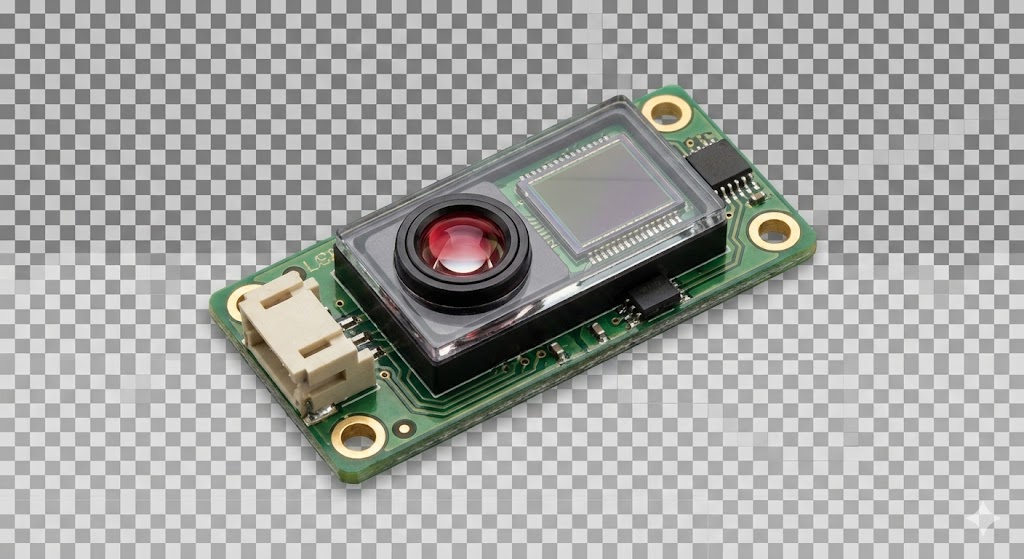
When selecting an array laser sensor, engineers must consider several critical parameters. Measurement range and stand-off distance define the operational envelope. Resolution and repeatability determine the precision of the data. The scanning frequency must match the production line speed. Environmental ratings, such as IP67 for dust and water resistance, are crucial for harsh environments. Finally, the choice of communication interface—Ethernet/IP, PROFINET, EtherCAT, or simple digital I/O—must align with the existing factory network architecture.
Looking ahead, the integration of array laser sensors with Artificial Intelligence and Machine Learning represents the next frontier. AI algorithms can be trained on vast datasets of profile images to not only detect anomalies but also predict process deviations and classify complex defect types beyond simple dimensional checks. Miniaturization and the development of more cost-effective models will further democratize their use in small and medium-sized enterprises. Additionally, the fusion of laser profile data with other sensor inputs, like 2D vision or thermal imaging, will create more comprehensive and intelligent inspection systems.
In conclusion, array laser sensors are a transformative technology driving efficiency, quality, and intelligence in modern industry. By providing fast, accurate, and non-contact profile measurement, they address core challenges in automation and quality assurance. As technology advances, their role will only expand, becoming more integrated, intelligent, and essential for building the smart factories of the future. Engineers and decision-makers must understand their capabilities and applications to fully leverage their potential for operational excellence.