In the realm of industrial automation and precision measurement, laser sensors have become indispensable tools due to their high accuracy, non-contact operation, and rapid response times. Designing a simple yet effective laser sensor can be a rewarding project for engineers looking to implement cost-effective solutions for tasks like object detection, distance measurement, or alignment. This article outlines the fundamental principles and steps involved in creating a basic laser sensor system, tailored for practical industrial use.
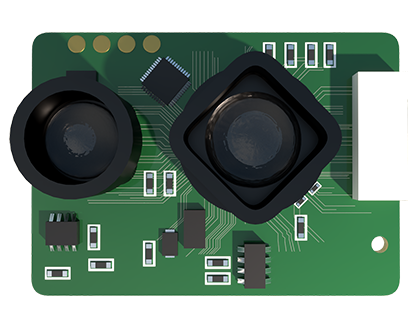
The core components of a simple laser sensor typically include a laser diode, a photodetector (such as a photodiode or phototransistor), signal conditioning circuitry, and a microcontroller or comparator for processing. The laser diode emits a focused beam of light toward a target. When the beam interacts with the target—either through reflection, interruption, or scattering—the photodetector captures the resulting light changes. The key to reliable operation lies in the modulation of the laser signal. Using a modulated beam (e.g., pulsing at a specific frequency) helps mitigate ambient light interference, which is crucial in noisy industrial environments. A common approach is to drive the laser diode with a square wave signal, often in the range of a few kilohertz, ensuring the sensor only responds to light modulated at that frequency.
For the receiver side, the photodetector converts light intensity into an electrical current. This signal is usually weak and requires amplification through an operational amplifier (op-amp) configured in a transimpedance arrangement to produce a usable voltage. Following amplification, filtering is essential to isolate the modulation frequency from background noise. A band-pass filter centered on the modulation frequency can effectively reject unwanted signals. The conditioned signal is then fed into a comparator or microcontroller analog-to-digital converter (ADC) to determine whether the beam has been interrupted or reflected, triggering an output accordingly.
In designing the optical layout, alignment between the laser and photodetector is critical. For reflective sensing, where the detector picks up light bounced off a target, careful angling and lens selection can optimize sensitivity. For through-beam sensing, with separate emitter and receiver units, precise mechanical mounting ensures the beam is accurately directed. Environmental factors like dust, vibration, and temperature variations must also be considered; enclosures and protective coatings can enhance durability.
Power management is another vital aspect. Laser diodes require stable current sources to maintain consistent output and prevent damage. Integrating voltage regulators and current-limiting resistors ensures reliable performance. For portable or low-power applications, energy-efficient components and sleep modes can extend operational life.
Testing and calibration are final steps to validate sensor performance. Using standardized targets at known distances, engineers can adjust gain settings and threshold levels to achieve desired detection ranges and resolutions. Documenting parameters like response time, accuracy, and environmental tolerances helps in fine-tuning for specific industrial tasks, such as conveyor belt monitoring or part positioning.
While this design focuses on simplicity, advanced variations can incorporate features like analog output for distance measurement (using triangulation or time-of-flight principles) or digital communication protocols (e.g., IO-Link) for integration into larger automation networks. By mastering these basics, engineers can adapt and scale laser sensor designs to meet diverse industrial challenges, balancing cost, reliability, and precision.
In summary, a simple laser sensor design hinges on thoughtful component selection, robust signal processing, and meticulous calibration. With attention to modulation techniques and environmental robustness, such sensors can deliver high performance in demanding settings, empowering engineers to innovate in automation and control systems.