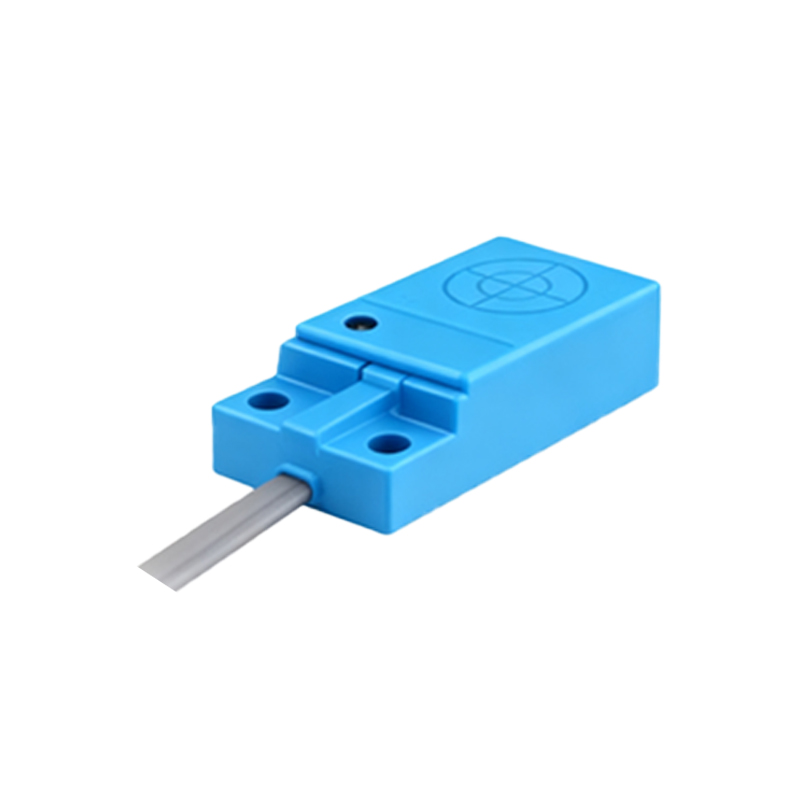
Proximity sensors are widely used in industrial automation for detecting the presence or absence of objects without physical contact. Among various types, inductive proximity sensors are particularly common due to their reliability and durability in harsh environments. However, a frequent question arises in the industry: Can proximity sensors effectively detect aluminum blocks? The answer is nuanced and depends on the sensor type, material properties, and application setup.
Inductive proximity sensors operate by generating an electromagnetic field. When a metallic object enters this field, eddy currents are induced in the material, causing a change in the sensor's oscillation amplitude. This change triggers the sensor to output a detection signal. Traditionally, inductive sensors are optimized for ferrous metals like iron and steel, which have high magnetic permeability. Aluminum, being a non-ferrous metal with low permeability, presents a challenge. Aluminum does conduct electricity, allowing eddy currents to form, but its detection range is typically reduced compared to ferrous metals. For instance, an inductive sensor rated for a 10mm detection range with steel might only achieve 5-6mm with aluminum. This reduction occurs because aluminum's lower permeability results in weaker eddy current effects, requiring the object to be closer for reliable detection.
To address this, many manufacturers design specialized inductive sensors for non-ferrous metals like aluminum. These sensors often feature higher sensitivity or adjustable settings to compensate for the material's properties. Additionally, capacitive proximity sensors can be an alternative for aluminum detection. Unlike inductive sensors, capacitive sensors detect changes in capacitance caused by any material, including non-metals, liquids, and aluminum blocks. They work by measuring alterations in an electrostatic field and are less affected by the metal's magnetic characteristics. However, capacitive sensors may be influenced by environmental factors such as humidity or dust, making them less suitable for some industrial settings.
In practical applications, detecting aluminum blocks requires careful consideration. Factors like the block's size, surface condition, and sensor alignment impact performance. For example, larger aluminum blocks with smooth surfaces enhance detection reliability, while small or irregularly shaped pieces might cause intermittent signals. It's also crucial to account for the sensor's mounting and surrounding metals, which can interfere with the electromagnetic field. Engineers often conduct on-site testing to calibrate sensors, adjusting sensitivity thresholds to minimize false triggers or missed detections.

Moreover, advancements in sensor technology have led to hybrid or multi-material sensors that combine inductive and capacitive principles, offering greater flexibility. These sensors can be programmed to switch modes based on the target material, making them ideal for mixed production lines handling both ferrous and non-ferrous components. When selecting a sensor for aluminum, key specifications to review include the sensing distance reduction factor (often provided in datasheets for different materials), operating frequency, and environmental ratings like IP67 for dust and water resistance.
In summary, proximity sensors can indeed detect aluminum blocks, but success hinges on choosing the right sensor type and configuring it appropriately. Inductive sensors require adjustments for reduced range, while capacitive sensors offer a broader material scope but with potential environmental limitations. By understanding the underlying principles and conducting thorough testing, engineers can ensure reliable aluminum detection in automation systems, enhancing efficiency and reducing downtime in industries ranging from automotive manufacturing to packaging.