In the field of industrial automation and control systems, proximity sensors are widely recognized for their ability to detect the presence or absence of objects without physical contact. These devices operate based on principles such as electromagnetic, capacitive, or inductive effects, making them essential for tasks like object detection, counting, and positioning. However, a common question arises among engineers and technicians: Can proximity sensors be used to measure displacement? To address this, we must first clarify the distinction between detection and measurement. Proximity sensors are primarily designed for binary output—indicating whether an object is within a predefined range. They excel at providing a simple on/off signal when a target enters their sensing field, which is ideal for applications like limit switching or safety interlocks. For instance, in conveyor systems, inductive proximity sensors can detect metallic parts passing by, triggering actions such as stopping a motor or activating a counter. This functionality relies on the sensor's sensitivity to changes in the electromagnetic field, but it does not inherently quantify the exact distance of the object.
Displacement measurement, on the other hand, involves determining the precise position or movement of an object relative to a reference point. This requires continuous analog output or high-resolution digital data that reflects changes in distance over time. Traditional proximity sensors lack this capability because they are optimized for threshold-based detection rather than linear measurement. Their output is typically a switch signal that activates when the object reaches a specific proximity, often with a fixed sensing range (e.g., 5 mm to 20 mm). As a result, they cannot provide detailed information about how far an object is within that range or track gradual movements. For example, if a metal part moves closer to an inductive proximity sensor, the sensor might trigger at a certain point, but it won't indicate whether the part is 2 mm or 10 mm away—only that it is "near" or "far" based on the set threshold.
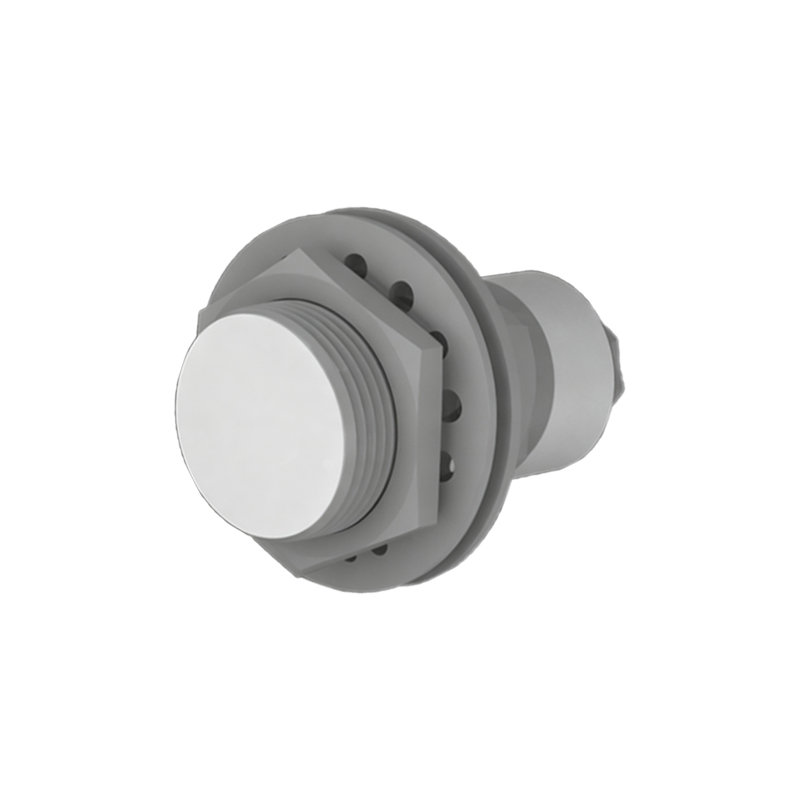
Despite this limitation, advancements in sensor technology have led to the development of specialized devices that bridge the gap. Analog proximity sensors, for instance, offer a continuous voltage or current output proportional to the distance of the target. These sensors can effectively measure displacement within their specified ranges by converting changes in the sensing field into analog signals. For example, an analog inductive proximity sensor might output 0-10 V DC, where 0 V corresponds to no target detected and 10 V indicates the target is at the maximum sensing distance. By calibrating this output, engineers can use such sensors for precise displacement monitoring in applications like robotic arm positioning or valve control. Similarly, capacitive proximity sensors with analog capabilities can measure non-metallic materials' positions, expanding their utility in industries like packaging or food processing.
Another solution lies in using proximity sensors in conjunction with other measurement systems. For instance, integrating a proximity sensor with an encoder or a linear variable differential transformer (LVDT) can enhance displacement accuracy. In this setup, the proximity sensor acts as a trigger or reference point, while the dedicated measurement device tracks fine movements. This hybrid approach is common in CNC machinery, where proximity sensors initiate tool changes, and encoders provide micron-level position feedback. Additionally, modern smart sensors with digital interfaces (e.g., IO-Link) can transmit more data, including approximate distance values, though they may not match the precision of dedicated displacement sensors like laser rangefinders or ultrasonic sensors.
In practical applications, the choice depends on the required accuracy and environmental factors. For high-precision displacement measurement—such as in semiconductor manufacturing or metrology—dedicated sensors like laser interferometers or capacitive displacement sensors are preferred due to their sub-micron resolution. Proximity sensors, even analog types, may suffer from limitations like temperature drift, material dependencies, or nonlinearity, which can affect measurement reliability. However, for moderate accuracy needs (e.g., within ±1 mm), analog proximity sensors offer a cost-effective and robust solution. They are particularly useful in harsh industrial environments where durability and resistance to contaminants are crucial.
To summarize, while standard proximity sensors are not designed for displacement measurement, technological adaptations like analog variants enable them to perform this function within certain constraints. Engineers should evaluate factors such as range, resolution, target material, and environmental conditions when selecting sensors. For binary detection tasks, traditional proximity sensors remain unmatched in efficiency and simplicity. But for displacement-related applications, considering analog proximity sensors or integrated systems can provide a viable path forward. As automation evolves, the line between detection and measurement continues to blur, driven by innovations in sensor fusion and smart factory trends. Ultimately, understanding the core principles and limitations of proximity sensors is key to leveraging their full potential in diverse industrial scenarios.