In the ever-evolving landscape of industrial automation, consumer electronics, and smart systems, the quest for more intuitive, reliable, and efficient detection mechanisms is relentless. At the forefront of this pursuit lies the rapid advancement of proximity sensor technology. Moving beyond simple on/off detection, new generations of proximity sensors are redefining how machines perceive their environment and how humans interact with devices. These innovations are not merely incremental improvements but represent fundamental shifts in sensing principles, material science, and integration capabilities.
The core function of a proximity sensor remains to detect the presence or absence of an object within a specified range without physical contact. However, the technological pathways to achieve this have diversified significantly. Traditional inductive and capacitive sensors, while still prevalent, are being augmented and, in some cases, supplanted by more sophisticated solutions. One of the most promising areas is the development of Time-of-Flight (ToF) sensors. These sensors emit a light signal, typically from a laser or LED, and measure the time it takes for the reflection to return. This allows for not only detection but also precise distance measurement. Modern ToF sensors boast high speed, excellent accuracy even in varying ambient light conditions, and the ability to create rudimentary 3D maps of a scene. This makes them ideal for applications like gesture recognition in smartphones, obstacle avoidance in robotics, and occupancy sensing in smart buildings.
Another groundbreaking approach is found in millimeter-wave (mmWave) radar sensors. Operating in the radio frequency spectrum, these sensors can detect minute movements, measure velocity, and see through certain materials like plastics and drywall. Their robustness in challenging environmental conditions—such as darkness, fog, or dust—where optical sensors might fail, opens up new possibilities. In automotive applications, mmWave radar is crucial for advanced driver-assistance systems (ADAS), enabling features like blind-spot detection and automatic emergency braking. Beyond vehicles, they are being integrated into touchless faucets, smart home security systems, and vital sign monitors for healthcare, detecting subtle chest movements to measure respiration rate.
Simultaneously, innovations in materials and miniaturization are driving progress. The use of new semiconductor compounds and MEMS (Micro-Electro-Mechanical Systems) technology has led to sensors that are smaller, more energy-efficient, and less expensive to produce. This miniaturization facilitates their integration into space-constrained devices like true wireless earbuds, where sensors automatically pause playback when removed from the ear, or into wearable devices for context-aware functionality.
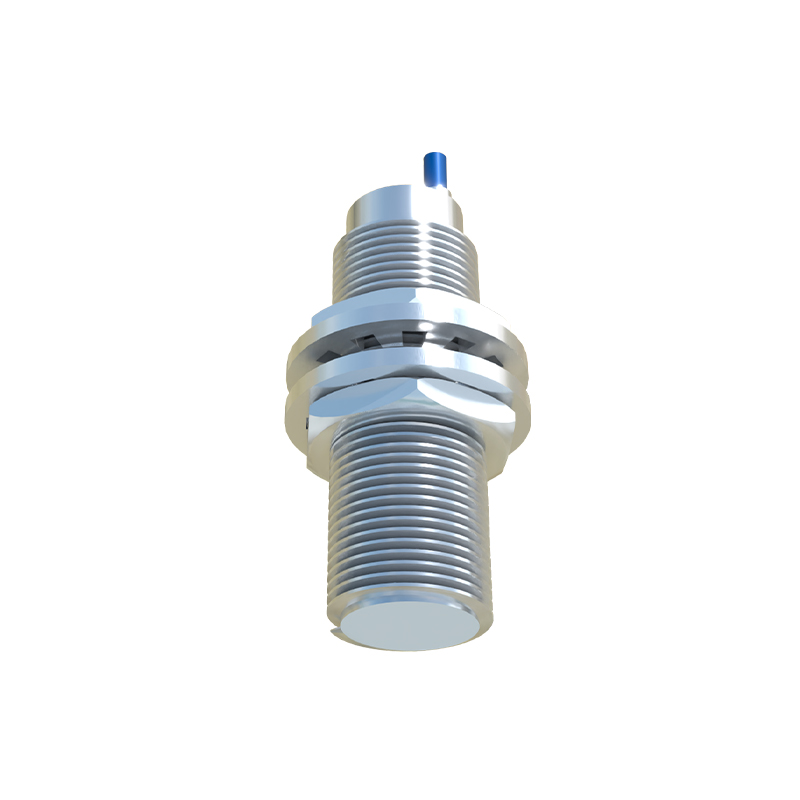
Furthermore, the convergence of sensing with artificial intelligence and edge computing is creating "smart sensors." These units do more than just collect raw data; they process information locally to make immediate decisions. A proximity sensor equipped with basic machine learning algorithms can distinguish between a hand gesture intended for control and incidental movement, greatly reducing false triggers and enhancing user experience. This intelligence is pivotal for developing more autonomous and responsive systems in industrial IoT settings, where a sensor on a conveyor belt can differentiate between product types and trigger specific actions.
The impact of these new proximity sensing technologies is profound across sectors. In manufacturing, they enable finer robotic control and predictive maintenance by monitoring equipment vibration and alignment. In consumer tech, they create seamless, intuitive interfaces, eliminating the need for physical buttons. In healthcare, they support touchless operation of equipment and patient monitoring, improving hygiene and safety. The automotive industry relies on them for both interior cabin monitoring and exterior safety features, paving the way for higher levels of automation.
However, challenges persist. Engineers must continually address issues related to power consumption, interference between multiple sensors, calibration stability over temperature fluctuations, and cost-effectiveness for mass-market adoption. The choice of technology—be it optical ToF, radar, ultrasonic, or enhanced capacitive—depends heavily on the specific requirements of range, resolution, environmental robustness, and target material.
Looking ahead, the trajectory points toward multi-modal sensing systems. Future devices will likely combine several proximity sensing technologies into a single package, fusing data from optical, RF, and acoustic sensors to build a comprehensive and reliable perception of the surroundings. This sensor fusion, managed by intelligent algorithms, will be key to enabling truly adaptive and context-aware machines. As these new proximity sensor technologies mature and become more ubiquitous, they will form an invisible yet essential layer of our interaction with the digital and physical world, making technology more responsive, safe, and integrated into the fabric of daily life.