In the world of modern electronics, there exists a silent, unseen workforce that makes our interactions with technology seamless and intuitive. These are proximity sensors, the unassuming components that detect the presence or absence of nearby objects without any physical contact. From the moment you lift your smartphone to your ear during a call to the automatic activation of a faucet in a public restroom, proximity sensors are at work, bridging the gap between human intent and machine response.
At its core, a proximity sensor is a device that emits an electromagnetic field or a beam of electromagnetic radiation, often infrared light, and looks for changes in the field or return signal. The primary function is to determine whether an object is within a predetermined distance. This simple action forms the basis for countless applications that enhance convenience, safety, and efficiency.
The technology behind these sensors is diverse, with several types dominating the market. Inductive proximity sensors are stalwarts in industrial automation. They generate an oscillating electromagnetic field and detect the eddy current losses caused when a metallic object enters this field. This makes them perfect for harsh factory environments, reliably counting metal parts on a conveyor belt or ensuring a robotic arm is in the correct position, all while being immune to dust, oil, and moisture.
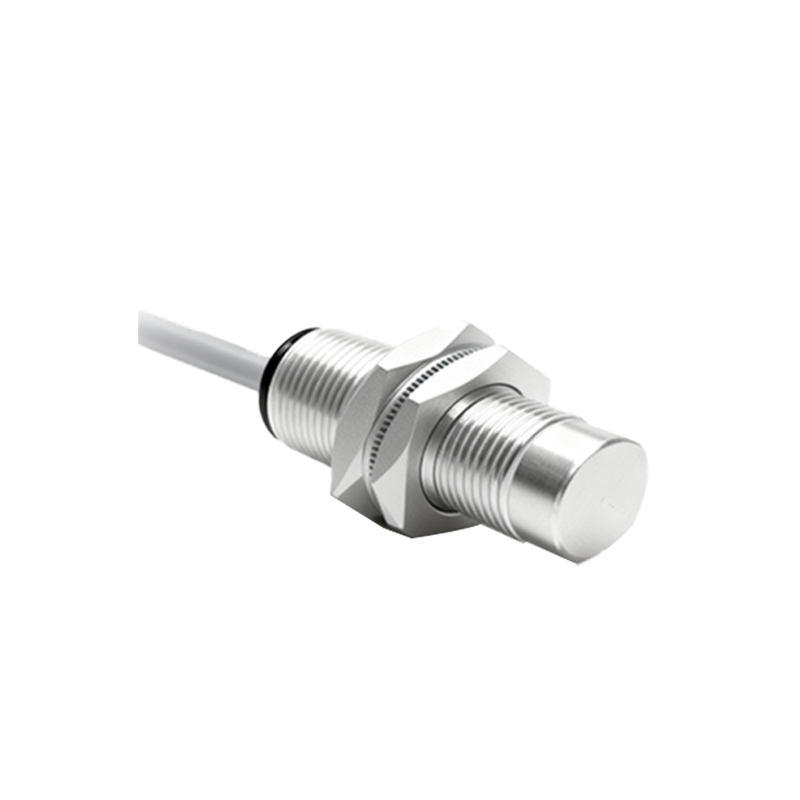
For detecting non-metallic objects, capacitive proximity sensors take the lead. They can sense materials like plastic, wood, and liquids by measuring changes in capacitance. When an object enters the sensor's electrostatic field, it alters the capacitance, triggering detection. This principle is brilliantly applied in touchscreens and touch-sensitive buttons, where a finger's proximity is enough to register a command. They are also crucial in liquid level sensing within tanks.
Perhaps the most familiar type to consumers is the infrared (IR) proximity sensor. Commonly found in smartphones and tablets, these sensors consist of an IR LED that emits light and a photodiode that measures the intensity of the reflected light. When you bring the phone close to your face during a call, the sensor detects the proximity and turns off the display to prevent accidental screen presses and save battery. This same technology enables gesture control in some devices and forms the basis of many automatic hand dryers and paper towel dispensers.
Ultrasonic sensors represent another key category, using sound waves beyond human hearing. They emit high-frequency sound pulses and calculate the time it takes for the echo to return. This allows for precise distance measurement, not just presence detection. You'll find them in automotive parking assist systems, measuring the distance to an obstacle with a reassuring beep, and in robotics for navigation and object avoidance.
The applications of proximity sensing are vast and growing. In the automotive sector, they are integral to advanced driver-assistance systems (ADAS), enabling features like blind-spot monitoring, automatic braking, and hands-free trunk opening. In consumer electronics, they enable features like automatic screen brightness adjustment and "wake-on-approach" for laptops. Industrial safety systems use them as non-contact safety interlocks on machinery guards, ensuring a press stops if a hand comes too close. Even in smart homes, they contribute to energy savings by controlling lights and HVAC systems based on room occupancy.
The advantages of using proximity sensors are compelling. Their non-contact nature means no mechanical wear and tear, leading to exceptional longevity and reliability. They can operate at high speeds, detecting objects in milliseconds, which is vital for fast-paced manufacturing. Furthermore, their ability to function in challenging environments—whether dirty, wet, or involving volatile materials—makes them indispensable where other sensors would fail.
Looking ahead, the evolution of proximity sensing is intertwined with the Internet of Things (IoT) and artificial intelligence. Smarter, smaller, and more energy-efficient sensors are being developed. Future sensors may incorporate multi-sensing capabilities, combining proximity, gesture, and ambient light sensing into a single chip. As technology pushes towards more natural human-machine interfaces, the role of the humble proximity sensor will only become more central, continuing to work invisibly to make our technological world more responsive and intelligent.