In the rapidly evolving landscape of industrial automation, proximity sensors have emerged as indispensable components, particularly within robotic systems. These sophisticated devices, designed to detect the presence or absence of objects without physical contact, are fundamental to achieving the high levels of precision, efficiency, and safety demanded by modern manufacturing and logistics operations. Their application in robotics spans from simple object detection to complex positioning and collision avoidance, forming the sensory backbone of intelligent automation.
The core principle of proximity sensing involves emitting an electromagnetic field or a beam of radiation and analyzing changes in the return signal. In robotics, several types are predominantly utilized, each with distinct advantages. Inductive proximity sensors are ideal for detecting metallic objects. They generate an oscillating electromagnetic field, and when a metal target enters this field, it induces eddy currents, causing a change in oscillation amplitude that triggers detection. These sensors are robust, resistant to environmental contaminants like dust or oil, and are extensively used in robotic arms for part positioning on metallic assembly lines or for confirming the presence of a metallic tool in a gripper.
Capacitive proximity sensors, on the other hand, can detect both metallic and non-metallic materials, including liquids, plastics, and wood. They function by measuring changes in capacitance between the sensor and the target object. This versatility makes them perfect for robotic packaging systems where the robot needs to handle diverse materials or in applications involving level detection of materials within non-metallic containers.
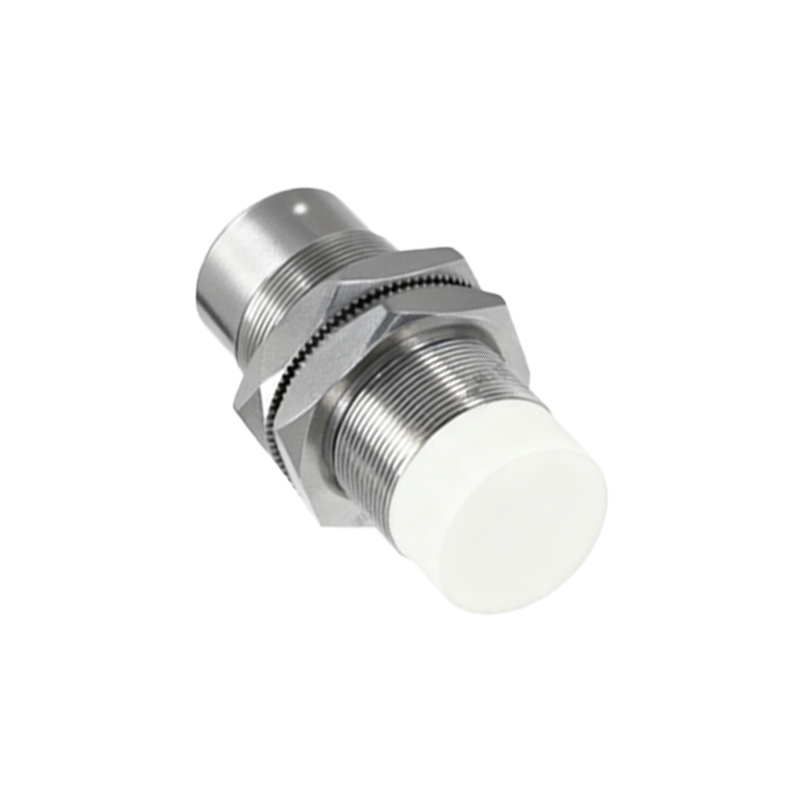
For applications requiring longer detection ranges and high-speed response, photoelectric sensors are the go-to choice. These sensors use a light emitter (often LED or laser) and a receiver. When an object interrupts or reflects the light beam, the sensor detects the change. In robotics, they are crucial for precise positioning on high-speed pick-and-place lines, conveyor tracking, and ensuring accurate robot alignment. Ultrasonic sensors, which use sound waves, excel in harsh environments where optical sensors might fail due to dust, fog, or target color variability. They are commonly deployed in automated guided vehicles (AGVs) and mobile robots for obstacle detection and navigation in dynamic warehouses.
The integration of these sensors directly enhances robotic precision. For instance, in arc welding robots, inductive or capacitive sensors precisely locate the seam of the metal workpiece, allowing the welding torch to follow an exact path. In assembly robots, sensors verify the correct placement of components before a fastener is applied, virtually eliminating assembly errors. This level of accuracy is paramount for industries like automotive and electronics manufacturing, where tolerances are extremely tight.
Beyond precision, safety is a paramount concern. Proximity sensors are critical in creating safe collaborative workspaces where humans and robots interact. Safety-rated laser scanners or capacitive sensors create protective fields around a robot's operational zone. If a human worker inadvertently steps into this zone, the sensor detects the intrusion and signals the robot to slow down or stop immediately, preventing accidents. This functionality is the cornerstone of collaborative robot (cobot) applications, enabling flexible and safe human-robot collaboration.
Furthermore, proximity sensors contribute significantly to predictive maintenance and system diagnostics. By monitoring parameters such as the consistent detection distance to a target or the vibration levels near a robotic joint, sensors can identify wear and tear or misalignment before they lead to catastrophic failure. This data allows for scheduled maintenance, reducing unplanned downtime and increasing overall equipment effectiveness (OEE).
The future of proximity sensing in robotics is intertwined with the advancement of Industry 4.0 and the Industrial Internet of Things (IIoT). Modern sensors are increasingly equipped with IO-Link or other smart communication protocols, enabling them to transmit not just a simple on/off signal but rich diagnostic and process data to higher-level control systems. This intelligence allows for more adaptive robotic systems that can self-optimize based on real-time sensory feedback. For example, a robot equipped with smart sensors could automatically adjust its grip force based on the detected material or compensate for tool wear during a machining process.
In conclusion, proximity sensors are far more than simple switches in robotic systems. They are the essential enablers of perception, granting robots the ability to interact intelligently and safely with their environment. As robotics continues to advance towards greater autonomy and flexibility, the role of advanced, networked proximity sensors will only become more critical, driving further innovations in productivity, quality, and workplace safety across the global industrial sector.