In the realm of industrial automation and control systems, the reliability and precision of sensing technology are paramount. Among the diverse array of sensors available, the 18A proximity switch sensor stands out as a critical component for non-contact detection and position sensing. This article delves into the technical specifications, operational principles, and key application areas of the 18A proximity sensor, providing a detailed overview for engineers and maintenance professionals.
An 18A proximity switch sensor is typically an inductive-type sensor designed to detect the presence or absence of metallic objects without any physical contact. The "18A" designation often refers to a specific model series or form factor, commonly characterized by a threaded cylindrical housing, such as an M18 size (18mm diameter). These sensors operate on the principle of electromagnetic induction. Internally, the sensor contains an oscillator circuit that generates a high-frequency electromagnetic field at its active face. When a metallic target enters this field, eddy currents are induced in the target, causing a change in the oscillation amplitude. This change is detected by the sensor's circuitry, which subsequently triggers a solid-state switching output—either NPN (sinking) or PNP (sourcing)—to signal the object's presence to a programmable logic controller (PLC) or other control device.
The key performance parameters of an 18A proximity sensor include its sensing distance, switching frequency, output type, and environmental ratings. The nominal sensing distance for a standard M18 inductive sensor is typically up to 8mm, though this can vary based on the target material (steel, aluminum, brass) and the specific sensor model. Factors such as temperature tolerance, typically ranging from -25°C to +70°C, and ingress protection ratings like IP67 or IP68, which ensure resistance to dust and temporary immersion, are crucial for operation in harsh industrial environments like machining centers, material handling systems, and automotive assembly lines.
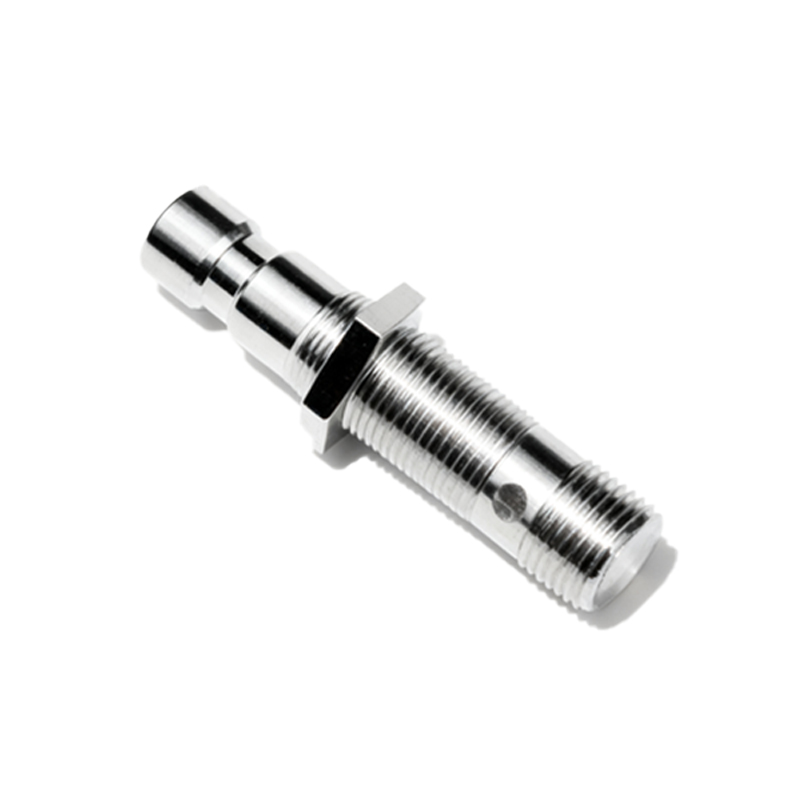
One of the primary advantages of the 18A inductive proximity sensor is its robustness. With no moving mechanical parts subject to wear, it offers exceptional longevity and requires minimal maintenance compared to mechanical limit switches. It is immune to contaminants like oil, coolant, and dust, making it ideal for dirty or wet conditions. Furthermore, its high switching speed, often exceeding 1 kHz, allows for detection in high-speed automation processes.
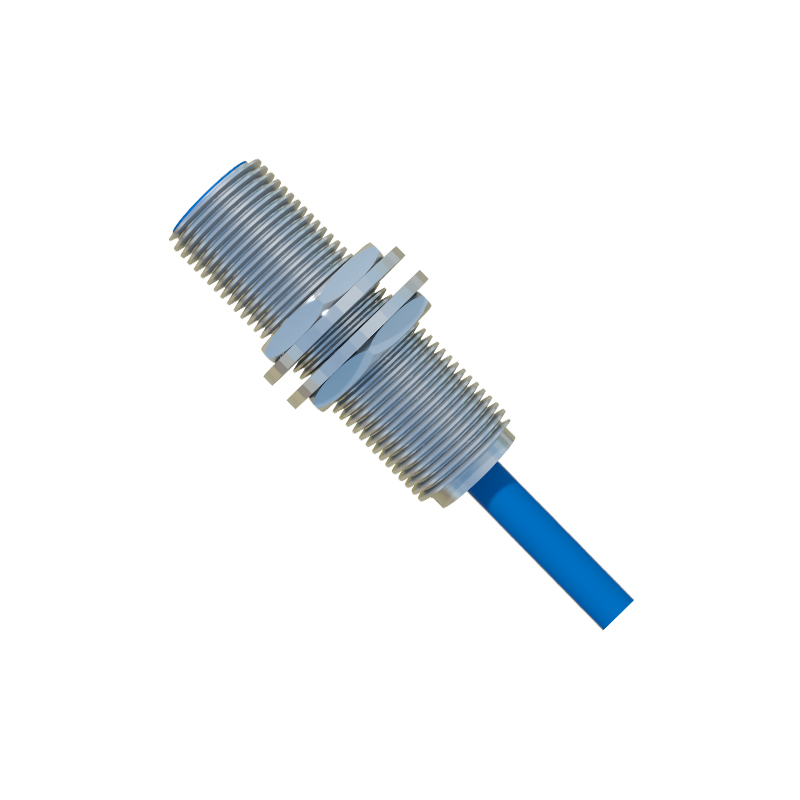
When selecting and installing an 18A proximity sensor, several best practices must be observed. First, correct mounting is essential. Sensors should be installed with adequate clearance from surrounding metal structures to prevent false triggering—a consideration known as the "flush-mountable" or "non-flush-mountable" characteristic. Wiring must conform to the specified output configuration (NPN/PNP) and voltage range (commonly 10-30V DC). For optimal performance, engineers must also consider the target material, size, and approach direction. For instance, the effective sensing distance for stainless steel is often less than that for mild steel.
Common applications for 18A proximity sensors are extensive. They are routinely used for part detection on conveyor belts, end-of-travel positioning in linear actuators, tool presence verification in CNC machines, and counting metallic objects. In packaging machinery, they ensure product positioning, while in robotic cells, they provide critical feedback for arm positioning and safety interlocks.
Troubleshooting typically involves checking power supply integrity, verifying output load compatibility, and inspecting for physical damage or buildup of metallic debris on the sensor face. A simple diagnostic is to use a metallic target to see if the sensor's indicator LED activates.
In conclusion, the 18A proximity switch sensor is a versatile, durable, and highly reliable workhorse in industrial automation. Its non-contact operation ensures long service life and consistent performance in demanding applications. Understanding its operating principles, specifications, and installation nuances is key to designing efficient, fault-resistant control systems. As Industry 4.0 advances, integrating such sensors with networked IO-Link systems for predictive maintenance and data analytics further enhances their value, solidifying their role as a foundational element in smart manufacturing infrastructure.