In the rapidly evolving landscape of industrial automation, the demand for sensors that deliver not only precision but also rapid response is paramount. Among these, proximity sensors stand as critical components, enabling non-contact detection of objects with high reliability. This article delves into the engineering principles behind high-performance proximity sensors, focusing on design strategies that enhance response speed and accuracy to meet the rigorous demands of contemporary manufacturing and robotics.
Proximity sensors operate on various principles, including inductive, capacitive, ultrasonic, and photoelectric technologies. Inductive sensors, for instance, detect metallic objects by generating an electromagnetic field and monitoring disturbances caused by eddy currents. The response time of such sensors is influenced by factors like oscillator frequency, coil design, and signal processing algorithms. To achieve high-speed response, engineers optimize these elements—increasing oscillation frequencies reduces the detection cycle time, while advanced digital signal processors (DSPs) enable faster data interpretation, often yielding response times under 1 millisecond. This is crucial in high-speed assembly lines where even microsecond delays can impact throughput.
Accuracy, on the other hand, hinges on minimizing false triggers and maintaining consistent detection ranges. Environmental factors such as temperature fluctuations, electromagnetic interference (EMI), and material variations can degrade sensor performance. Modern proximity sensors incorporate temperature compensation circuits and shielded designs to mitigate these effects. For example, capacitive sensors used for non-metallic object detection employ adaptive thresholding to adjust sensitivity based on ambient conditions, ensuring reliable operation in diverse settings like packaging or food processing. Additionally, the integration of smart features—such as IO-Link communication—allows for real-time monitoring and calibration, further boosting accuracy by enabling predictive maintenance and dynamic adjustments.
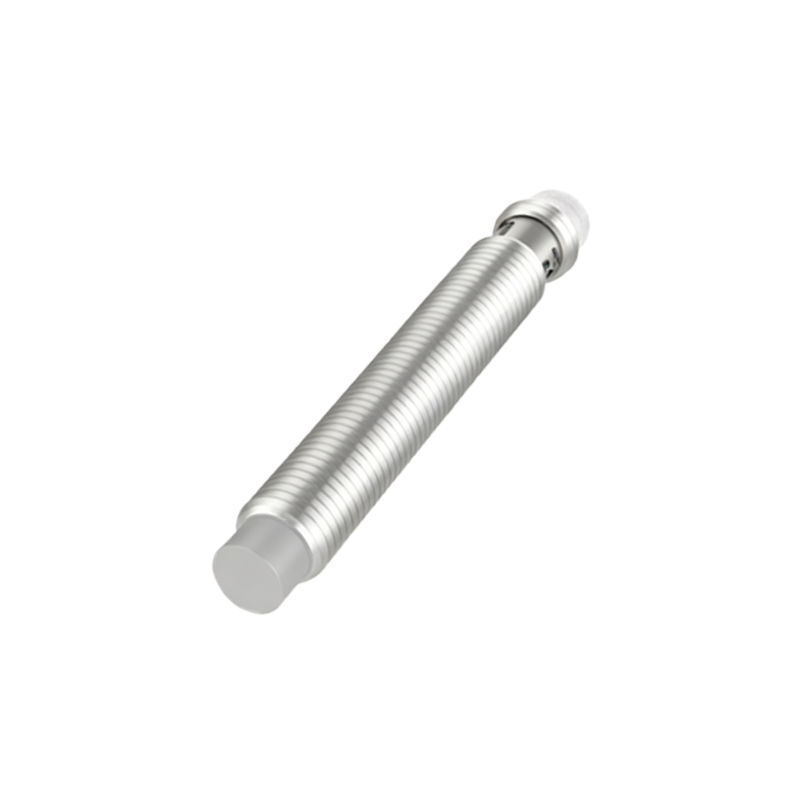
The selection of sensor type plays a pivotal role in application-specific performance. In automotive manufacturing, where robots handle metal components at high speeds, inductive sensors with rugged housings and IP67 ratings are preferred for their durability and fast response. Conversely, in pharmaceutical cleanrooms, capacitive sensors might be chosen for their ability to detect plastic or glass containers without physical contact, reducing contamination risks. Engineers must balance response speed with factors like sensing distance, target material, and environmental robustness. Recent advancements, such as the use of high-frequency RFID-integrated sensors, have expanded capabilities, allowing for both detection and identification in a single operation, thereby streamlining processes in logistics and smart factories.
Power efficiency is another consideration in designing responsive proximity sensors. Low-power designs, often leveraging pulse modulation techniques, extend battery life in wireless or portable applications without compromising speed. By reducing energy consumption during idle states and optimizing wake-up cycles, these sensors support sustainable automation initiatives while maintaining instant activation when objects approach.
In conclusion, the engineering of high-performance proximity sensors is a multidisciplinary endeavor that merges electronics, materials science, and software. As industries push toward Industry 4.0 and the Internet of Things (IoT), the evolution of these sensors will continue to focus on faster response times, greater accuracy, and enhanced connectivity. By understanding the underlying technologies and application requirements, engineers can specify or develop sensors that drive efficiency, reduce downtime, and enable smarter, more responsive automated systems. Whether in precision robotics, conveyor systems, or safety interlocks, the right proximity sensor serves as the eyes of machinery, ensuring seamless and reliable operation in an increasingly automated world.