In the realm of industrial automation, the reliable detection of metallic objects is a fundamental requirement. Among the various sensing technologies available, the inductive proximity sensor stands as a cornerstone, prized for its robustness, non-contact operation, and longevity. This article delves into the specifics of a prevalent configuration: the PNP 24V DC inductive proximity sensor, explaining its operating principle, key characteristics, wiring, and typical applications.
At its core, an inductive proximity sensor generates an electromagnetic field from a coil within its sensing face, powered by an oscillator. When a metallic target (ferrous or non-ferrous, depending on the sensor type) enters this field, eddy currents are induced on the target's surface. This causes a change in the oscillation amplitude or frequency within the sensor. An integrated circuit detects this change and triggers a switching action in the output stage. The "inductive" designation comes from this principle of electromagnetic induction.
The "PNP" and "24V" specifications define the electrical characteristics. PNP refers to the type of transistor output. In a PNP sensor (also often called "sourcing" output), the switching element connects the load to the positive supply voltage (+24V). When the sensor is active (target detected), the output terminal switches to a high state, sourcing current from the +24V supply through the load to the common negative (0V). This is in contrast to an NPN (sinking) sensor, which connects the load to ground when active. The 24V DC is the standard operating voltage for most industrial control systems, including PLCs (Programmable Logic Controllers), making this sensor type directly compatible.
Wiring a 3-wire PNP 24V inductive sensor is straightforward. The three wires are typically color-coded: brown for the positive supply (+24V DC), blue for the common negative (0V DC), and black for the switched output signal. The load (e.g., a PLC input, relay coil, or indicator lamp) is connected between the black output wire and the blue (0V) wire. When a target is present, the sensor internally connects the black wire to the brown wire, completing the circuit and energizing the load. It is crucial to ensure the power supply polarity is correct and to observe the sensor's current and voltage ratings to avoid damage.
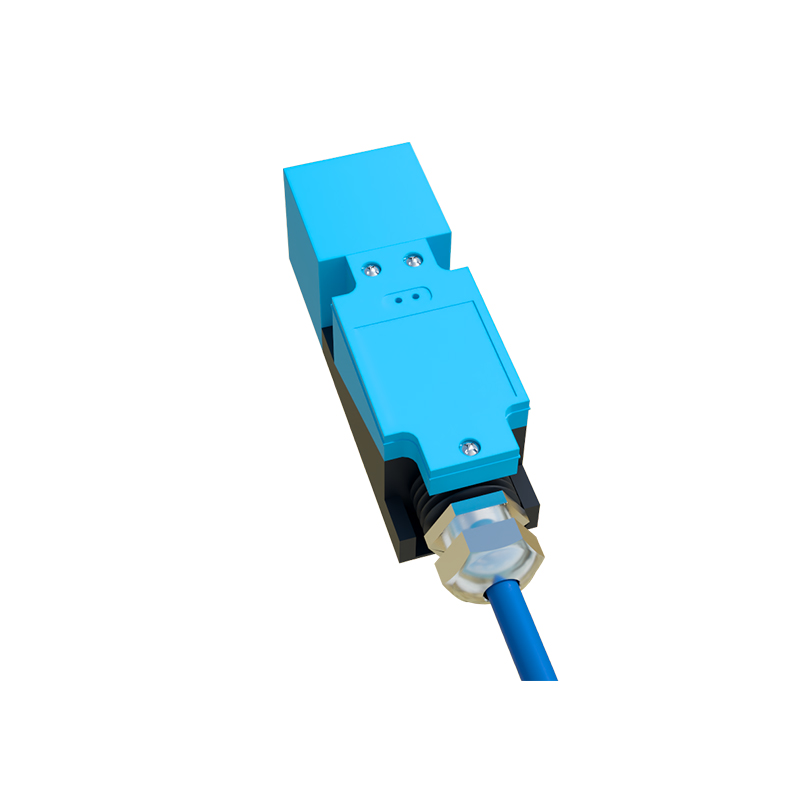
Key performance parameters for these sensors include sensing distance, which is standardized (e.g., 2mm, 4mm, 8mm) and typically rated for mild steel. For other metals like aluminum or copper, a reduction factor must be applied. The housing material, often nickel-plated brass or stainless steel, provides resistance to mechanical impact and industrial chemicals. Many models feature built-in protection against short-circuits, overload, and reverse polarity. The output state is usually indicated by an LED. Furthermore, flush-mountable models allow for side-by-side installation without mutual interference, while non-flush models offer a longer sensing range.
The applications for PNP 24V inductive proximity sensors are vast across manufacturing and processing industries. Common uses include: position detection of machine parts (e.g., cylinder end positions), counting metallic objects on a conveyor, monitoring the presence of tools in a CNC machine, detecting the end of a roll of material, and ensuring parts are correctly seated in a fixture. Their solid-state design, with no moving mechanical parts, makes them exceptionally reliable for high-cycle operations in harsh environments characterized by dust, oil, and coolant sprays.
When selecting a PNP 24V inductive sensor, engineers must consider the target material and required sensing distance, the required housing shape and size (cylindrical, rectangular), the IP (Ingress Protection) rating for the environmental conditions, and the output current capability. Understanding the distinction between PNP and NPN is critical for proper integration with the control system's input card logic. With correct selection and installation, these sensors provide a maintenance-free and highly dependable solution for countless automation tasks, forming an invisible yet vital network for machine control and process monitoring.