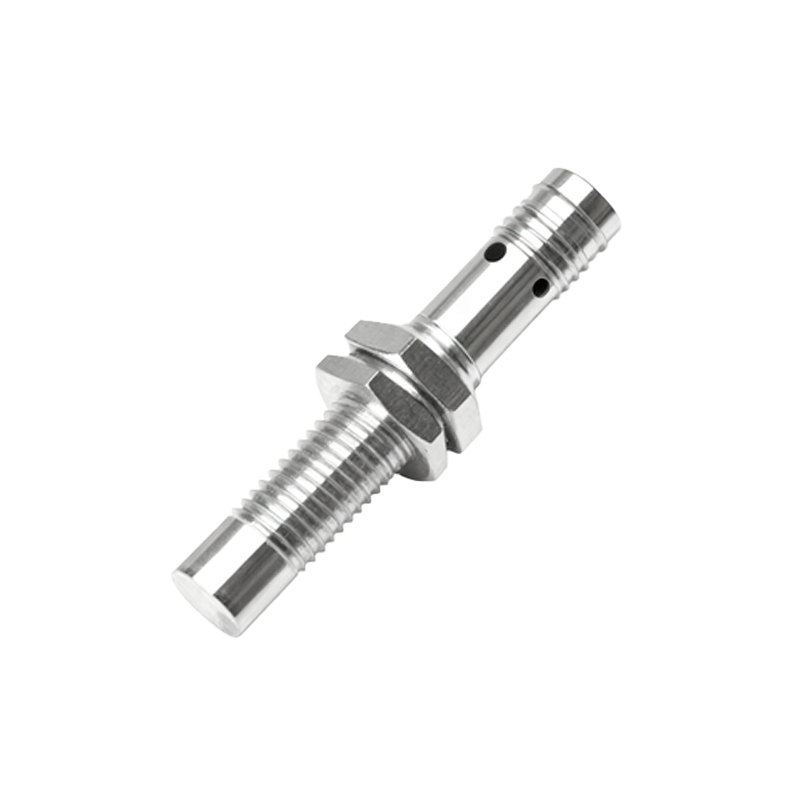
Proximity switch sensor heads are fundamental components in modern industrial automation and control systems. As non-contact sensing devices, they detect the presence or absence of metallic or non-metallic objects without physical contact, ensuring reliability and longevity in demanding environments. This article delves into the operational principles, types, selection criteria, and application best practices for these critical sensors.
At their core, proximity sensors operate based on electromagnetic fields, capacitive effects, or ultrasonic waves. Inductive proximity switches, the most common type for metal detection, generate an oscillating electromagnetic field from a coil in the sensor head. When a metallic object enters this field, eddy currents are induced, causing a change in oscillation amplitude. This change is detected by the sensor's circuitry, triggering a solid-state output switch. Capacitive sensors function similarly but can detect both metallic and non-metallic materials by sensing changes in capacitance caused by the target object altering the electrostatic field. Ultrasonic sensors use sound waves, measuring the time for an echo to return, making them suitable for various materials and challenging conditions like dust or fog.
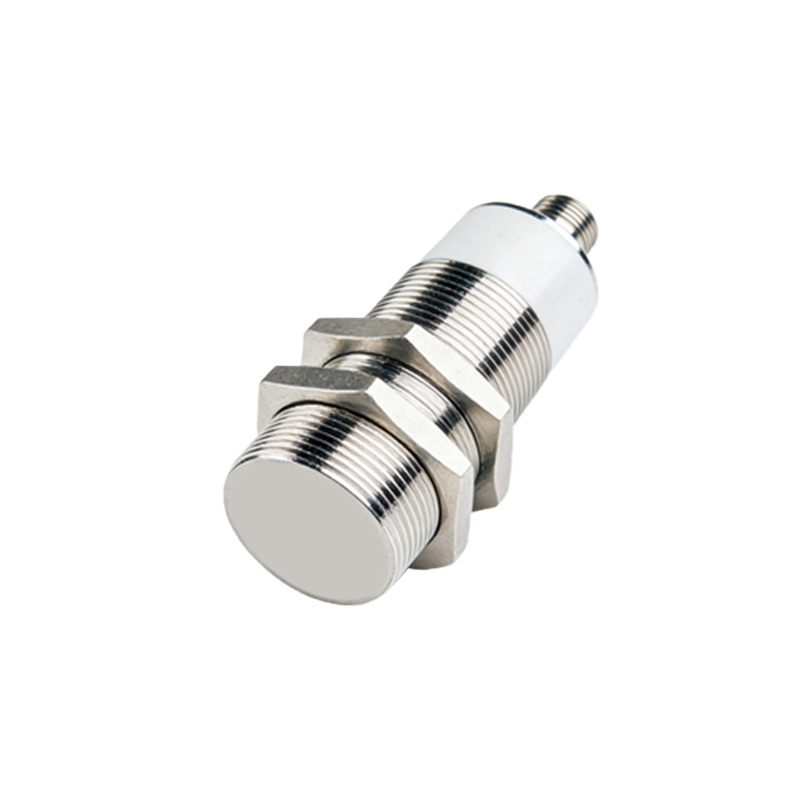
The design of the sensor head is paramount. Key specifications include sensing distance, which is typically rated as a nominal value under ideal conditions (e.g., 5mm, 10mm). Engineers must consider factors like temperature ranges, housing material (often nickel-plated brass or stainless steel for durability), and ingress protection (IP) ratings for resistance to dust and moisture. Output configurations are another critical aspect, with options including NPN (sinking), PNP (sourcing), normally open (NO), or normally closed (NC) contacts, which must be compatible with the programmable logic controller (PLC) or other control systems.
Selecting the right proximity sensor head requires a detailed analysis of the application. For high-speed counting on a conveyor line, a fast-response inductive sensor with a shielded head might be ideal to prevent side-sensing of adjacent metal. In a packaging machine handling plastic bottles, a capacitive sensor would be necessary. For harsh environments with heavy washdowns, such as food processing, a sensor with a high IP rating (e.g., IP67 or IP69K) and corrosion-resistant housing is essential. Installation is equally important; maintaining the proper mounting distance and avoiding sensor head collision with targets prevents premature failure.
Regular maintenance, though minimal, involves checking for physical damage, buildup of debris on the sensing face, and verifying electrical connections. Troubleshooting common issues often starts with diagnostic LEDs, which indicate power status and output activation. A failure to detect might stem from an incorrect sensing distance, an unsuitable target material, or electrical noise interference, which can be mitigated by using shielded cables and proper grounding.
In conclusion, proximity switch sensor heads are versatile and robust tools for automation. A deep understanding of their technology and careful application-specific selection are crucial for designing efficient, reliable, and safe control systems. As Industry 4.0 advances, these sensors continue to evolve with features like IO-Link communication for enhanced diagnostics and parameter setting, further solidifying their role in smart manufacturing.