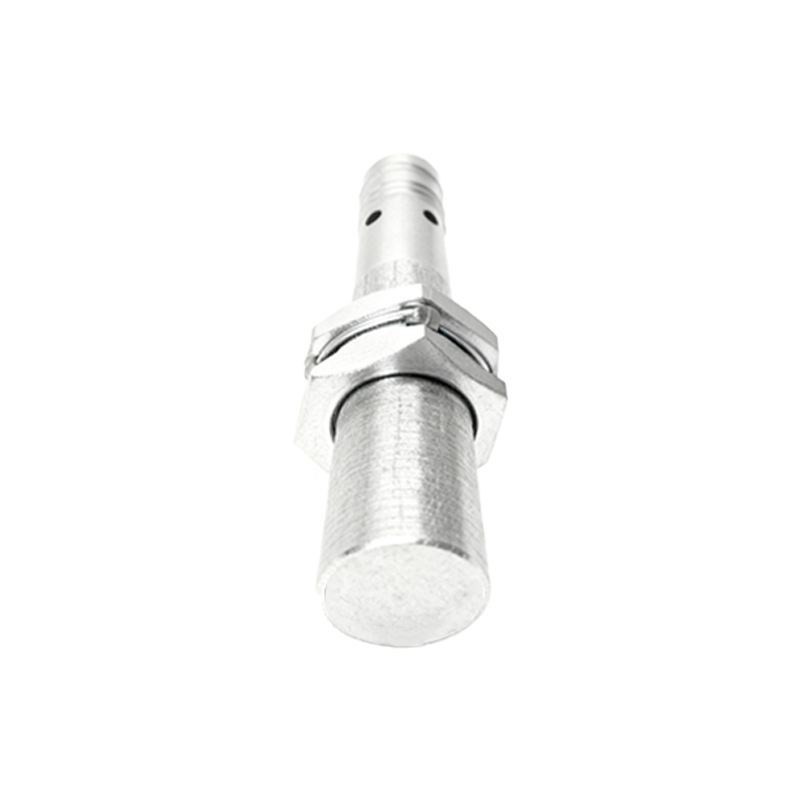
In the realm of industrial automation and human-machine interface (HMI) design, the demand for robust, non-contact sensing solutions continues to grow. Among these, inductive finger proximity sensors represent a sophisticated and reliable technology for detecting the presence of a human finger without physical contact. This article delves into the operating principles, key applications, and critical engineering factors for implementing these sensors effectively.
The fundamental principle behind an inductive finger proximity sensor is electromagnetic induction. The sensor generates a high-frequency alternating electromagnetic field from its active face via an internal coil. When a conductive object—such as a human finger—enters this field, eddy currents are induced on the object's surface. These eddy currents create a secondary magnetic field that opposes the original field, causing a measurable change in the oscillation amplitude or frequency within the sensor's LC resonant circuit. The sensor's integrated electronics detect this change and trigger a switching output. While metals are highly conductive and easily detected, the human body, including fingers, possesses sufficient conductivity and dielectric properties due to its water and ionic content to be sensed by sensitive, specially tuned inductive sensors.
A key advantage of this technology is its non-contact nature. This eliminates mechanical wear, ensuring long-term reliability and reducing maintenance needs. It also allows for the creation of sealed, hygienic interfaces, as the sensor can be mounted behind non-conductive panels like glass, plastic, or ceramic. This makes it ideal for environments requiring high cleanliness or resistance to harsh conditions like moisture, dust, or chemicals. Furthermore, these sensors are immune to ambient light interference, a common issue with optical alternatives.
Typical applications for inductive finger proximity sensors are diverse. In industrial control panels, they serve as durable, glove-compatible push-button replacements, even operable through protective glass in safety zones. In medical and laboratory equipment, they enable the creation of smooth, easy-to-clean surfaces without physical buttons. They are also found in elevator controls, automotive infotainment systems (as touchless sliders or switches), and home appliances, providing a modern, sleek user interface. Advanced implementations use sensor arrays to create touchless gesture control for scrolling or selection tasks.
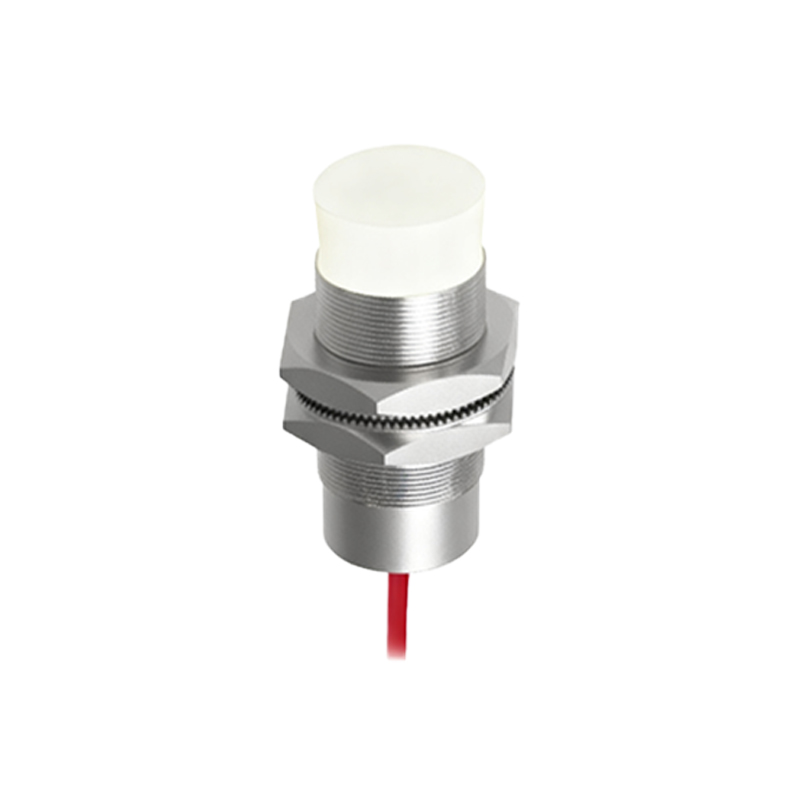
However, successful integration requires careful engineering consideration. Sensor tuning is paramount. The sensor must be optimized for the specific dielectric properties of a finger, which differs significantly from metal detection. This often involves adjusting the oscillation frequency and sensitivity threshold. The design of the front cover material is equally critical; its thickness and dielectric constant directly affect sensing range and sensitivity. Materials like glass or plastic with low loss tangents are preferred. Engineers must also account for the installation environment, ensuring the sensor is shielded from other metal objects in its background or side that could cause false triggering. Proper shielding and the use of differential sensing techniques can mitigate this.
The sensing range for fingers is typically limited, often between 5mm to 20mm, which is sufficient for the intended purpose but must be clearly specified in the design. Finally, compliance with relevant standards for safety and electromagnetic compatibility (EMC), such as IEC 60947-5-2, is essential for market acceptance.
In conclusion, inductive finger proximity sensors offer a unique blend of durability, environmental resistance, and intuitive user interaction. By understanding their underlying physics and meticulously addressing application-specific design parameters, engineers can leverage this technology to build next-generation interfaces that are both functional and resilient, paving the way for more innovative and reliable human-machine interactions across countless industries.