In the realm of industrial automation, proximity sensors are indispensable components, acting as the silent sentinels that detect the presence or absence of objects without physical contact. Their ability to provide reliable, non-contact detection is fundamental to countless automated processes, enhancing efficiency, safety, and precision. This article explores the primary types of automation proximity sensors, their operating principles, and typical applications.
The most common categorization of proximity sensors is based on their underlying sensing technology. The first major type is the Inductive Proximity Sensor. These sensors generate an electromagnetic field. When a metallic object enters this field, it induces eddy currents within the target, causing a change in the sensor's oscillation amplitude. This change is detected, triggering an output signal. Inductive sensors are robust, resistant to environmental contaminants like dust and oil, and are exclusively used for detecting ferrous and non-ferrous metals. Typical applications include part presence verification on conveyor lines, metal detection in machinery, and position sensing of machine tool components.
The second prominent category is the Capacitive Proximity Sensor. These sensors function by generating an electrostatic field. Any object, metallic or non-metallic (such as plastic, wood, glass, or liquids), that enters this field alters its capacitance. The sensor detects this change and switches its output state. Capacitive sensors are versatile and can detect a wide range of materials, even through non-metallic barriers. They are commonly employed in level detection for liquids and granular materials, presence detection of plastic or glass bottles on packaging lines, and touch-sensitive control panels.
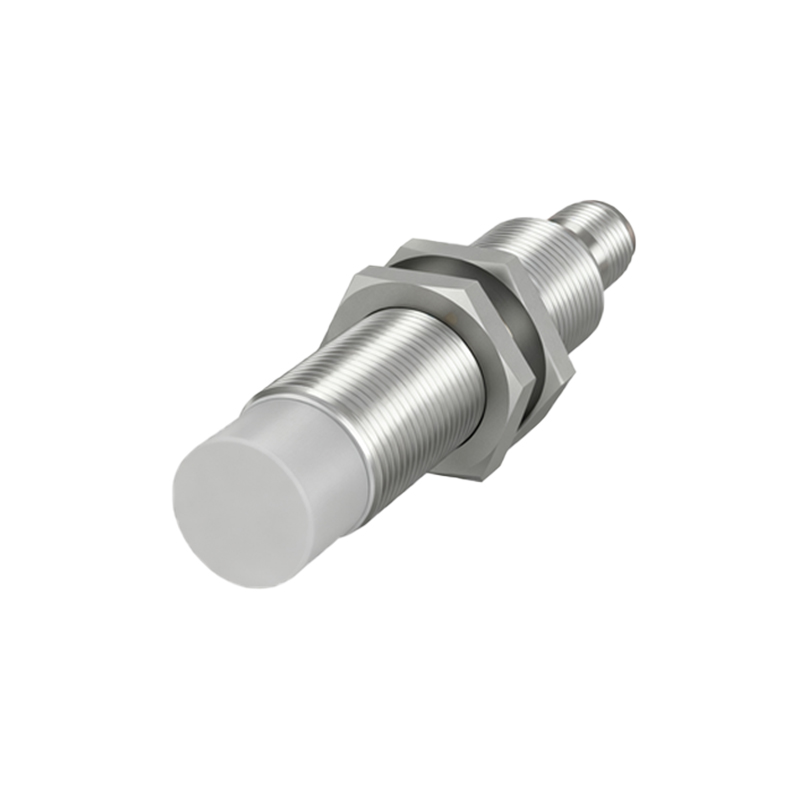
Ultrasonic Proximity Sensors represent another critical type. They operate on the principle of echolocation. The sensor emits high-frequency sound waves and measures the time taken for the echo to return after bouncing off a target object. This time-of-flight measurement is used to calculate distance, allowing these sensors to perform both presence detection and precise distance measurement. They are effective for detecting objects of virtually any material, shape, or color, and are less affected by dust, smoke, or light. Applications include palletizing, loop control in web processing, and liquid level sensing in harsh environments.
Photoelectric Sensors, while sometimes categorized separately, are a vital form of proximity sensing in automation. They use a light emitter (usually LED) and a receiver. The presence of an object is detected by either the interruption (through-beam) or reflection (retro-reflective or diffuse) of the light beam. Diffuse reflective photoelectric sensors, where the sensor detects light reflected directly from the target, function as true proximity sensors. They are excellent for detecting small objects, offer long sensing ranges, and can detect various materials, though their performance can be influenced by color, transparency, and surface finish. They are ubiquitous in packaging, material handling, and assembly automation.
A more specialized type is the Magnetic Proximity Sensor (often Reed Switch or Hall Effect based). These sensors detect the presence of a magnetic field, typically from a permanent magnet attached to a moving part. They are simple, cost-effective, and can operate in demanding conditions. Common uses include detecting the position of cylinders in pneumatic systems (using cylinder-mounted magnets) and as limit switches in safety doors or movable guards.
Selecting the appropriate proximity sensor requires careful consideration of several factors: the target material, required sensing distance, environmental conditions (temperature, contaminants), electrical output requirements (PNP/NPN, analog, IO-Link), and physical size constraints. For instance, an inductive sensor is ideal for a high-speed metal part count in an oily environment, while a capacitive sensor is necessary for monitoring the fill level of a resin hopper.
In conclusion, the diverse family of automation proximity sensors—inductive, capacitive, ultrasonic, photoelectric, and magnetic—provides engineers with a tailored solution for nearly any non-contact detection challenge. Their continuous evolution, with trends toward miniaturization, increased intelligence via integrated diagnostics, and connectivity through Industrial IoT protocols, ensures they will remain a cornerstone of smart, responsive, and efficient automated systems. Understanding their distinct characteristics is the first step in designing robust and reliable automation solutions that drive modern manufacturing forward.