Square proximity sensors are essential components in industrial automation, offering reliable non-contact detection of metallic objects. Understanding their key parameters is crucial for optimal system integration and performance. This guide details the critical specifications engineers must evaluate when selecting and applying these sensors.
Sensing Distance: This is the nominal operating distance at which a standard target (typically a 1mm thick square of mild steel) can be reliably detected. For square inductive sensors, common ranges are 2mm, 4mm, 5mm, 8mm, 10mm, 15mm, and 20mm. It is vital to note that the actual sensing distance can vary based on the target material's properties, such as its conductivity and permeability. A derating factor must be applied for non-ferrous metals like aluminum or copper. The sensor should be installed with a margin (e.g., 10-20% less than nominal) to account for temperature fluctuations, voltage tolerances, and part tolerances.
Output Configuration: The electrical output defines how the sensor interfaces with the control system. Key types include:
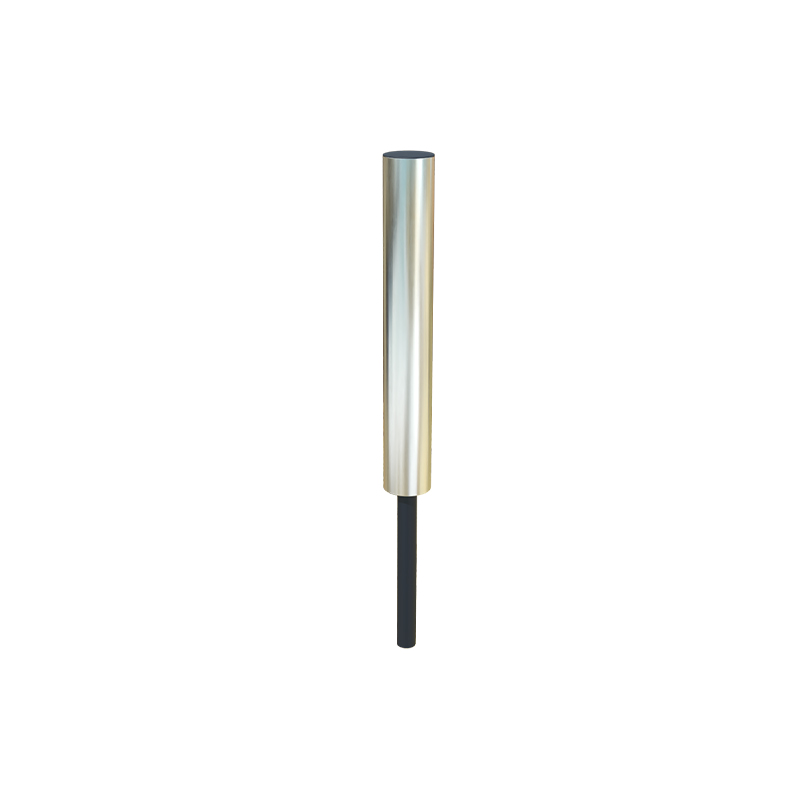
PNP (Sourcing): The output switches the positive voltage line to the load. Predominant in Europe and Asia.
NPN (Sinking): The output switches the negative or 0V line to the load. Common in North America.
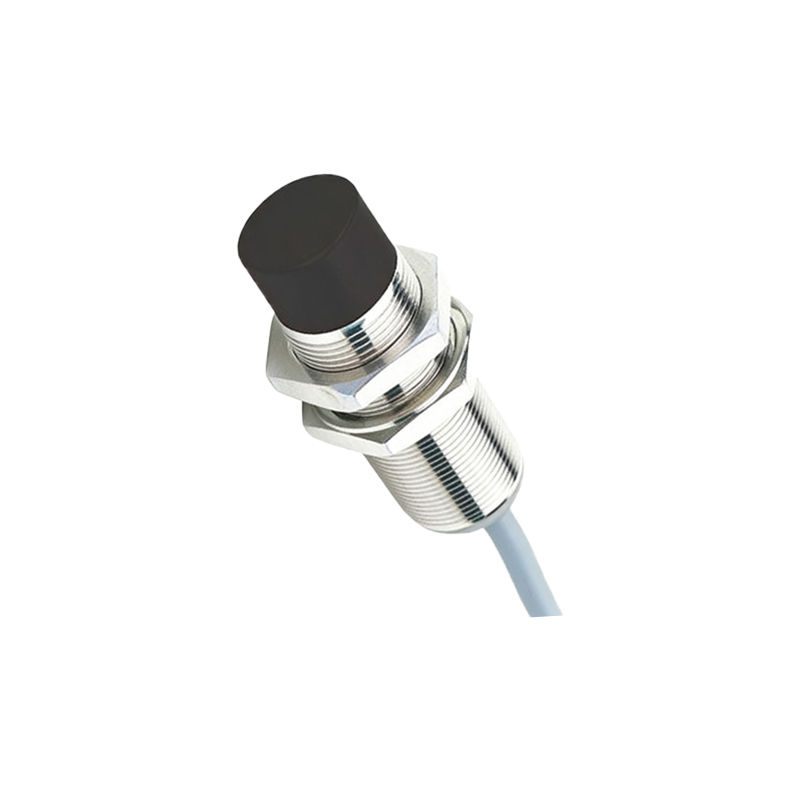
NO (Normally Open) / NC (Normally Closed): Refers to the switching state when no target is present. NO contacts close upon detection; NC contacts open upon detection. NC configurations are often used for safety-critical circuits.
Analog Output (e.g., 0-10V, 4-20mA): Provides a continuous signal proportional to the distance to the target, used for positioning or monitoring applications.
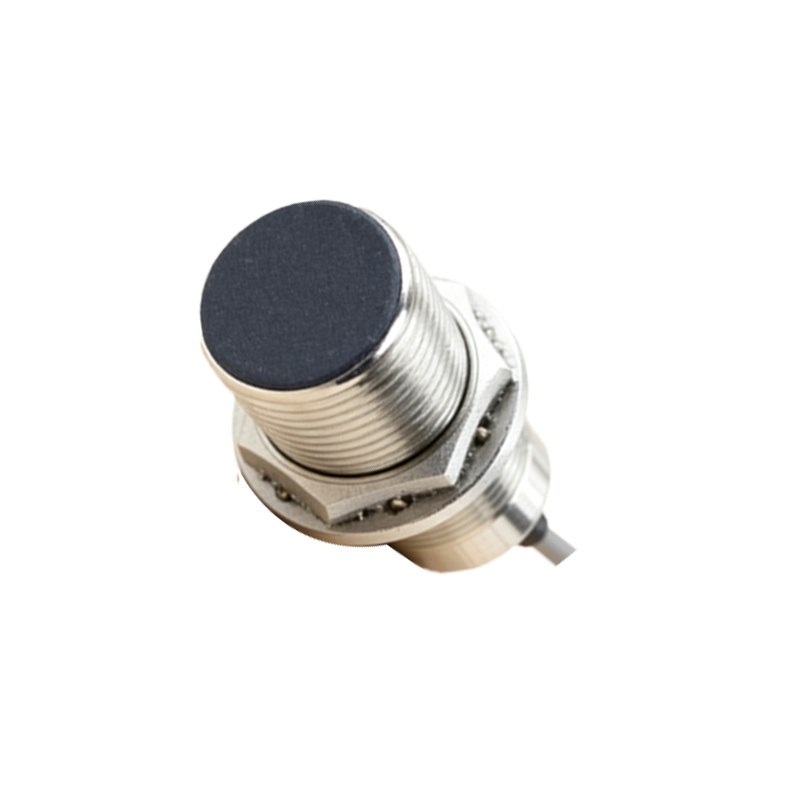
Electrical Specifications:
Supply Voltage: The operating voltage range, commonly 10-30V DC for DC models. Some models offer wide-range operation (e.g., 10-55V DC).
Current Consumption: The quiescent current drawn by the sensor itself, typically below 15mA.
Output Current: The maximum continuous current the switching output can handle, often 200mA. This must not be exceeded to prevent damage.
Voltage Drop: The voltage loss across the sensor's output transistor when switched on (saturation voltage), typically below 2V. This is critical in low-voltage systems.
Switching Frequency: The maximum number of on/off cycles per second (Hz). High-speed applications (e.g., counting small parts) require frequencies of 500Hz to 5kHz.
Construction and Environmental Ratings:
Housing Material: Typically made of nickel-plated brass or stainless steel (V2A/AISI 304, V4A/AISI 316) for corrosion resistance. The sensing face is often made of PBT or similar plastic.
Protection Class (IP Rating): IP67 is standard, indicating protection against dust ingress and temporary immersion in water (up to 1m for 30 minutes). IP69K ratings are for high-pressure/high-temperature washdown environments.
Temperature Range: Operating and storage temperature ranges, commonly -25°C to +70°C. Extended temperature models are available.
Connection Type: Pre-wired cable (2m standard) or quick-disconnect (M8, M12 connectors) for easy maintenance.
Functional Characteristics:
Hysteresis: The difference between the switch-on and switch-off points, expressed as a percentage of the sensing distance. Hysteresis (typically 3-15%) prevents output chatter when a target is at the detection boundary due to vibration.
Repeatability: The precision with which the switch point is reproduced under constant conditions, often as fine as 0.01mm.
Short-Circuit Protection: Integrated protection against accidental output-to-supply shorts.
Reverse Polarity Protection: Protection against damage if supply wires are connected incorrectly.
Indicator LED: A visual status LED (usually on the rear or side) for diagnostics.
Application Considerations:
1. Target Material and Size: The sensor must be selected for the specific target. Inductive sensors detect metals; capacitive versions are needed for non-metallics. The target should be at least equal to the sensor's face size for rated sensing distance.
2. Flush vs. Non-Flush Mounting: Flush-mountable square sensors can be installed embedded in metal without affecting performance. Non-flush sensors offer longer ranges but require a