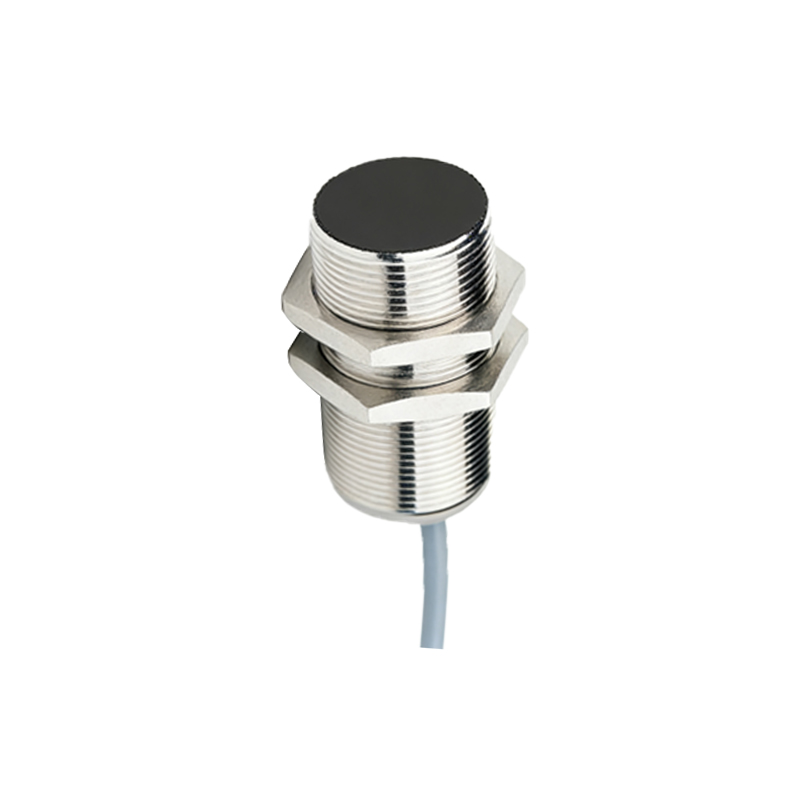
In the realm of industrial automation and control, proximity sensors are indispensable components for non-contact detection. Among the various technologies available, the flat capacitive proximity sensor stands out for its unique design and versatile capabilities. This article delves into the operational principles, key advantages, typical applications, and critical selection criteria for these sensors, providing a comprehensive guide for engineers and system integrators.
At its core, a flat capacitive proximity sensor operates on the principle of capacitance change. The sensor face, which is typically a flat, rectangular, or circular plate, forms one electrode of a capacitor. The target object acts as the other electrode, with the air gap serving as the dielectric. An internal oscillator generates an electrostatic field emanating from the sensing face. When a target enters this field, it alters the dielectric constant and thus the capacitance of the system. The sensor's circuitry detects this change, processes the signal, and triggers a switching output—typically a solid-state PNP, NPN, or analog signal. Unlike inductive sensors that only detect metals, capacitive sensors can detect a wide range of materials, including liquids, powders, plastics, wood, and glass, provided the material has a dielectric constant different from air.
The flat form factor is a defining characteristic that offers distinct benefits. Its low-profile design allows for installation in spaces with severe height restrictions where standard cylindrical sensors cannot fit. The large, flat sensing surface provides a wide and uniform detection field, which is excellent for level detection of bulk materials or for ensuring complete coverage in presence detection applications. Many models feature sensing ranges that are adjustable via a potentiometer, allowing fine-tuning to ignore background materials like container walls—a process known as compensation. This is crucial for reliable level sensing in tanks or hoppers.
The applications for flat capacitive proximity sensors are extensive across numerous industries. In packaging, they detect the presence of cardboard, plastic films, or labels on production lines. In food and beverage processing, they monitor levels of liquids, granules, or powders in stainless steel or plastic containers, ensuring process continuity. The wood and paper industries utilize them to detect sheet materials and monitor roll diameters. In automotive assembly, they verify the presence of non-metallic components such as glass panels, plastic trim, or rubber seals. Their ability to function through non-metallic walls makes them ideal for sealed, hygienic, or pressurized systems where direct contact with the medium is undesirable.
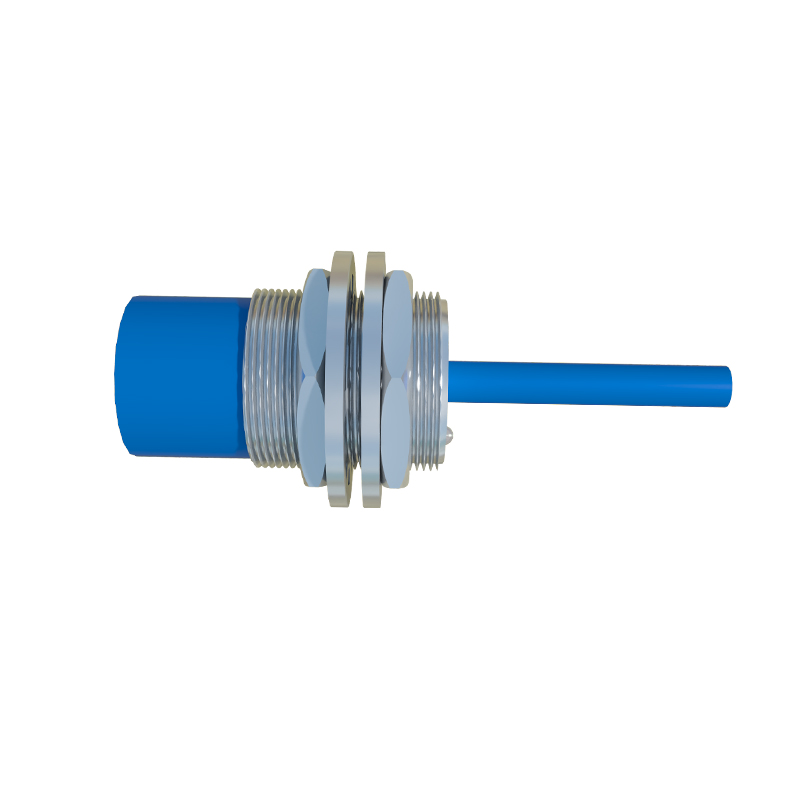
Selecting the right flat capacitive sensor requires careful consideration of several parameters. First, define the target material and its dielectric constant, as this directly influences the nominal sensing distance. Manufacturers provide reduction factors for different materials; for instance, water has a high factor (close to 1), while plastics like PVC have a much lower factor, significantly reducing the effective range. The required sensing distance, or standoff, must be determined, keeping in mind that the usable range is often less than the rated range for non-metallic targets. The housing material is another critical choice; common options include corrosion-resistant plastics like PBT or PVDF for harsh chemical environments, and stainless steel for food-grade or washdown applications (IP67, IP69K ratings). Output type must match the control system: discrete DC outputs (3-wire) are standard, while analog outputs (4-20mA, 0-10V) provide continuous measurement data for level control. Finally, consider the electrical connection—pre-wired cables or quick-disconnect connectors—and the mounting method, as many flat sensors feature integrated mounting holes or slots for easy installation.
Installation and environmental factors profoundly impact performance. Ensure the sensor is mounted securely and flush with the surrounding surface to prevent mechanical damage and false triggers. The sensor face must be kept clean from buildup of dust, moisture, or the target material itself, as this can cause drift or permanent activation. For level control, proper compensation at the time of installation is vital to nullify the effect of the container wall. Electrical noise from variable frequency drives (VFDs) or welding equipment can interfere with sensor operation; using shielded cables and proper grounding practices is essential for stability in electrically noisy environments.
In conclusion, the flat capacitive proximity sensor is a highly adaptable solution for non-contact detection challenges involving diverse materials and constrained spaces. Its operational principle based on dielectric constant changes grants it a broad detection spectrum unmatched by inductive counterparts. By thoroughly understanding the target application, environmental conditions, and sensor specifications, engineers can leverage this technology to enhance system reliability, automate processes, and solve complex detection tasks efficiently. As industrial processes become more sophisticated, the role of these robust and versatile sensors is set to expand further.