Photoelectric proximity sensors are indispensable components in modern industrial automation, offering non-contact detection of objects with high precision and reliability. Their operation is based on the transmission and reception of light beams, typically infrared, visible red, or laser light. Understanding their correct application is crucial for optimizing system performance, ensuring safety, and minimizing downtime. This guide provides a comprehensive overview of their usage, from selection to installation and troubleshooting.
The fundamental principle involves an emitter that projects a light beam and a receiver that detects changes in this beam. There are three primary sensing modes: through-beam, retro-reflective, and diffuse (proximity). Through-beam sensors, with separate emitter and receiver units, offer the longest sensing ranges and highest reliability, as they detect an object breaking the beam. They are ideal for precise detection in high-speed or demanding environments, such as conveyor belt counting or safety light curtains. Retro-reflective models house both emitter and receiver in a single housing, relying on a reflector to bounce the beam back. An object is detected when it interrupts this reflected beam. This mode provides a good balance of range and ease of wiring, suitable for medium-range applications like pallet detection or door control. Diffuse or proximity sensors also have a single housing, but they detect light reflected directly off the target object itself. Their sensing range is shortest and depends on the object's color, texture, and reflectivity, making them perfect for close-range detection, such as presence sensing of parts on a machine tool.
Selecting the right sensor begins with defining the application requirements. Key parameters include sensing distance, required response time, object characteristics (size, material, color), and environmental conditions. For sensing distance, always consider a safety margin, typically 20-30%, beyond the nominal operating distance listed in the datasheet. The response time must be faster than the speed of the object passing the sensing point. For detecting small or fast-moving objects, a sensor with a focused beam (like a laser sensor) or a high-response-frequency model is necessary. Environmental factors are critical. Dust, steam, oil mist, or ambient light can interfere with optical sensors. In such conditions, choosing sensors with modulated LED light (which ignores constant ambient light) and adequate Ingress Protection (IP) ratings (e.g., IP67 for dust and temporary immersion) is essential. For highly reflective backgrounds in diffuse mode applications, background suppression sensors or fixed-field sensors are available; they use triangulation principles to detect objects only within a defined zone, ignoring more distant surfaces.
Installation and alignment are critical steps. Ensure the sensor is securely mounted to prevent vibration-induced misalignment. For through-beam and retro-reflective types, precise alignment of the emitter, receiver, and reflector is paramount. Use the sensor's alignment indicator (often an LED) or follow the manufacturer's procedure. Many modern sensors feature teach-in functions or potentiometers for easy distance setting. For diffuse sensors, be mindful of the target's properties. A glossy white object will be detected at a much greater distance than a matte black one. Always test with the actual target material under real operating conditions. Electrical wiring must conform to the sensor's specifications (typically PNP or NPN output, sourcing or sinking) and match the PLC or controller input. Ensure correct polarity and use shielded cables in electrically noisy environments, grounding the shield at one end only.
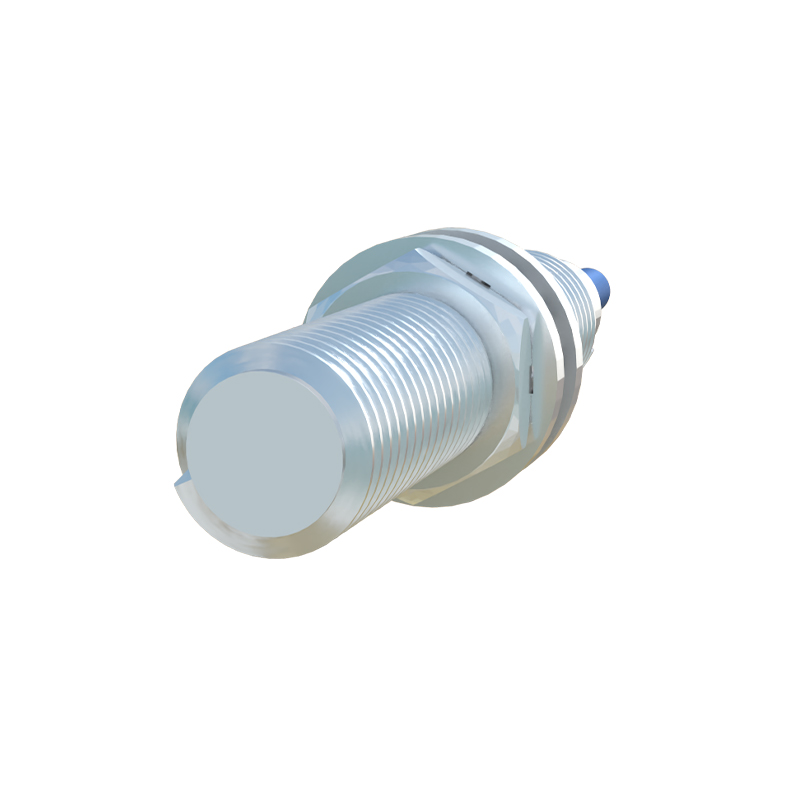
Regular maintenance involves keeping the lens clean from dirt, dust, or condensation, which can attenuate the light signal. A routine inspection schedule should check for physical damage, secure connections, and stable output signals. Common issues include failure to detect, intermittent operation, or false triggering. Troubleshooting should follow a logical sequence: verify power supply, inspect and clean the lens, check alignment, confirm the target is within the specified sensing range and meets reflectivity assumptions, and test for environmental interference. Using an oscilloscope to monitor the received light signal can be invaluable for diagnosing issues related to signal strength or noise.
Advanced features are expanding their utility. Analog output sensors provide distance-proportional signals for precise positioning. Fiber optic versions allow sensing in extreme temperatures, tight spaces, or highly corrosive areas by separating the amplifier from the sensing head. Sensors with IO-Link communication provide detailed diagnostic data, parameterization from the control system, and condition monitoring, enabling predictive maintenance strategies.
In conclusion, the effective use of photoelectric proximity sensors hinges on a methodical approach: correct selection based on a thorough analysis of the task, careful installation and alignment, and proactive maintenance. By mastering these aspects, engineers can leverage these versatile sensors to build robust, efficient, and intelligent automated systems that form the backbone of modern manufacturing and logistics.