In the rapidly evolving landscape of new energy technologies—spanning electric vehicles (EVs), wind turbines, solar power installations, and advanced energy storage systems—the role of precision sensing is paramount. Among the most critical sensing devices employed are proximity sensors. These non-contact sensors detect the presence or absence of an object within a defined field without any physical contact, providing essential data for control, safety, and efficiency. Understanding the core components of a proximity sensor is key to appreciating its function and reliability in demanding new energy environments.
At its heart, a typical electronic proximity sensor consists of several fundamental components. The sensing element or oscillator is the core. This component generates an electromagnetic field (in inductive or capacitive sensors) or an optical beam (in photoelectric sensors). In inductive sensors, commonly used to detect metallic objects in EV motor assemblies or turbine gearboxes, a coil forms part of an LC oscillator circuit. When a metallic target enters the field, it induces eddy currents, causing a change in the oscillator's amplitude. This change is the primary detection signal.
The demodulation and signal conditioning circuit is the next critical stage. The raw signal from the oscillator is often weak or noisy. This circuit rectifies and filters the signal, converting the change in oscillation into a clean, stable DC voltage shift. It ensures that only the relevant detection event is processed, filtering out environmental interference common in industrial settings, such as electromagnetic noise from high-power inverters in charging stations.
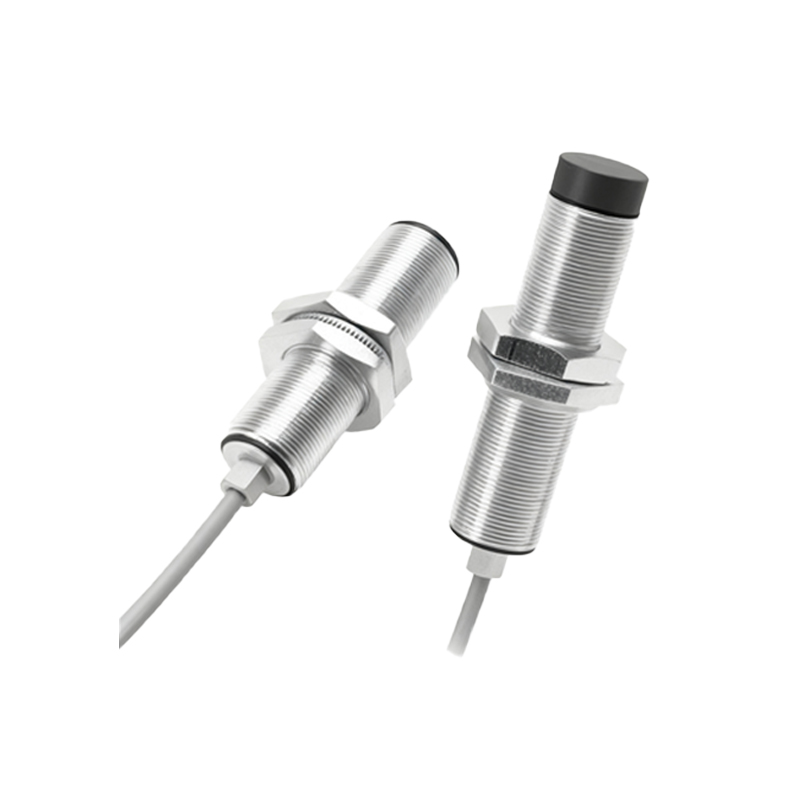
Following signal conditioning, the output stage or switching circuit activates. This component translates the conditioned signal into a usable output. Common outputs include solid-state switches like NPN/PNP transistors for DC sensors or triacs for AC sensors, providing a digital ON/OFF signal. In more advanced analog or IO-Link sensors, this stage may provide a continuous current or voltage output proportional to the distance to the target, useful for precise positioning of components in battery module assembly robots.
The housing and sensing face constitute the physical structure. The housing, typically made from robust materials like nickel-plated brass, stainless steel, or PBT plastic, protects the internal electronics from harsh conditions—including moisture, dust, chemicals, and extreme temperatures encountered in wind farms or outdoor solar trackers. The sensing face is a specially designed window that allows the field or beam to emit while protecting the core element. In inductive sensors, it is often made of a ferrite core and a protective epoxy coating.
Furthermore, modern proximity sensors for new energy applications often integrate additional auxiliary components. These include LED status indicators for visual diagnostics, reverse polarity protection circuits to prevent damage during installation, and short-circuit/overload protection. In networked industrial environments, sensors may feature embedded microcontrollers and communication chips to support Industry 4.0 protocols like IO-Link, enabling parameter setting, condition monitoring, and predictive maintenance data flow.
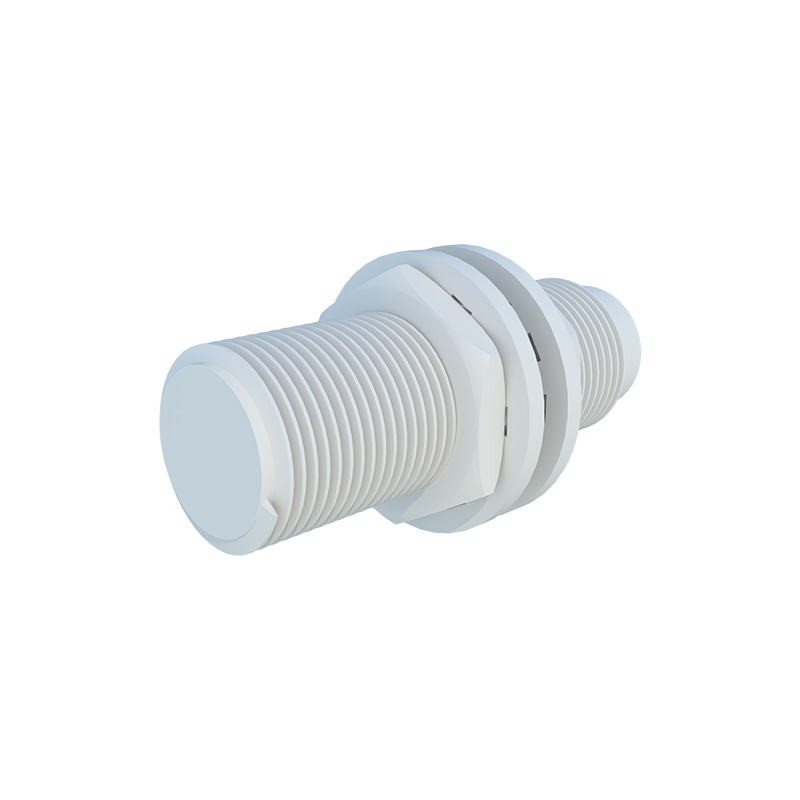
The selection and integration of these components are meticulously engineered to meet specific new energy challenges. For instance, sensors in EV battery management systems (BMS) require high precision and stability to monitor connector engagement or coolant valve positions, often utilizing capacitive or ultrasonic principles for non-metallic targets. In wind turbine pitch control systems, sensors must withstand constant vibration, wide temperature swings, and exposure to the elements, necessitating ruggedized housings and high-grade electronic components.
In conclusion, the proximity sensor is a sophisticated assembly of interacting components—the oscillator, signal conditioner, output stage, and rugged housing—each playing a vital role. Their collective operation enables the reliable, non-contact detection that is indispensable for the automation, safety, and efficiency of new energy systems. As this sector advances towards greater autonomy and connectivity, the underlying components of sensors will continue to evolve, integrating more intelligence and resilience to power the sustainable energy infrastructure of the future.