In the realm of industrial automation, the M18 inductive proximity sensor stands as a cornerstone component, renowned for its reliability, robustness, and versatility. Characterized by its 18mm cylindrical threaded barrel housing, this sensor type is a ubiquitous presence on factory floors, performing critical non-contact detection of metallic objects. This guide delves into the technical specifications, key model variations, selection criteria, and application best practices for M18 inductive proximity sensors.
The fundamental operating principle is based on electromagnetic induction. The sensor generates a high-frequency oscillating electromagnetic field from its active face. When a metallic target enters this field, eddy currents are induced within the target, causing a change in the oscillation amplitude. This change is detected by the sensor's internal circuitry, which subsequently triggers a switching signal—either PNP (sourcing) or NPN (sinking). This solid-state switching makes them ideal for high-speed counting, position verification, and limit switching without any physical contact, thereby eliminating mechanical wear.
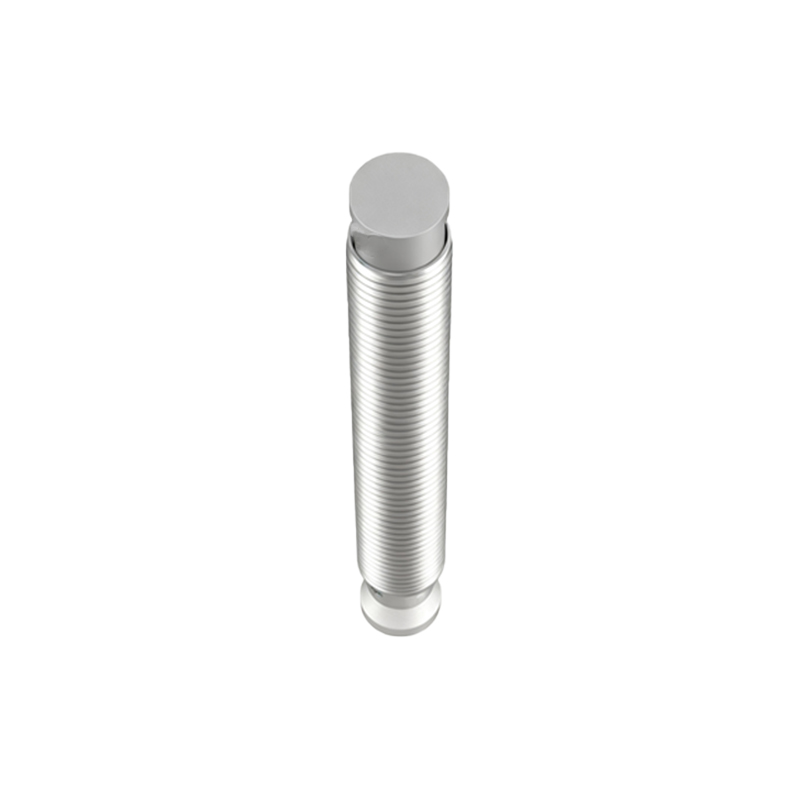
Key specifications define an M18 sensor's performance. The sensing distance, a critical parameter, typically ranges from 2mm to 8mm for standard models, with factors like target material (steel, aluminum, brass) and size affecting the actual range. Shielded (flush-mountable) models offer a shorter, more precise sensing field, allowing installation flush with metal surfaces without false triggering. Unshielded (non-flush) models provide a longer sensing range but require clearance from surrounding metal. The operating voltage is commonly 10-30V DC, with some models supporting wider ranges. Output configurations include 3-wire DC (PNP/NPN, NO/NC), 2-wire DC/AC, and analog (4-20mA or 0-10V) variants for distance-proportional measurement. The housing is typically constructed from nickel-plated brass or stainless steel (e.g., V2A/AISI 304, V4A/AISI 316), with sensing faces made of PBT or PTFE, offering high resistance to coolants, oils, and mechanical impact. Protection ratings of IP67 and IP69K are standard, ensuring reliable operation in harsh, wash-down environments.
Model variations cater to diverse application needs. Standard detection models are the most common, designed for ferrous metals. Factor-1 models are calibrated for universal metals, including steel, aluminum, and copper, though with a reduced sensing range. All-metal sensors offer consistent detection across all metal types. High-temperature models, with specialized internal components, can withstand ambient temperatures up to 120°C or more. Welding-field immune models are specifically hardened against the intense electromagnetic interference generated by resistance welding equipment. Cylindrical sensors with built-in amplifiers and IO-Link versions are also available, providing advanced diagnostics, parameter setting, and process data communication for Industry 4.0 environments.
Selecting the correct model requires a systematic approach. First, identify the target material and required sensing distance. For steel targets, a standard model suffices; for non-ferrous metals, a Factor-1 or all-metal type is necessary. Next, determine the electrical interface: PNP is prevalent in Europe and for PLC sinking input cards, while NPN is common in Asia and for sourcing cards. Two-wire sensors simplify wiring but have a residual current when off. The environmental conditions are paramount—consider the presence of chemicals, temperature extremes, or potential physical damage to select the appropriate housing material and protection rating. For dynamic applications like speed monitoring on a rotating shaft, ensure the sensor's switching frequency (often 0.5kHz to 5kHz) exceeds the target's passage frequency.
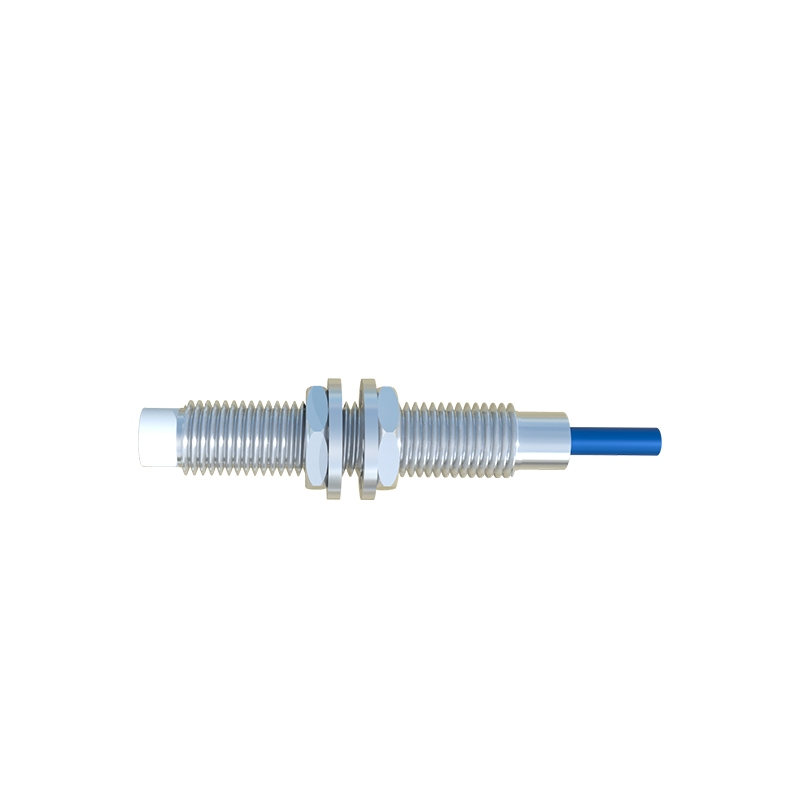
Installation and wiring are straightforward but demand attention to detail. Always follow the manufacturer's datasheet for torque specifications (typically 15-20 Nm) to avoid damaging the housing or threads. Ensure proper grounding and use shielded cables in electrically noisy environments. Maintain the recommended lateral and axial clearance from other metal objects, especially for unshielded models, to prevent degraded performance. For reliable operation, the target should approach the sensor's face perpendicularly and be at least 80% of the sensor's face diameter.
In conclusion, the M18 inductive proximity sensor is an indispensable tool for modern industrial sensing. Its standardized form factor, coupled with a vast array of specialized models, allows engineers to solve a wide spectrum of detection challenges—from simple part presence on a conveyor to precise positioning in machining centers. By carefully matching the sensor's technical capabilities to the application's specific demands, system designers can ensure maximum reliability, longevity, and performance in their automated systems.