In industrial automation and control systems, proximity sensors play a critical role in detecting the presence or absence of objects without physical contact. These sensors rely on excitation signals—commonly referred to as "power-on" or "energizing" signals—to function effectively. This article delves into the technical aspects of proximity sensor excitation, exploring its principles, types, and practical considerations for engineers and technicians.
Proximity sensors, including inductive, capacitive, and photoelectric variants, require a stable electrical supply to generate an electromagnetic field or light beam. When an object enters this field, it disrupts the signal, triggering an output response. The excitation signal is typically a direct current (DC) voltage, such as 12V or 24V, though alternating current (AC) options exist for specific applications. This signal not only powers the sensor but also defines its operational parameters, such as sensing range and response time.
For inductive proximity sensors, the excitation signal energizes a coil to produce an oscillating magnetic field. When a metallic object approaches, eddy currents are induced, altering the oscillation amplitude and causing the sensor to switch states. Capacitive sensors use a similar principle but respond to both conductive and non-conductive materials by measuring changes in capacitance. In photoelectric sensors, the excitation signal powers an LED or laser emitter, with a receiver detecting reflected or interrupted light.
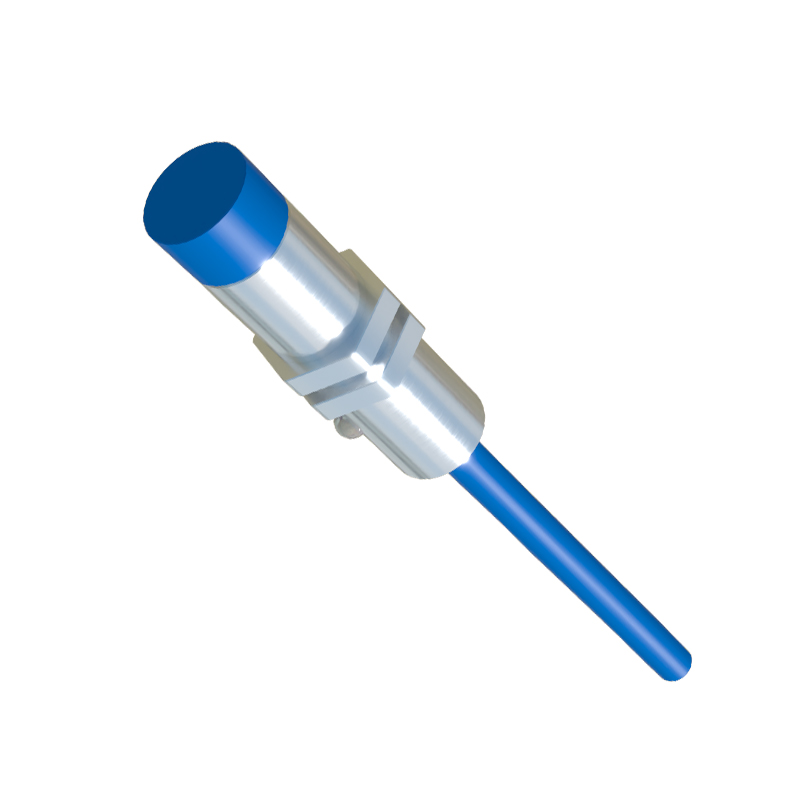
Key factors in selecting an excitation signal include voltage compatibility, current draw, and environmental conditions. For instance, in harsh industrial environments with electrical noise, shielded cables and stable power supplies are essential to prevent false triggers. Engineers must also consider the sensor's output type—whether it's normally open (NO) or normally closed (NC)—and ensure the excitation signal aligns with the control system's input requirements, such as PLCs or relays.
Installation and maintenance practices significantly impact sensor performance. Proper wiring, using twisted-pair cables for noise reduction, and regular calibration can enhance reliability. Additionally, understanding the sensor's datasheet specifications, like switching frequency and temperature range, helps optimize the excitation signal for longevity and accuracy. Common issues, such as sensor drift or intermittent operation, often stem from unstable excitation signals, highlighting the need for robust power management.
In summary, the excitation signal is the lifeblood of proximity sensors, dictating their functionality in diverse applications from assembly lines to safety systems. By mastering its technical nuances, professionals can ensure efficient, reliable automation processes, minimizing downtime and maximizing productivity. As technology evolves, trends like smart sensors with integrated diagnostics are emerging, further emphasizing the importance of precise excitation in modern industrial setups.