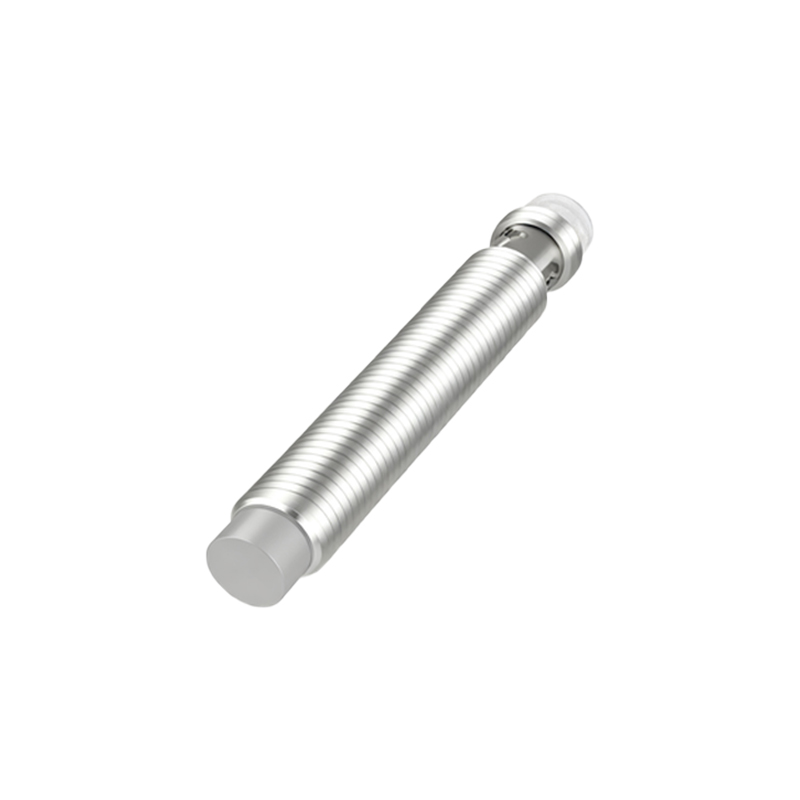
In the realm of industrial automation and precise control, proximity sensors stand as fundamental components for non-contact detection. Among their various configurations, the dual-probe proximity sensor represents a sophisticated solution for applications demanding enhanced reliability, redundancy, or specific spatial measurement. This article delves into the operational principles, key advantages, diverse applications, and critical selection factors for these specialized sensors.
At its core, a dual-probe proximity sensor integrates two independent sensing elements—typically based on inductive, capacitive, or photoelectric technology—within a single housing or a closely coupled assembly. Inductive types, detecting metallic objects, are most common. Each probe contains its own oscillator, detection circuit, and output stage. The primary operational logic can be configured in several ways. Often, the sensor's output is activated only when both probes detect the target object simultaneously, providing a high degree of discrimination against stray objects or environmental noise. This "AND" logic is crucial for confirming the precise position or alignment of a component. Alternatively, configurations may use an "OR" logic for redundancy, where the output remains active if at least one probe senses the target, ensuring system continuity even if one probe fails. Some advanced models allow for differential measurement, where the output signal correlates to the difference in detection distance between the two probes, enabling applications like edge guidance or thickness monitoring.
The advantages of employing a dual-probe design are significant. First and foremost is increased reliability and error prevention. By requiring confirmation from two sensing points, the chance of a false trigger due to chip debris, vibration, or a partially misaligned part is drastically reduced. This is paramount in safety-critical or high-precision assembly processes. Secondly, they enable precise positional verification. Instead of merely detecting presence, a dual-probe sensor can verify that an object is correctly oriented or seated, such as checking if a connector is fully inserted by sensing two specific tabs. Thirdly, they offer built-in redundancy. In continuous process industries, sensor failure can lead to costly downtime. A dual-probe sensor with redundant wiring and "OR" logic can maintain operation, alerting maintenance to the fault without stopping production. Finally, they save space and simplify installation. Using one dual-probe unit is frequently more compact and requires less wiring and mounting hardware than installing two separate single-probe sensors.
These sensors find utility across numerous industries. In automotive manufacturing, they are used to verify the correct placement of engine pistons or the alignment of gearbox components before assembly. In packaging machinery, they ensure that labels are applied squarely by detecting two opposite edges of the package. In metalworking, a differential-mode dual-probe sensor can monitor the bend angle of a sheet metal part. In material handling, they confirm the presence and orientation of pallets or totes. Electronics assembly lines use them to verify the precise placement of multi-pin integrated circuits on circuit boards.
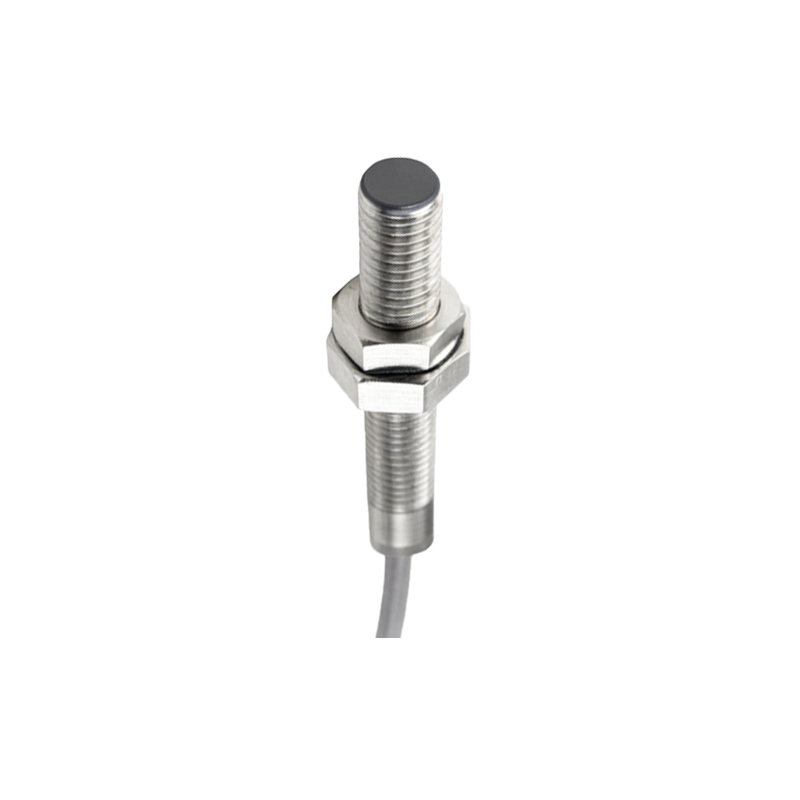
Selecting the appropriate dual-probe proximity sensor requires careful consideration of several parameters. Sensing Technology: Choose inductive for metals, capacitive for non-metals (plastics, liquids), or photoelectric for long-range or color-based detection. Sensing Range: The effective detection distance for each probe must suit the application. Output Configuration: Determine the required logic (AND, OR, differential analog) and output type (PNP/NPN transistor, analog 4-20mA, IO-Link). Environmental Rating: The housing must withstand the operational environment, considering factors like IP (Ingress Protection) rating for dust/water, resistance to oils/coolants, and temperature range. Probe Geometry and Spacing: The physical size, shape, and fixed distance between the two probes are application-specific and often customizable. Response Time: The sensor must be fast enough to keep up with the process cycle time. Finally, Connectivity and Diagnostics: Modern sensors with IO-Link or similar digital interfaces offer valuable data on sensor health, temperature, and operating hours, facilitating predictive maintenance.
In conclusion, dual-probe proximity sensors are powerful tools that move beyond simple presence detection. By providing coordinated sensing from two points, they deliver superior accuracy, reliability, and functional capability for complex industrial tasks. Understanding their operating modes and carefully matching their specifications to the application's needs allows engineers to design more robust, efficient, and fault-tolerant automated systems. As Industry 4.0 advances, the integration of such intelligent sensors with digital networks will further amplify their value in the smart factory ecosystem.