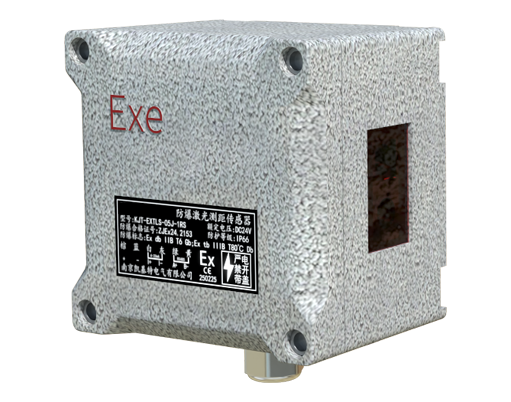
In the rapidly evolving landscape of industrial automation and quality control, the demand for unparalleled precision has catalyzed significant advancements in sensing technology. Among these, ultra-fine laser sensors have emerged as a cornerstone, offering capabilities that transcend traditional measurement methods. These sensors utilize highly focused laser beams, often with micrometer or even sub-micrometer spot sizes, to detect, measure, and inspect objects with extraordinary accuracy. Their operation is fundamentally based on principles such as laser triangulation, confocal microscopy, or interferometry, enabling non-contact measurement that is critical for delicate, high-speed, or sterile environments.
The core advantage of ultra-fine laser sensors lies in their exceptional resolution and repeatability. Unlike conventional contact probes or larger-spot optical sensors, they minimize the influence of surface texture, color, and ambient light, providing stable readings even on challenging materials like transparent glass, shiny metals, or dark, absorptive surfaces. This makes them indispensable in sectors such as semiconductor manufacturing, where measuring minute circuit patterns or wafer thickness tolerances is paramount. In the electronics assembly line, these sensors verify component placement and solder paste volume with speed and reliability that directly impacts yield rates.
Furthermore, the integration of ultra-fine laser sensors with smart systems and Industry 4.0 frameworks is amplifying their impact. Equipped with advanced processors and communication protocols like IO-Link or Ethernet/IP, they not only deliver raw measurement data but also perform real-time analytics, predictive maintenance alerts, and seamless data integration into Manufacturing Execution Systems (MES). This facilitates a closed-loop control process, where measurements instantly inform and adjust production parameters, minimizing waste and optimizing efficiency.

In the realm of medical device manufacturing and biotechnology, the non-invasive nature of these sensors is equally transformative. They are employed for precise dimensional checks of micro-components like stents or catheters, and in laboratory settings for monitoring cell cultures or microfluidic processes without risk of contamination. The automotive and aerospace industries leverage them for rigorous quality assurance, from inspecting fuel injector nozzles to measuring turbine blade profiles, ensuring components meet stringent safety and performance standards.
Despite their sophistication, the implementation of ultra-fine laser sensors requires careful consideration. Factors such as optimal stand-off distance, alignment, and environmental vibrations must be managed to achieve specified accuracy. Manufacturers continue to innovate, developing models with enhanced resistance to dust, coolant mist, and thermal drift, broadening their applicability in harsh industrial settings. Additionally, the trend toward miniaturization is producing compact sensor heads that can be integrated into tight spaces on robotic arms or within complex machinery.
Looking ahead, the convergence of ultra-fine laser sensing with artificial intelligence and machine learning promises even greater frontiers. AI algorithms can interpret complex sensor data patterns to detect anomalies or predict material fatigue beyond simple dimensional analysis. As industries push the boundaries of miniaturization and quality requirements, ultra-fine laser sensors will undoubtedly remain at the forefront, not merely as measurement tools but as enablers of intelligent, adaptive, and highly precise manufacturing ecosystems. Their continued evolution is not just an incremental improvement but a fundamental shift in how we perceive and control the physical dimensions of the manufactured world.