In modern industrial machinery, precision and stability are paramount. One critical technology that ensures operational efficiency and longevity of rotating equipment is the dynamic balancing laser sensor. This advanced sensor plays a vital role in detecting and correcting imbalances in rotating components, such as turbines, fans, motors, and pumps, which are ubiquitous across sectors like manufacturing, energy, and aerospace.
Dynamic balancing laser sensors operate on the principle of non-contact measurement using laser triangulation or interferometry. As a rotor spins, even minor imbalances can cause vibrations, leading to increased wear, energy loss, and potential catastrophic failures. The laser sensor emits a focused beam onto the rotating surface, capturing minute displacements or vibrations in real-time. By analyzing the reflected light, the sensor calculates the amplitude and phase of unbalance, providing precise data on the magnitude and angular location of the imbalance. This data is then fed into balancing systems, which can automatically adjust counterweights or recommend corrective actions.
The advantages of using laser sensors for dynamic balancing are numerous. Firstly, they offer high accuracy and resolution, capable of detecting imbalances as small as a few micrometers. This precision is crucial for high-speed machinery where even tiny deviations can escalate into significant issues. Secondly, laser sensors are non-invasive, meaning they do not require physical contact with the rotating part. This eliminates the risk of sensor wear or interference with the machinery's operation, ensuring long-term reliability and minimal maintenance. Additionally, these sensors can function in harsh environments, resisting dust, oil, and temperature variations, making them suitable for industrial settings.
In practice, integrating dynamic balancing laser sensors involves several steps. During installation, the sensor is positioned at a strategic point near the rotor, often aligned with key measurement planes. Calibration is essential to account for environmental factors and machine-specific characteristics. Once operational, the sensor continuously monitors vibration levels, with data processed through specialized software that visualizes imbalance patterns. For instance, in wind turbine maintenance, laser sensors help detect blade imbalances caused by erosion or debris, enabling proactive adjustments that enhance energy output and prevent downtime. Similarly, in automotive manufacturing, they ensure crankshafts and flywheels are perfectly balanced, reducing noise and improving engine performance.

Despite their benefits, challenges exist in deploying dynamic balancing laser sensors. Initial costs can be high, particularly for advanced models with enhanced features like multi-point scanning or integration with IoT platforms. However, the return on investment is often justified through reduced maintenance expenses, extended equipment lifespan, and avoided production losses. Another consideration is the need for skilled personnel to interpret data and implement corrections, though automated systems are increasingly mitigating this requirement.
Looking ahead, innovations in laser sensor technology are driving further improvements. Developments in fiber optics and miniaturization are making sensors more compact and versatile, allowing for installation in confined spaces. Artificial intelligence and machine learning algorithms are being integrated to predict imbalances before they occur, shifting maintenance from reactive to predictive models. This evolution aligns with Industry 4.0 trends, where smart sensors contribute to interconnected, data-driven industrial ecosystems.
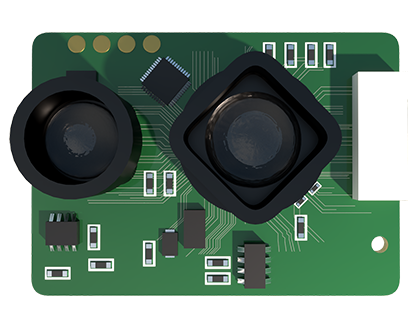
In conclusion, dynamic balancing laser sensors are indispensable tools for maintaining the health of rotating machinery. By providing accurate, real-time insights into imbalances, they enable industries to optimize performance, ensure safety, and reduce operational costs. As technology advances, their role will only expand, fostering greater efficiency and innovation across the electrical and mechanical engineering landscapes. For engineers and technicians, mastering these sensors is key to navigating the demands of modern industrial automation.
