In the rapidly evolving landscape of industrial automation, precision measurement and quality control are paramount. Among the suite of advanced sensing technologies, line laser vision sensors have emerged as a cornerstone for non-contact, high-speed, and highly accurate inspection tasks. This article delves into the operational principles, key applications, and critical factors for selecting the right line laser sensor for your automation needs.
At its core, a line laser vision sensor is an integrated system comprising a laser line projector and a digital camera. The fundamental principle is based on active triangulation. The sensor projects a thin, bright line of laser light onto the target object's surface. The camera, positioned at a known angle relative to the laser emitter, captures the profile of this laser line. When the object's surface is flat, the line appears straight in the camera's image. However, any variation in height, depth, or surface contour causes the projected laser line to deform or shift from its expected position. Sophisticated algorithms within the sensor's processor analyze this deformation in real-time. By calculating the disparity between the projected and observed line, the system generates a highly accurate 2D profile or even a dense 3D point cloud of the object's surface. This process, often called laser profiling or sheet-of-light measurement, occurs at remarkable speeds, making it ideal for dynamic production lines.
The applications for line laser vision sensors are vast and span numerous industries. In automotive manufacturing, they are indispensable for gap and flush measurement on car body assemblies, ensuring panel alignment meets stringent quality standards. They also inspect weld seam profiles for consistency and integrity. In electronics, these sensors measure component coplanarity, such as checking if all leads or balls on a BGA (Ball Grid Array) are at the correct height, preventing faulty solder connections. The packaging industry leverages them for fill-level detection in bottles and containers, verifying that products are filled to the specified volume. Furthermore, they perform critical dimensional checks on extruded plastics, rubber seals, and rolled metals, ensuring thickness, width, and cross-sectional profiles remain within tolerance. In logistics and warehousing, line laser sensors mounted on robotic arms or gantries enable precise bin picking and palletizing by providing detailed 3D profiles of randomly stacked items.
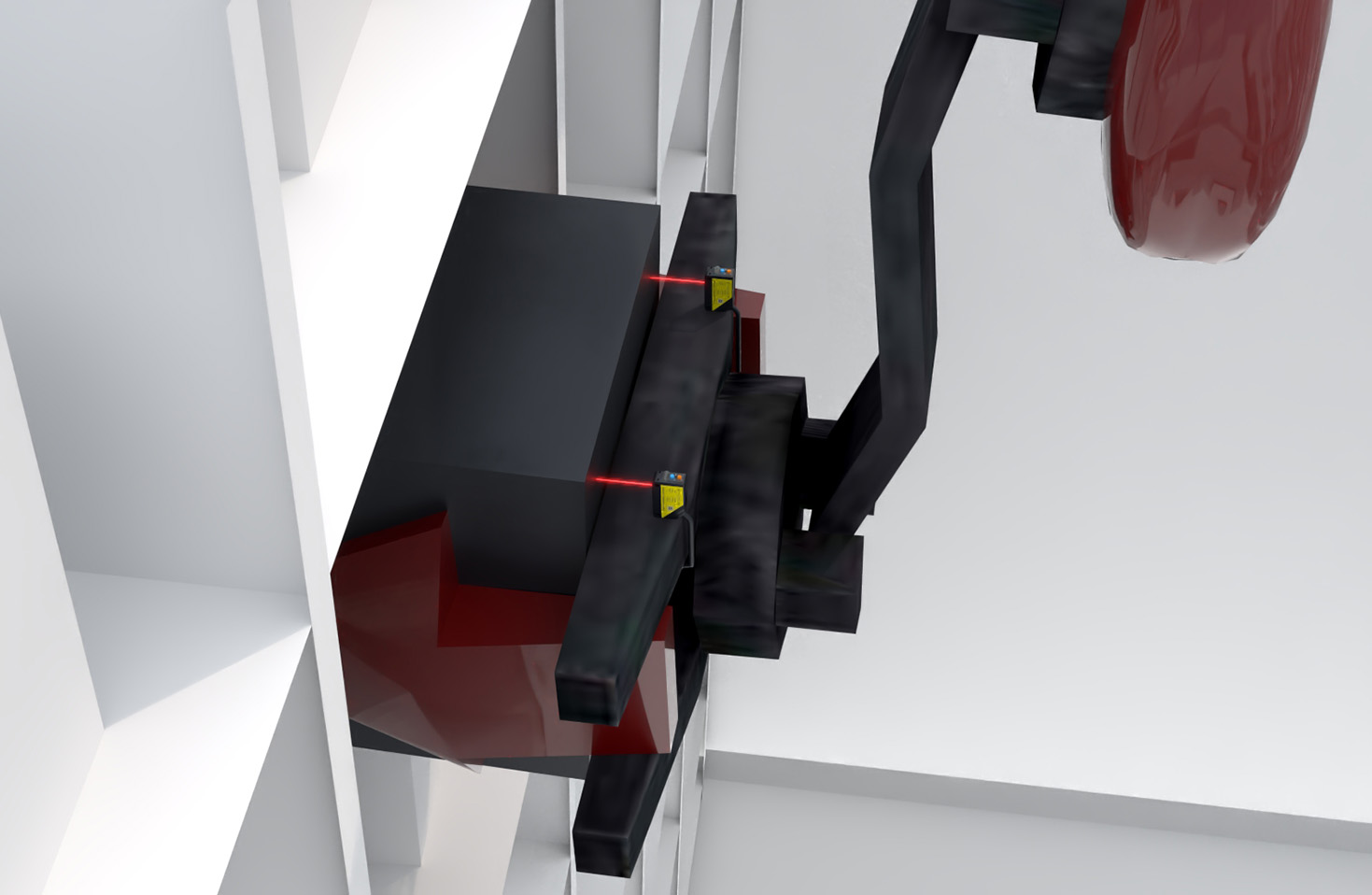
Selecting the appropriate line laser vision sensor requires careful consideration of several technical parameters. First, the measurement range and standoff distance must align with the physical constraints of the application. The Z-axis resolution (height resolution) determines the smallest detectable height difference, crucial for applications like surface defect detection. The profile frequency (or scan rate), measured in Hertz, dictates how many profiles can be captured per second; a higher rate is necessary for fast-moving conveyor belts. The laser line length must be sufficient to cover the entire width of the object being inspected. Environmental robustness is another key factor; sensors rated with high IP (Ingress Protection) codes (e.g., IP67) are essential for harsh environments with dust, moisture, or coolant exposure. Finally, the integration ecosystem is vital. Consider the available output interfaces (Ethernet/IP, PROFINET, digital I/O), the quality and usability of the software development kit (SDK), and compatibility with existing machine vision platforms or PLCs.
Beyond basic profiling, modern line laser sensors incorporate advanced features. Multi-line projection can help overcome challenges with highly reflective or dark surfaces by providing redundant data points. Integrated color cameras allow for simultaneous 2D intensity imaging and 3D profiling, enabling more complex inspection routines that combine dimensional data with surface texture or color information. On-sensor processing capabilities are also advancing, allowing for edge computing where profile data is analyzed and decisions are made directly within the sensor, reducing latency and data load on central systems.
In conclusion, line laser vision sensors represent a powerful and versatile tool in the automation engineer's arsenal. By transforming a simple line of light into rich, actionable 3D data, they solve complex inspection challenges that are impossible for traditional 2D vision or contact probes. A thorough understanding of their operating principle, coupled with a methodical approach to selection based on application-specific requirements, will ensure successful implementation, driving improvements in product quality, production efficiency, and overall operational excellence.