In the realm of industrial automation and precision engineering, proximity sensors play a pivotal role in enabling non-contact detection of objects. Among the diverse array of proximity sensors available, the M4 series, particularly those with a 2mm sensing range, stands out for its compact design, reliability, and high accuracy. This article delves into the technical aspects, applications, and benefits of M4 proximity sensors with a 2mm range, providing insights for engineers and industry professionals.
M4 proximity sensors are typically inductive sensors, designed to detect metallic objects without physical contact. The "M4" designation often refers to the sensor's thread size, which is 4mm in diameter, making it suitable for installations in tight spaces where larger sensors cannot fit. The 2mm sensing range indicates the maximum distance at which the sensor can reliably detect a standard target, usually defined as a square of mild steel (Fe360) with specific dimensions. This short-range capability is crucial for applications requiring high precision and minimal interference from surrounding materials.
The operating principle of an inductive M4 proximity sensor involves generating an electromagnetic field from a coil within the sensor. When a metallic object enters this field, eddy currents are induced, causing a change in the oscillation amplitude. This change is detected by the sensor's circuitry, triggering an output signal. For a 2mm range, the sensor is finely tuned to respond only within this limited distance, ensuring accurate detection and reducing false triggers from objects outside the specified range. Key specifications include a supply voltage typically ranging from 10-30V DC, a switching frequency that can reach up to 5 kHz, and protection ratings such as IP67 for resistance to dust and water ingress.
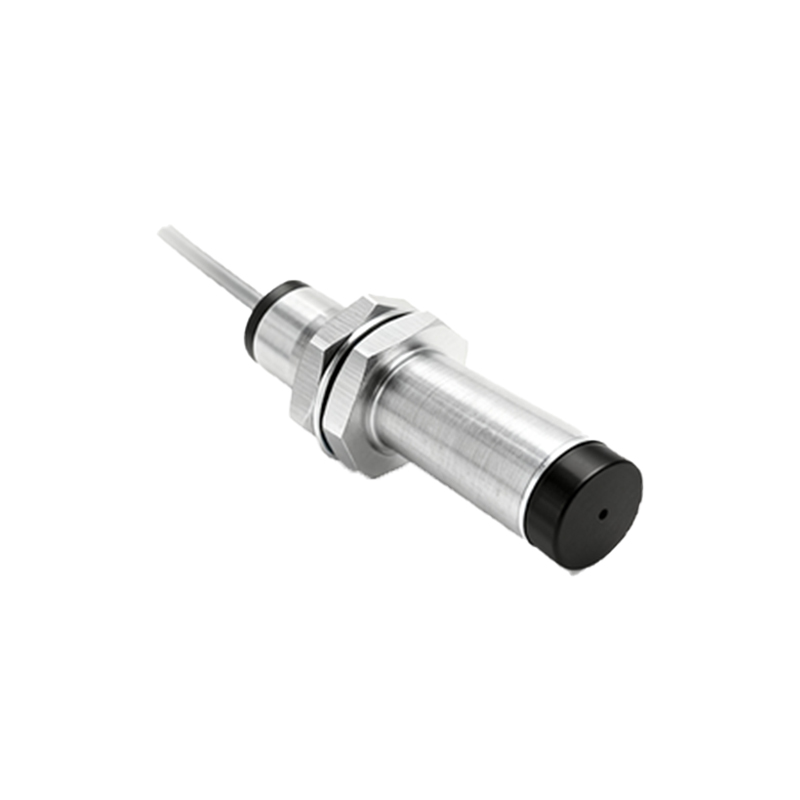
Applications of M4 proximity sensors with 2mm sensing range are widespread across various industries. In automotive manufacturing, they are used for position sensing in assembly lines, such as detecting the presence of small components like bolts or pins. In electronics, these sensors facilitate precise PCB board handling or component placement. The packaging industry employs them for counting and monitoring small metallic items, while in robotics, they enable end-effector positioning and collision avoidance. Their compact size allows integration into miniature devices, such as medical equipment or consumer electronics, where space is at a premium.
Benefits of using M4 proximity sensors with a 2mm range include enhanced precision due to the short sensing distance, which minimizes errors from environmental factors. Their robust construction, often featuring stainless steel or nickel-plated brass housings, ensures durability in harsh industrial environments. Additionally, these sensors offer easy installation with standard M4 threading, reducing setup time and maintenance costs. Energy efficiency is another advantage, as they consume low power while providing fast response times, critical for high-speed automation processes.
When selecting an M4 proximity sensor with a 2mm range, engineers should consider factors such as the target material, as non-ferrous metals may require reduced sensing distances. Environmental conditions like temperature extremes or exposure to chemicals should also be evaluated to choose sensors with appropriate ratings. Regular calibration and testing are recommended to maintain optimal performance, especially in applications where even minor deviations can impact overall system accuracy.
In summary, M4 proximity sensors with a 2mm sensing range are indispensable tools in modern engineering, offering a blend of compactness, accuracy, and reliability. By understanding their technical parameters and applications, professionals can leverage these sensors to improve efficiency and precision in automated systems. As technology advances, we can expect further innovations in sensor design, potentially expanding their capabilities while maintaining the core benefits that make the M4 series a trusted choice in the industry.