In the high-stakes environment of modern industrial automation, safeguarding personnel, machinery, and products is paramount. Among the most critical technologies enabling this safety and efficiency is the laser anti-collision sensor. These sophisticated devices represent a significant leap beyond traditional mechanical bumpers or basic photoelectric sensors, offering unparalleled precision, reliability, and flexibility in collision prevention systems. This guide delves into the operational principles, key features, diverse applications, and selection criteria for these essential components.
At its core, a laser anti-collision sensor is a non-contact safety device that utilizes a focused laser beam to detect the presence of objects within a predefined two-dimensional or three-dimensional protective field. The fundamental operating principle involves Time-of-Flight (ToF) or phase-shift measurement. The sensor emits short, pulsed laser beams. By precisely measuring the time it takes for the light to reflect off a potential obstacle and return to the sensor's receiver, the system can calculate the exact distance to that object with millimeter-level accuracy. This continuous stream of distance data allows the sensor to monitor a specific zone. If an object intrudes into this configured safety zone, the sensor triggers an immediate output signal. This signal is typically a safety-rated stop command (e.g., via OSSD outputs or a PROFIsafe message) sent directly to the machine's safety controller or drive system, initiating a controlled halt or reduced-speed operation to prevent a collision.

The advantages of laser-based systems are manifold. First and foremost is their exceptional precision and long range. They can define protective fields with exact boundaries over distances extending tens of meters, far surpassing the capabilities of ultrasonic or rudimentary infrared sensors. This allows for the creation of large, customizable warning and stopping zones around machinery like overhead cranes, automated guided vehicles (AGVs), and robotic workcells. Secondly, their high resolution enables them to distinguish between critical obstacles, like a person, and non-critical ones, such as drifting dust or small flying debris, minimizing nuisance trips. Modern sensors often feature configurable zones—multiple, independently programmable warning and protection fields. A warning zone might trigger an audible alarm or flashing light, while a subsequent intrusion into the immediate stop zone halts the machine. This layered approach enhances operational fluidity without compromising safety.
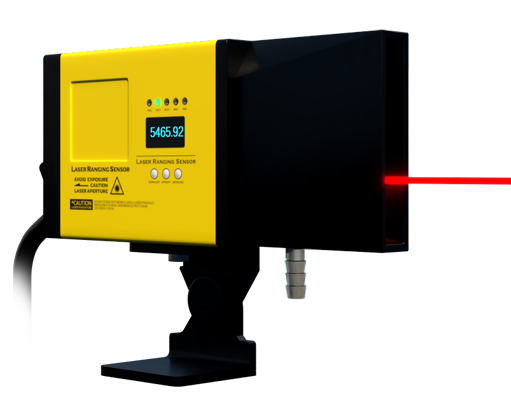
Integration into complex industrial networks is seamless. Contemporary laser anti-collision sensors support major industrial safety protocols like PROFINET/PROFIsafe, EtherNet/IP with CIP Safety, and others. This allows them to function as intelligent nodes within a Plant's overall safety ecosystem, enabling detailed diagnostics, remote configuration, and real-time status monitoring from a central human-machine interface (HMI). Their robust housing, typically rated IP67 or higher, ensures reliable performance in harsh conditions involving dust, moisture, and vibration common in manufacturing, logistics, and heavy industry.
Application scenarios are extensive. In automated storage and retrieval systems (AS/RS), they prevent crane collisions with racking or other cranes. For AGVs and mobile robots, they provide critical navigation safety, detecting both static infrastructure and dynamic obstacles like other vehicles or personnel. Around large robotic arms in automotive assembly, they create dynamic safety curtains that adapt to the robot's programmed path. In milling and machining centers, they can prevent tool crashes by monitoring for unexpected workpiece displacement or tool breakage.
Selecting the right laser anti-collision sensor requires careful analysis. Key parameters include the required protective field size (range and angle), the minimum object size to be detected, the necessary response time (crucial for fast-moving machinery), the environmental light immunity (to withstand ambient factory lighting), and the required safety integrity level (SIL 2 or PL d/e as per ISO 13849 and IEC 62061 standards). The choice of interface—discrete I/O, Ethernet-based safety protocol—must align with the existing control architecture. Regular functional testing and adherence to the manufacturer's installation guidelines are essential to maintain the system's certified safety performance.
In conclusion, laser anti-collision sensors are indispensable for advancing industrial safety and productivity. By providing accurate, reliable, and configurable object detection, they form a proactive barrier against costly and dangerous impacts. As Industry 4.0 drives towards more flexible and collaborative automation, the role of these intelligent sensors will only grow, ensuring that humans and machines can work in ever-closer harmony with confidence and security. Their implementation is not merely a regulatory compliance step but a strategic investment in operational resilience and asset protection.