In industrial automation and motor control systems, achieving precise forward and reverse rotation of motors is critical for applications such as conveyor belts, robotic arms, and machining tools. Proximity switch sensors play a pivotal role in this process by providing non-contact detection and feedback, ensuring reliable and efficient motor operation. This article explores the mechanisms, integration methods, and benefits of using proximity sensors for motor direction control.
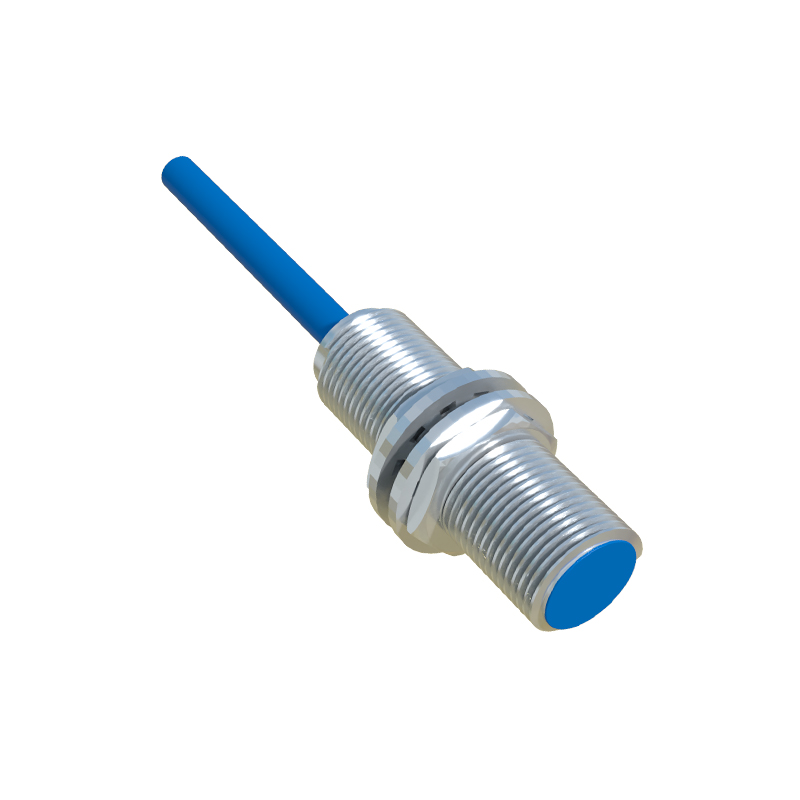
Proximity switch sensors, including inductive, capacitive, and magnetic types, detect the presence or absence of metallic or non-metallic objects without physical contact. In motor control, these sensors are typically installed near rotating components, such as shafts or gears, to monitor position and movement. When a target object (e.g., a metal flag on a motor shaft) approaches the sensor, it triggers an electrical signal. This signal is sent to a control unit, such as a programmable logic controller (PLC) or motor driver, which interprets it to determine the motor's rotational status.
To enable forward and reverse rotation, proximity sensors are strategically placed in the motor assembly. For example, two sensors might be positioned at specific angular intervals around the shaft—one to indicate the forward limit and another for the reverse limit. As the motor rotates, the target passes by each sensor, generating pulses that correspond to direction. The control system uses these pulses to sequence the motor's operation: if Sensor A detects the target first, the system commands forward rotation; if Sensor B triggers initially, reverse rotation is initiated. This setup allows for automated direction changes based on predefined logic, such as reversing a conveyor when an object reaches the end of a line.
Integration involves wiring the sensors to the motor control circuit. Inductive proximity sensors are commonly used for metallic targets due to their durability and resistance to environmental factors like dust or moisture. The sensors output signals (e.g., NPN or PNP) that interface with the control unit, which then activates relays, contactors, or variable frequency drives (VFDs) to switch the motor's power phase sequence. Reversing the phase sequence—swapping two of the three power lines in an AC motor, for instance—changes the rotational direction. Proximity sensors ensure this happens accurately by providing real-time feedback, preventing mechanical overtravel or collisions.
Key benefits of using proximity sensors for motor direction control include enhanced safety, reduced wear, and improved precision. Since they operate without contact, there's no friction or physical degradation, leading to longer system lifespan. Additionally, their fast response times (often in milliseconds) enable quick direction changes, boosting productivity in dynamic applications. In automated systems, sensors can be paired with logic controllers to create complex sequences, such as oscillating movements or position-based reversals, without manual intervention.
In summary, proximity switch sensors are indispensable for modern motor control, enabling seamless forward and reverse rotation through non-contact detection and electronic signaling. By integrating these sensors with control systems, engineers can design efficient, reliable, and automated solutions for diverse industrial needs. As technology advances, smart sensors with networking capabilities may further optimize motor performance, paving the way for more intelligent automation.