Selecting the appropriate proximity sensor switch is a critical decision in industrial automation and control systems. These non-contact devices detect the presence or absence of objects and are essential for tasks ranging from simple object detection to complex positioning and safety interlocks. With various technologies and specifications available, making the right choice requires a systematic approach based on application requirements. This guide outlines key factors to consider for optimal sensor selection.
First, understand the primary technologies: inductive, capacitive, ultrasonic, and photoelectric sensors. Inductive proximity sensors are the most common in industrial settings, ideal for detecting metallic objects. They generate an electromagnetic field and detect changes caused by conductive materials. For non-metallic targets like plastics, liquids, or granular materials, capacitive sensors are suitable as they respond to changes in capacitance. Photoelectric sensors use light beams and are excellent for long-range detection or sensing small objects, but they can be affected by environmental factors like dust or ambient light. Ultrasonic sensors emit sound waves and measure reflection time, making them versatile for various materials and harsh conditions, though they may have slower response times.
The sensing range is a fundamental parameter. Always choose a sensor with a rated operating distance slightly greater than the maximum distance required in your application to account for installation tolerances and environmental variations. For inductive sensors, note that the sensing distance can vary with target material; for example, steel is detected at the nominal range, while aluminum or copper may reduce it. Ensure the target size meets the sensor's specifications—smaller targets might require a reduced sensing distance or a specialized sensor.
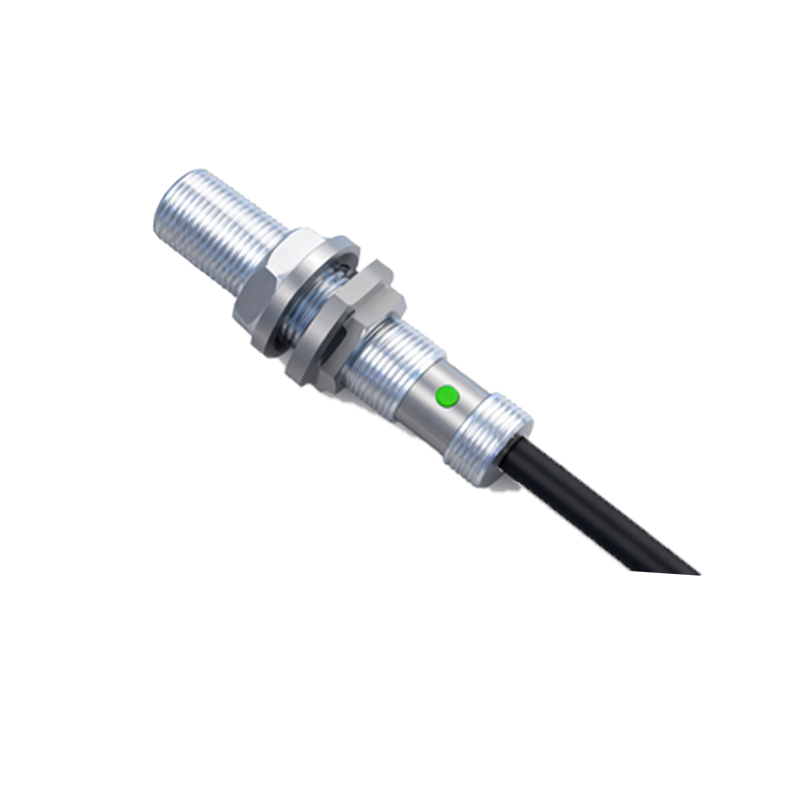
Environmental conditions heavily influence performance. Consider factors such as temperature extremes, humidity, vibration, and exposure to chemicals or oils. Many industrial sensors are rated with Ingress Protection (IP) codes (e.g., IP67 for dust and temporary immersion resistance) and NEMA ratings for durability. In washdown or outdoor applications, stainless steel housings and high IP ratings are essential. Additionally, electrical noise from motors or frequency drives can interfere with sensor operation, so look for models with shielding or high noise immunity.
Output configuration must match the control system. Common outputs include NPN (sinking) and PNP (sourcing) transistor outputs for DC sensors, and relay or solid-state outputs for AC sensors. Verify the voltage rating (e.g., 10-30V DC, 90-250V AC) and load current capacity to ensure compatibility with your PLC or controller. Some sensors offer analog outputs (4-20mA or 0-10V) for distance measurement or special functions like IO-Link for digital communication and parameterization.
Mounting and physical dimensions are practical considerations. Cylindrical sensors (e.g., M8, M12, M18, M30 threads) are standard, but rectangular or slot-style sensors may be needed for space-constrained areas. Factor in the installation method—flush-mounted sensors allow side-by-side placement without interference, while non-flush models offer longer ranges but require clearance. Material buildup or debris can affect capacitive sensors, so regular maintenance or protective housings might be necessary.
Finally, assess additional features like short-circuit protection, reverse polarity protection, LED indicators for diagnostics, and adjustability. For high-speed applications, check the sensor's response time and switching frequency. Always consult manufacturer datasheets and, if possible, test the sensor in the actual operating environment. By methodically evaluating technology, range, environment, output, and physical factors, you can ensure reliable, efficient, and cost-effective sensor integration, enhancing system performance and minimizing downtime.