Laser interferometric sensors represent a pinnacle of precision measurement technology, leveraging the wave nature of light to achieve nanometer or even sub-nanometer resolution. At their core, these devices operate on the principle of interference, where two or more coherent light beams—typically from a highly stable laser source like a helium-neon or semiconductor laser—are superimposed. The resulting interference pattern, characterized by alternating bright and dark fringes, is exquisitely sensitive to changes in the optical path difference between the beams. This path difference can be altered by physical parameters such as displacement, vibration, pressure, or refractive index changes in the measurement medium. The most common configuration is the Michelson interferometer, where a laser beam is split by a beam splitter into a reference arm and a measurement arm. The beam in the measurement arm reflects off a target mirror or the surface of the object under test, while the reference beam reflects off a fixed mirror. Upon recombination, they create an interference pattern detected by a photodetector. As the target moves, the optical path length changes, causing the interference fringes to shift. By counting these fringe shifts and often employing phase interpolation techniques, the sensor can determine displacement with extraordinary accuracy.
The advantages of laser interferometry are manifold. It offers non-contact measurement, eliminating mechanical loading on delicate specimens. It provides a vast dynamic range, capable of measuring from sub-micrometer motions to several meters, all while maintaining traceability to the fundamental definition of the meter via the laser's known wavelength. This makes it the gold standard for calibration of precision machine tools, coordinate measuring machines (CMMs), and semiconductor lithography equipment. Beyond dimensional metrology, laser interferometric sensors are indispensable in fields like gravitational wave detection (e.g., LIGO), where they measure infinitesimal spacetime distortions, and in optical testing for evaluating the surface form and wavefront error of lenses and mirrors. Advanced variants include heterodyne interferometers, which use two slightly different frequency beams to provide directional information and enhanced noise immunity, and Fabry-Pérot interferometers, used for high-finesse spectroscopic measurements and sensing of acoustic or thermal signals.
Recent technological advancements are pushing the boundaries further. The integration of fiber optics has led to compact, robust fiber-optic interferometric sensors suitable for harsh environments in aerospace or oil and gas industries. The development of frequency comb lasers has opened new avenues for absolute distance measurement over long ranges with unprecedented precision. Furthermore, the miniaturization of components through photonic integrated circuits (PICs) is paving the way for chip-scale interferometric sensors, promising widespread adoption in consumer electronics, biomedical devices for cell membrane vibration analysis, and advanced driver-assistance systems (ADAS) in vehicles. However, challenges remain, primarily related to environmental sensitivity. Factors like air turbulence, temperature fluctuations, and mechanical vibrations can introduce noise, necessitating sophisticated isolation systems, environmental compensation units, and advanced signal processing algorithms using techniques like phase-locked loops or deep learning for error correction.
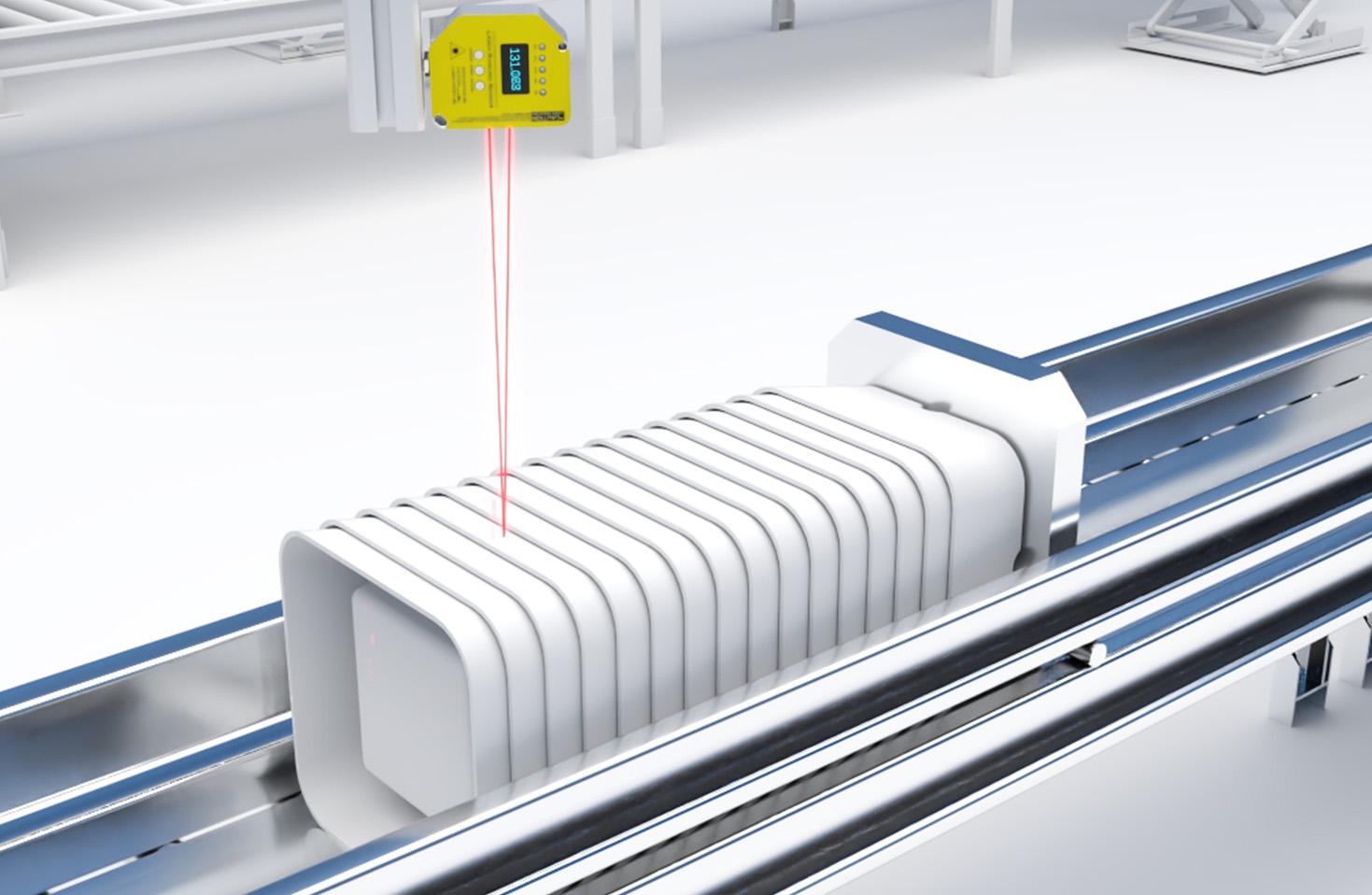
In industrial practice, implementing a laser interferometer system requires careful consideration. Key factors include the choice of laser wavelength (visible vs. infrared), coherence length, and the type of interferometer configuration (Michelson, Mach-Zehnder, Fizeau) suited to the application. Proper alignment is critical, and modern systems often incorporate auto-alignment features. The data acquisition and analysis software is equally important, transforming raw fringe data into actionable measurement reports for quality control. As Industry 4.0 and smart manufacturing evolve, these sensors are becoming integral nodes in the Internet of Things (IoT), providing real-time, in-process feedback for closed-loop control of ultra-precision machining and assembly. Their unparalleled accuracy ensures that they will continue to be a foundational technology for scientific discovery and engineering excellence, enabling innovations from next-generation nanotechnology to the exploration of fundamental physics.
