In the landscape of modern industrial automation, measurement, and control systems, optical sensors and laser technologies have emerged as foundational pillars. Their integration drives innovation across a staggering array of fields, from manufacturing and medicine to telecommunications and consumer electronics. This article delves into the core principles, diverse applications, and evolving trends of these critical photonic technologies.
At its essence, an optical sensor is a device that converts light or a change in light properties into an electrical signal. These sensors operate by detecting variations in parameters such as light intensity, wavelength (color), phase, or polarization. The basic components typically include a light source (which can be an LED, laser diode, or even ambient light), a transmission medium (like an optical fiber or free space), and a photodetector (such as a photodiode or CCD). The interaction of light with the target—be it through reflection, absorption, scattering, or interference—generates a measurable signal that conveys information about the target's presence, distance, position, composition, or condition.
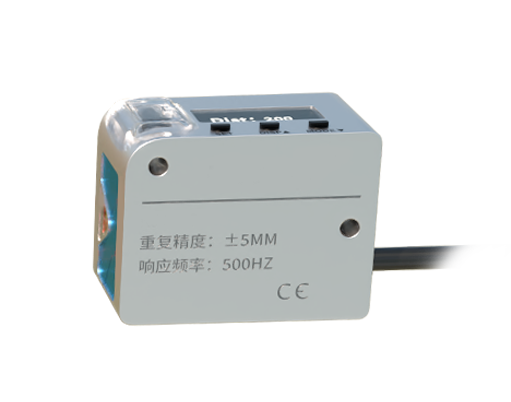
Laser technology, standing for Light Amplification by Stimulated Emission of Radiation, provides the coherent, monochromatic, and highly directional light sources that empower many advanced optical sensing systems. Unlike incoherent light from an LED, laser light is organized, with waves traveling in phase. This coherence grants lasers exceptional precision and the ability to be focused into extremely small spots or transmitted over long distances with minimal divergence. Common industrial lasers include gas lasers (e.g., CO2), solid-state lasers (e.g., Nd:YAG), fiber lasers, and semiconductor laser diodes, each chosen for specific power, wavelength, and application requirements.
The synergy between lasers and optical sensors creates powerful solutions. One of the most prevalent applications is LiDAR (Light Detection and Ranging). Used in autonomous vehicles, topographic mapping, and robotics, LiDAR systems emit rapid laser pulses and measure the time-of-flight for the reflected light to calculate precise distances and generate detailed 3D point clouds of the environment. Similarly, laser triangulation sensors are workhorses on production lines, performing non-contact measurement of dimensions, thickness, and surface contours with micron-level accuracy.
In the realm of manufacturing, laser-based optical sensors are indispensable for quality control. Machine vision systems, often illuminated by structured laser lines or patterns, inspect components for defects, verify assembly correctness, and guide robotic arms. Confocal displacement sensors use chromatic aberration to measure height and thickness on reflective or transparent surfaces, crucial in semiconductor and display panel production. Furthermore, laser interferometers provide nanometer-scale measurements for calibrating machine tools and positioning stages, ensuring the utmost precision in high-tech manufacturing.

Beyond dimensional metrology, spectroscopic sensors utilize the interaction between laser light and matter for material analysis. Raman spectroscopy and Laser-Induced Breakdown Spectroscopy (LIBS) employ lasers to excite molecular vibrations or create micro-plasmas, respectively. The analysis of the emitted light's spectral fingerprint allows for the identification of chemical composition and detection of contaminants without physical contact, vital in pharmaceutical, environmental, and security screening applications.
Fiber optic sensors represent another major category, where the optical fiber itself acts as the sensing element. By embedding fibers in composite materials, structures like bridges, wind turbine blades, and aircraft wings can be continuously monitored for strain, temperature, and vibration. Distributed Acoustic Sensing (DAS) uses laser pulses in fiber cables to detect acoustic vibrations along tens of kilometers, enabling pipeline monitoring and perimeter security.
The future trajectory of optical sensors and lasers points toward greater miniaturization, intelligence, and integration. The development of photonic integrated circuits (PICs) aims to combine lasers, modulators, detectors, and waveguides onto a single microchip, analogous to electronic integrated circuits. This will lead to smaller, cheaper, and more robust sensor systems. The rise of quantum sensing, leveraging quantum properties of light, promises breakthroughs in sensitivity for magnetic field detection and gravitational wave observation. Additionally, the integration of Artificial Intelligence and machine learning with optical sensor data is enhancing real-time analysis, predictive maintenance, and adaptive control in smart factories and IoT networks.
In conclusion, optical sensors and lasers are not merely components but enabling technologies that define the capabilities of modern engineering systems. Their ability to provide accurate, non-contact, and often real-time data under challenging conditions makes them irreplaceable. As research pushes the boundaries of photonics, we can anticipate these technologies to become even more pervasive, intelligent, and critical in solving the complex measurement and automation challenges of the future.