In the realm of industrial automation, precision measurement is paramount. Laser distance sensors, a sophisticated subset of photoelectric sensors, have become indispensable tools for achieving non-contact, high-accuracy measurements across diverse applications. This article delves into the operational principles, key technologies, prevalent applications, and critical selection criteria for these advanced devices.
At its core, a laser distance sensor operates by projecting a focused laser beam onto a target object. The sensor then analyzes the reflected light to calculate the distance. Two primary measurement principles dominate the market: time-of-flight (ToF) and triangulation.
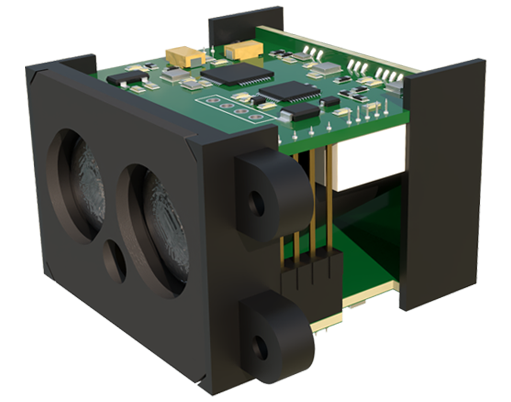
Time-of-flight sensors measure the time it takes for a laser pulse to travel to the target and back. Since the speed of light is constant, the distance can be calculated precisely using the formula: Distance = (Speed of Light × Time of Flight) / 2. This method is excellent for long-range measurements, often up to several hundred meters, with typical accuracies in the millimeter to centimeter range. Common applications include vehicle detection, bulk material level monitoring, and large-scale surveying.
Triangulation-based sensors, on the other hand, are designed for high precision at shorter ranges. Here, a laser diode projects a spot onto the target. The reflected light strikes a position-sensitive detector (like a CCD or PSD) at an angle. The position of the light spot on this detector changes linearly with the target's distance. Using trigonometric calculations, the sensor's internal processor determines the exact distance. This method offers exceptional resolution, often in the micron range, making it ideal for tasks like wafer alignment, component inspection, and thickness measurement.
Beyond the basic principle, several key specifications define a laser sensor's performance. Measurement range indicates the minimum and maximum distances it can handle effectively. Repeatability, often more critical than absolute accuracy, refers to the sensor's ability to consistently return the same reading for a fixed target. Spot size is crucial; a smaller spot allows for measuring smaller features or targeting specific areas on complex surfaces. Response time determines how quickly the sensor can take and output a measurement, which is vital for high-speed production lines. Environmental factors like ambient light, temperature fluctuations, and the target's surface characteristics (color, reflectivity, texture) significantly impact performance. Modern sensors incorporate advanced features to combat these challenges, such as background suppression, digital filtering, and teach-in functions for automatic calibration.

The applications for laser distance sensors are vast and growing. In factory automation, they are used for precise positioning of robotic arms, checking part presence or dimensions on conveyor belts, and controlling fill levels in packaging. In the logistics sector, they measure parcel dimensions for automated sorting and billing. The automotive industry relies on them for assembly verification and gap measurement. Furthermore, they are integral to unmanned guided vehicles (UGVs) for navigation and obstacle avoidance, and in construction for alignment and profiling.
Selecting the right laser distance sensor requires a careful analysis of the application. Begin by defining the required measurement range and the desired precision (repeatability). Consider the target's properties: Is it dark, shiny, transparent, or textured? A highly reflective surface can saturate the receiver, while a dark, absorbent surface may return too weak a signal. Many sensors offer adjustable laser power or special modes for such difficult surfaces. The operating environment is another critical factor. Will the sensor be exposed to dust, moisture, or vibration? Ingress Protection (IP) ratings indicate the housing's resilience. For outdoor use, models with high ambient light immunity are necessary. Finally, the output interface must be compatible with the control system, whether it's analog voltage/current, discrete switching signals, or digital protocols like IO-Link, PROFINET, or EtherNet/IP.
In conclusion, laser distance sensors provide a versatile and reliable solution for non-contact measurement. By understanding the underlying technologies—ToF for long range and triangulation for high precision—and meticulously evaluating application requirements against sensor specifications, engineers can effectively integrate these powerful tools to enhance quality control, optimize processes, and drive innovation in automation. As technology advances, we can expect even smaller, faster, and more intelligent sensors with integrated evaluation capabilities to further expand their role in Industry 4.0 and beyond.