In the rapidly evolving landscape of automotive technology, Light Detection and Ranging (LiDAR) sensors have emerged as a pivotal component, often described as the "eyes" of autonomous vehicles. These sophisticated devices utilize laser pulses to create high-resolution, three-dimensional maps of the surrounding environment, enabling vehicles to perceive and navigate the world with unprecedented accuracy and safety. Unlike traditional cameras or radar systems, LiDAR offers exceptional precision in object detection, distance measurement, and speed estimation, even in challenging conditions such as low light, fog, or direct sunlight.
The core principle of LiDAR operation involves emitting rapid laser pulses and measuring the time it takes for each pulse to reflect off objects and return to the sensor. This time-of-flight data is then processed to generate detailed point clouds, which represent the spatial characteristics of the environment. Modern automotive LiDAR systems typically employ wavelengths in the near-infrared spectrum, around 905 nm or 1550 nm, balancing performance, eye safety, and atmospheric penetration. The choice of wavelength is critical; 1550 nm LiDAR, for instance, allows for higher power output without risking eye damage, facilitating longer detection ranges—a key advantage for highway driving scenarios.

There are several architectural approaches to automotive LiDAR, each with distinct advantages. Mechanical spinning LiDAR, often seen in early autonomous prototypes, uses rotating assemblies to provide a 360-degree field of view. However, scalability and durability concerns have driven the industry toward solid-state and hybrid solutions. Solid-state LiDAR, which has no moving parts, leverages technologies like Micro-Electro-Mechanical Systems (MEMS) mirrors or optical phased arrays to steer laser beams electronically. This design enhances reliability, reduces size, and lowers production costs, making it more suitable for mass-market integration. Hybrid systems combine elements of both, offering a balance of performance and manufacturability.
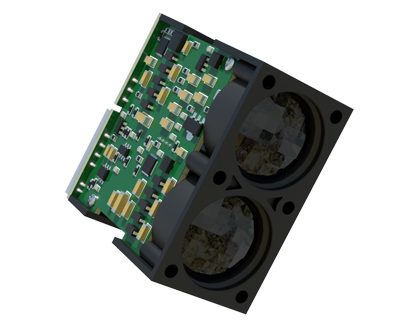
Integration into modern vehicles presents both opportunities and challenges. On the software side, advanced algorithms and artificial intelligence are essential for interpreting LiDAR data in real-time, distinguishing between pedestrians, cyclists, vehicles, and static obstacles. Sensor fusion—combining LiDAR with cameras, radar, and ultrasonic sensors—creates a redundant and robust perception system. This multi-modal approach mitigates the limitations of any single sensor; for example, cameras provide rich color and texture information, while radar excels in velocity measurement and adverse weather performance. Together, they form a comprehensive sensory suite that is crucial for achieving higher levels of automation, from SAE Level 2+ to fully autonomous Level 5.
From an engineering perspective, key performance metrics for automotive LiDAR include range, resolution, frame rate, and field of view. Long-range detection (often exceeding 200 meters) is vital for high-speed travel, allowing the vehicle ample time to react. Angular resolution determines the level of detail in the point cloud, affecting the ability to identify small or distant objects. A high frame rate ensures the system can track dynamic objects smoothly, while a wide field of view (both horizontal and vertical) covers critical areas around the vehicle. Power consumption, thermal management, and electromagnetic compatibility are also critical design considerations, especially as LiDAR units become more compact and integrated into vehicle architectures.
The automotive industry is witnessing intense innovation in LiDAR technology, driven by demands for cost reduction and performance enhancement. Emerging trends include the development of flash LiDAR, which illuminates the entire scene with a single broad laser pulse, and frequency-modulated continuous-wave (FMCW) LiDAR, which offers inherent velocity data and improved resistance to interference. Semiconductor advancements are enabling more integrated photonic circuits, potentially leading to "LiDAR-on-a-chip" solutions that could dramatically lower costs and enable ubiquitous deployment.
However, significant hurdles remain. Environmental robustness is a primary concern; LiDAR must operate reliably across extreme temperatures, vibration, and exposure to contaminants like dirt or rain. Standardization and regulatory frameworks are still evolving, affecting interoperability and safety certifications. Moreover, public perception and ethical considerations around data privacy and security require careful attention as these sensors collect vast amounts of spatial information.
In conclusion, automotive LiDAR sensors represent a transformative technology that is fundamental to the realization of safe and efficient autonomous driving. As research and development continue to advance, we can expect these systems to become more affordable, reliable, and capable, ultimately contributing to a future with reduced traffic accidents, enhanced mobility, and smarter transportation ecosystems. The journey from prototype to production is complex, but the potential benefits for society are immense, making LiDAR a cornerstone of next-generation automotive engineering.