As electrical engineers and technology professionals, we are intimately familiar with the proliferation of optical sensors in modern smartphones. From time-of-flight (ToF) sensors for autofocus and augmented reality to LiDAR scanners for 3D mapping, laser-based components are now commonplace. A recurring concern among consumers, and a valid point for technical scrutiny, is the potential for these laser emissions to cause ocular damage. This article provides a technical deep dive into the operational principles, safety classifications, and real-world risk assessment of smartphone laser sensors.
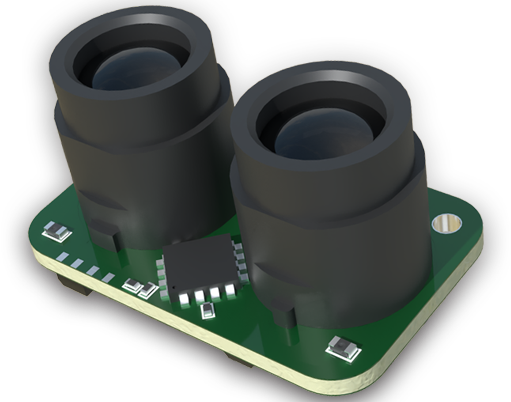
First, it is crucial to understand the fundamental technology. Most smartphone "laser" sensors are actually VCSELs (Vertical-Cavity Surface-Emitting Lasers) or edge-emitting laser diodes operating in the infrared spectrum, typically at 850nm or 940nm wavelengths. These are low-power, pulsed sources. Their primary function is to emit a controlled beam of light, which is then reflected off a target. A photodetector measures the time it takes for the light to return (Time-of-Flight principle) or analyzes the pattern of the reflected beam (structured light). This data is used for calculating distance, depth, and creating 3D models. The key point is that these are active illumination systems, not passive receivers.
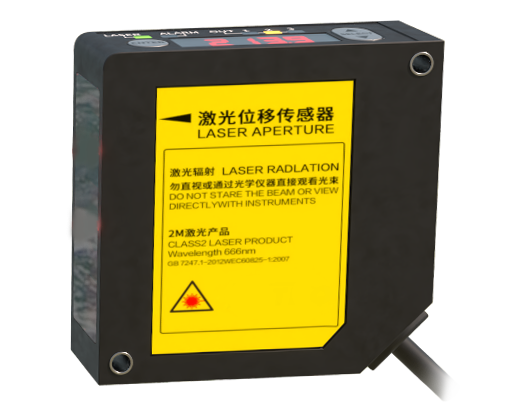
From a safety perspective, all laser products are classified according to international standards, primarily the IEC 60825-1 standard. This classification system ranges from Class 1 (safe under all conditions of normal use) to Class 4 (capable of causing severe eye and skin injury). Smartphone-integrated laser sensors are rigorously designed and tested to fall under Class 1 or, in some cases, Class 1M. A Class 1 laser product is considered inherently safe; the accessible emission limit (AEL) is below the Maximum Permissible Exposure (MPE) for the eye under any condition, including long-term direct intrabeam viewing. Class 1M is safe for the unaided eye but could potentially be hazardous if viewed through optical instruments like magnifying lenses or telescopes, which can concentrate the beam. Given the typical use case of a smartphone, the risk of viewing the sensor emission through such an instrument is exceptionally low.
The engineering safeguards are multilayered. Firstly, the optical output power is fundamentally limited by the laser driver circuitry. Secondly, these sensors are almost always paired with a diffuser or lens that spreads the beam, reducing its power density (irradiance). Thirdly, and most importantly, they operate in a pulsed mode with an extremely low duty cycle. The average power output is minuscule—often in the microwatt range—even if peak pulse power is higher. Finally, the physical placement of the sensor, often recessed and adjacent to the camera lens, makes direct, collimated exposure to the naked eye practically impossible during normal operation.
Let's address the infrared (IR) aspect. The human eye's natural aversion response—the blink reflex and pupil constriction—is triggered by visible light. Since smartphone laser sensors operate in the near-infrared (NIR) range, this protective reflex is absent. This theoretically means one could stare at the source without discomfort. However, the safety classification accounts for this. The MPE limits for the cornea and retina are significantly more conservative for NIR wavelengths (particularly around 900-1000nm) because the eye's lens focuses this radiation onto the retina. The Class 1 AEL for these wavelengths is set far below the threshold for thermal or photochemical retinal injury. Extensive testing during certification ensures compliance.
Could a faulty device be dangerous? In theory, a catastrophic failure of the driver IC or laser diode could lead to uncontrolled emission. However, modern semiconductor design includes numerous fail-safes. Power regulation is tightly controlled, and these components are not designed to operate outside their specified parameters without failing entirely. Furthermore, the diffusing optical element remains a physical barrier that would prevent a collimated, hazardous beam from exiting the housing even in a failure scenario. The risk is orders of magnitude lower than, for instance, a malfunctioning high-power laser pointer.
For engineers designing with these components, the responsibility lies in adhering to the manufacturer's specified operating conditions, ensuring proper EMI/EMC shielding to prevent circuit malfunctions, and never attempting to bypass or modify the sensor's integrated optics or driver. When prototyping, standard laser safety practices should be observed, such as avoiding direct eye exposure to the active emitter during bench testing.
In conclusion, based on current international safety standards, engineering design principles, and the inherent limitations of the technology, the laser sensors in commercially available smartphones present a negligible risk of eye damage under normal and foreseeable conditions of use. The combination of low power, infrared wavelength, pulsed operation, physical beam diffusion, and stringent Class 1 certification provides a robust safety framework. As engineers, our role is to understand these principles, communicate them effectively to address public concerns, and continue to implement these technologies with the same rigorous attention to safety in our own designs. The perceived risk is significantly disproportionate to the actual, miniscule hazard, which is a testament to the successful integration of robust safety engineering into consumer electronics.