In the realm of industrial automation and smart systems, proximity sensors stand as fundamental components for non-contact object detection. The efficacy of these sensors, however, is heavily dependent on the quality and robustness of their accompanying driver software. This article delves into the core principles, design considerations, and implementation strategies for developing reliable proximity sensor drivers, tailored for electrical engineering professionals.
A proximity sensor driver serves as the critical intermediary between the physical sensor hardware and the higher-level application or control system. Its primary functions include initializing the sensor, configuring its operational parameters (such as sensing range, output type, and response time), continuously polling or interpreting its output signal, and providing a clean, processed data interface to the host microcontroller or processor. The driver abstracts the low-level electrical complexities, presenting a simple API for functions likereadProximity(),getStatus(), orconfigureThreshold().
The architectural design of the driver is paramount. For digital output sensors (e.g., NPN/PNP open-collector), the driver primarily involves GPIO (General-Purpose Input/Output) management. It must handle pin configuration, implement debouncing algorithms to filter mechanical or electrical noise, and manage interrupt service routines (ISRs) for real-time response if the sensor supports interrupt-driven operation. For analog output sensors, the driver integrates with an ADC (Analog-to-Digital Converter) peripheral. Key tasks here involve setting the ADC resolution, sampling rate, and implementing calibration routines to map the ADC readings to actual distance units (millimeters or inches). This often requires storing calibration data in non-volatile memory.
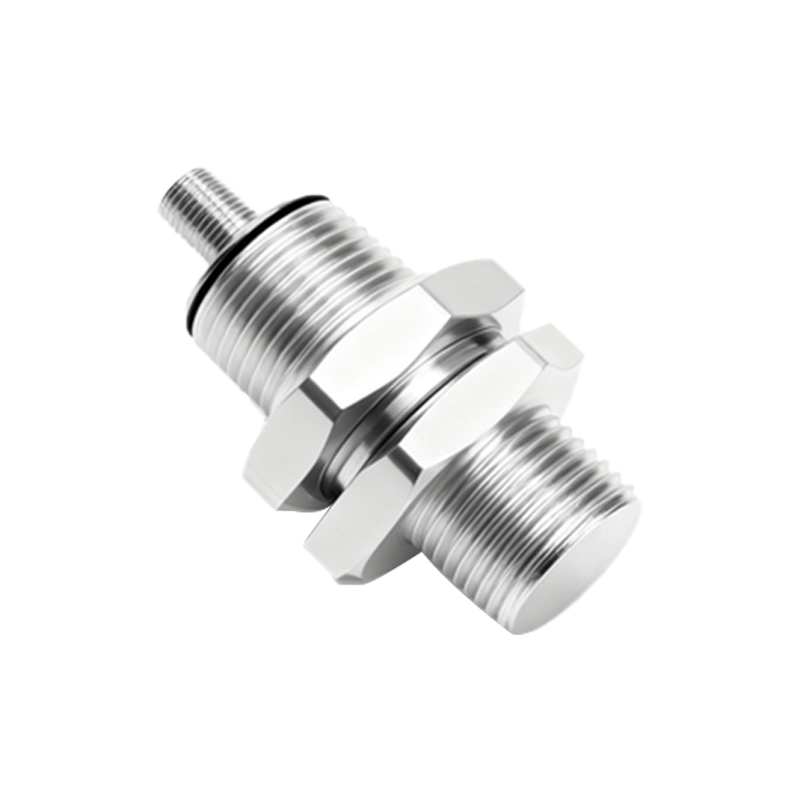
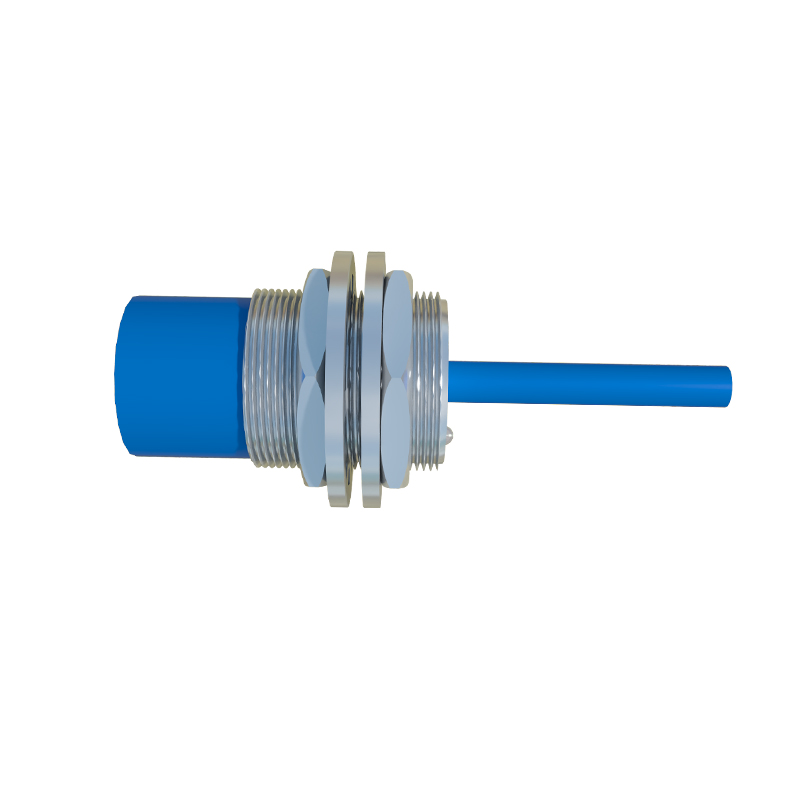
Advanced sensor types, such as inductive, capacitive, or ultrasonic, introduce additional driver layer responsibilities. Inductive sensors, sensitive to metals, may require drivers that can differentiate between ferrous and non-ferrous metals based on signal phase or amplitude shifts. Capacitive sensors, used for detecting non-metallic objects, often need drivers with automatic sensitivity calibration to compensate for environmental changes like humidity. Ultrasonic sensors demand precise timing control for pulse generation and echo reception, making the driver heavily reliant on hardware timers and potentially complex time-of-flight calculations.
A robust driver must incorporate comprehensive error handling and diagnostics. This includes routines to detect sensor disconnection, signal saturation, supply voltage fluctuations, and environmental interference. Implementing a heartbeat or watchdog mechanism within the driver can enhance system reliability. Furthermore, for systems employing multiple sensors, the driver should support scalable and modular design patterns, allowing easy integration and management of an array of sensors without resource conflicts.
Communication protocol support is another crucial aspect. While many sensors offer simple digital/analog interfaces, modern industrial networks utilize protocols like IO-Link, which provides bidirectional digital communication. Developing a driver for an IO-Link sensor involves implementing the full IO-Link stack, handling SIO (Standard IO) and COM (Communication) data channels, and managing process and service data cycles. Similarly, drivers for sensors on buses like CAN (Controller Area Network) or industrial Ethernet require corresponding protocol-specific driver layers.
The development process should follow a structured V-model or similar, encompassing requirements analysis, modular coding, rigorous testing (unit, integration, and HIL - Hardware-in-the-Loop), and thorough documentation. Code should be written for portability across different microcontroller architectures, often using Hardware Abstraction Layers (HAL). Power management features, such as putting the sensor into a low-power sleep mode when not in active scanning, are increasingly important for battery-operated IoT devices.
In conclusion, a well-engineered proximity sensor driver is not merely a piece of code that reads a pin state. It is a sophisticated software module that ensures accuracy, reliability, and real-time performance. It bridges the gap between the analog physical world and the digital control system, incorporating physics, signal processing, and software engineering principles. As sensors grow smarter and more connected, the role of the driver evolves from a simple interface to an intelligent management entity, making its design a critical task in any electromechanical system development.