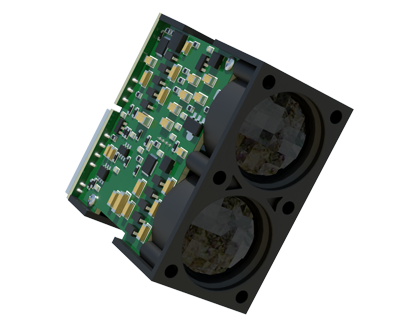
In modern industrial and HVAC systems, fan performance monitoring is critical for ensuring operational efficiency, safety, and longevity. Traditional measurement methods, such as using contact tachometers or vibration sensors, often introduce inaccuracies due to physical interference or require system downtime. Laser sensor technology has emerged as a superior non-contact solution for precise fan speed, vibration, and alignment measurement, revolutionizing maintenance and quality control protocols.
Laser sensors operate on the principle of laser Doppler vibrometry or time-of-flight measurement. When directed at a fan blade, the sensor emits a focused laser beam. As the blade moves, it reflects the beam back to the sensor. By analyzing the frequency shift or the time delay of the reflected light, the sensor calculates parameters like rotational speed (RPM), blade displacement, and vibrational frequency with micron-level accuracy. This method eliminates mechanical load on the fan, preventing measurement-induced wear and ensuring data integrity even in high-speed or high-temperature environments.
Key applications include predictive maintenance in data center cooling systems, where laser sensors detect imbalances or bearing wear in fans before failures cause overheating. In automotive manufacturing, they verify fan assembly precision in engine cooling modules. Aerospace industries utilize laser sensors for testing turbine blade fans under extreme conditions, ensuring compliance with stringent safety standards. The non-contact nature also allows measurements in hazardous or inaccessible areas, such as inside sealed enclosures or near moving parts without shutdowns.
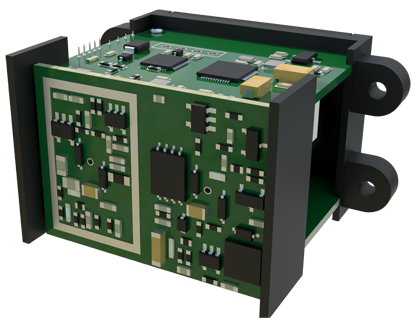
Implementing laser sensor systems involves selecting appropriate specifications—wavelength, sampling rate, and measurement range—to match fan size and operational dynamics. For instance, infrared lasers are suitable for dark surfaces, while visible lasers work well on reflective materials. Integration with IoT platforms enables real-time data analytics, alerting technicians to anomalies via cloud-based dashboards. Regular calibration against reference standards maintains sensor accuracy, and environmental factors like ambient light or dust are mitigated using filtered optics or protective housings.
Despite higher initial costs compared to contact sensors, laser technology reduces long-term expenses by minimizing unplanned downtime and extending equipment life. Future trends include miniaturization of sensors for embedded fan monitoring and AI-driven predictive algorithms that correlate laser data with historical performance patterns. As industries advance toward Industry 4.0, laser sensors will become integral to smart manufacturing ecosystems, providing unparalleled insights into fan health and efficiency.
In conclusion, laser sensors offer a transformative approach to fan measurement, combining precision, reliability, and non-intrusive operation. By adopting this technology, engineers can optimize system performance, enhance safety, and drive sustainable operational practices across diverse sectors.