In the rapidly evolving landscape of industrial automation and precision measurement, high-precision laser distance sensors have emerged as indispensable tools. These sophisticated devices, leveraging the principle of time-of-flight or phase-shift measurement of laser light, offer unparalleled accuracy, speed, and reliability for a vast array of applications. Unlike traditional contact measurement methods, laser sensors provide non-contact, wear-free operation, making them ideal for delicate surfaces, high-speed production lines, and harsh environments.
The core technology behind these sensors is elegantly precise. A laser diode emits a focused beam of coherent light towards a target. The sensor then measures the time it takes for the reflected light to return or analyzes the phase shift of the modulated signal. This data is processed to calculate the exact distance with resolutions often reaching the micrometer range. Modern iterations incorporate advanced features like background suppression, which filters out ambient light and irrelevant objects, and programmable measurement windows for targeting specific areas.
When selecting a premium laser distance sensor for an industrial application, several critical parameters must be evaluated. First and foremost is measurement range. Sensors are available for sub-millimeter tasks, such as inspecting PCB thickness, all the way to long-range models capable of measuring hundreds of meters for warehouse logistics or crane positioning. Accuracy and repeatability are paramount; a true "精品" or premium sensor offers not just high nominal accuracy but exceptional long-term stability and minimal drift over temperature fluctuations. Measurement rate is crucial for dynamic processes. High-speed sensors can perform thousands of measurements per second, enabling real-time control of robotic arms or quality inspection on fast-moving conveyor belts.
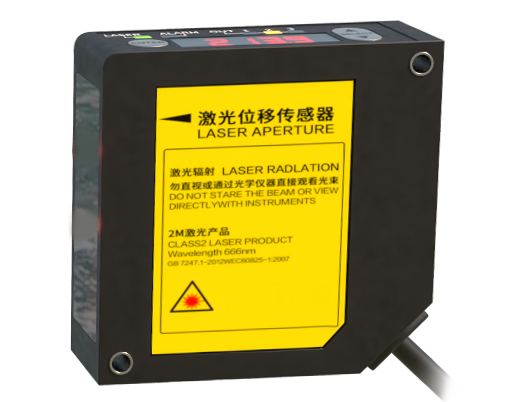
The output interface is another key consideration. Common industrial communication protocols include analog outputs (4-20 mA, 0-10 V), digital interfaces like RS-232 or RS-485, and increasingly, industrial Ethernet (EtherNet/IP, PROFINET) and IO-Link for seamless integration into Industry 4.0 networks. Environmental robustness is non-negotiable in factory settings. Look for sensors with high IP ratings (e.g., IP67, IP69K) for dust and water resistance, robust housing to withstand vibration, and wide operating temperature ranges.
The application spectrum for these precision instruments is remarkably broad. In automotive manufacturing, they ensure precise gap and flush measurements between body panels. In electronics, they verify component placement height and solder paste thickness. In logistics, they measure package dimensions for volumetric weighing and palletizing. In metal processing, they monitor material thickness and control roll gaps. Furthermore, they are integral to robotic guidance systems, providing the exact positioning data needed for pick-and-place, assembly, and welding operations.
Integration best practices involve careful mounting to minimize mechanical stress, ensuring a clean optical path free from obstructions, and proper configuration of the sensing parameters via software. Calibration against known standards is essential to maintain traceability and accuracy. The future of laser distance sensing is leaning towards smarter, more connected devices. We are seeing the integration of onboard diagnostics, predictive maintenance alerts, and enhanced data processing capabilities directly within the sensor housing.
In conclusion, investing in a high-quality laser distance sensor is not merely a purchase of a measurement tool; it is an investment in process optimization, quality assurance, and operational efficiency. By meticulously matching the sensor's specifications—its range, speed, accuracy, and durability—to the specific demands of the application, engineers can unlock new levels of precision, reduce waste, and drive innovation in their automated systems. The right sensor becomes a silent, reliable partner in building smarter, more responsive manufacturing ecosystems.