In the intricate world of industrial automation and control systems, two components stand as fundamental pillars for sensing and switching: proximity sensors and relays. While serving distinct functions, their synergistic operation forms the backbone of countless applications, from simple conveyor belt controls to complex robotic assembly lines. This guide delves into their principles, types, and critical integration points, providing essential knowledge for electrical engineering professionals.
Understanding Proximity Sensors
A proximity sensor is a non-contact electronic device designed to detect the presence or absence of an object within its sensing field without physical contact. This capability makes them ideal for harsh environments, high-speed counting, and applications where wear and tear from mechanical contact is undesirable.
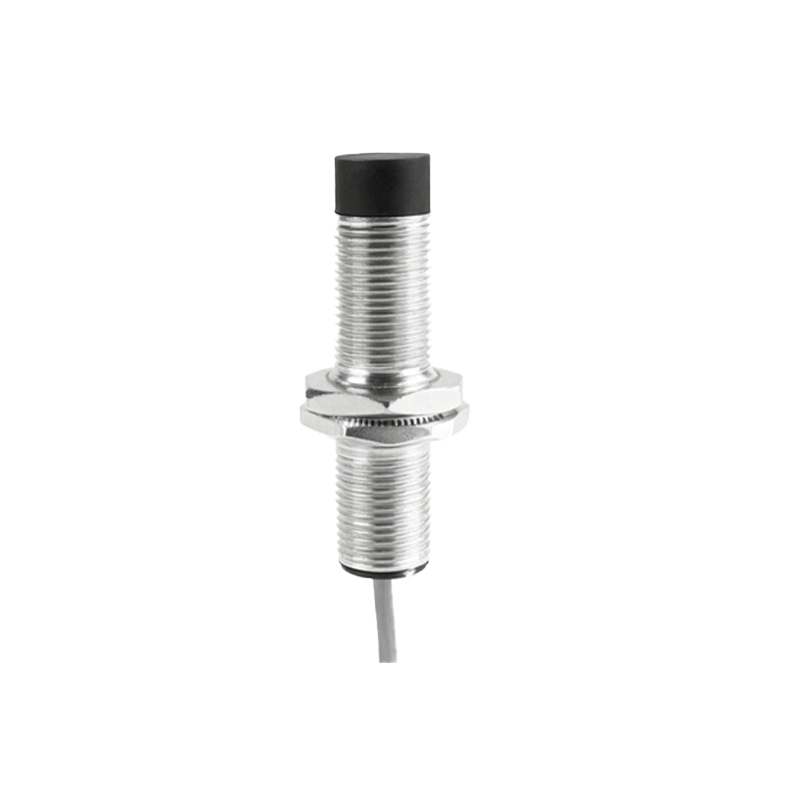
The core operating principle involves generating an electromagnetic field or a beam of radiation (like infrared light). The presence of a target object alters this field or reflects the beam, triggering a change in the sensor's output state. Major types include:
Inductive Proximity Sensors: Detect metallic objects (ferrous and non-ferrous) by using a coil to generate an oscillating electromagnetic field. When a metal object enters this field, it induces eddy currents, causing a change in oscillation amplitude that is detected by the sensor circuit. They are robust, resistant to environmental factors like dust and oil, and are commonly used for position detection of machine parts.
Capacitive Proximity Sensors: Can detect both metallic and non-metallic materials (plastics, wood, liquids, granules) by measuring changes in capacitance. The sensor forms one plate of a capacitor, the target object forms the other (or alters the dielectric constant), and the sensing electronics detect the capacitance shift. They are used in level detection, material handling, and presence sensing of non-metals.
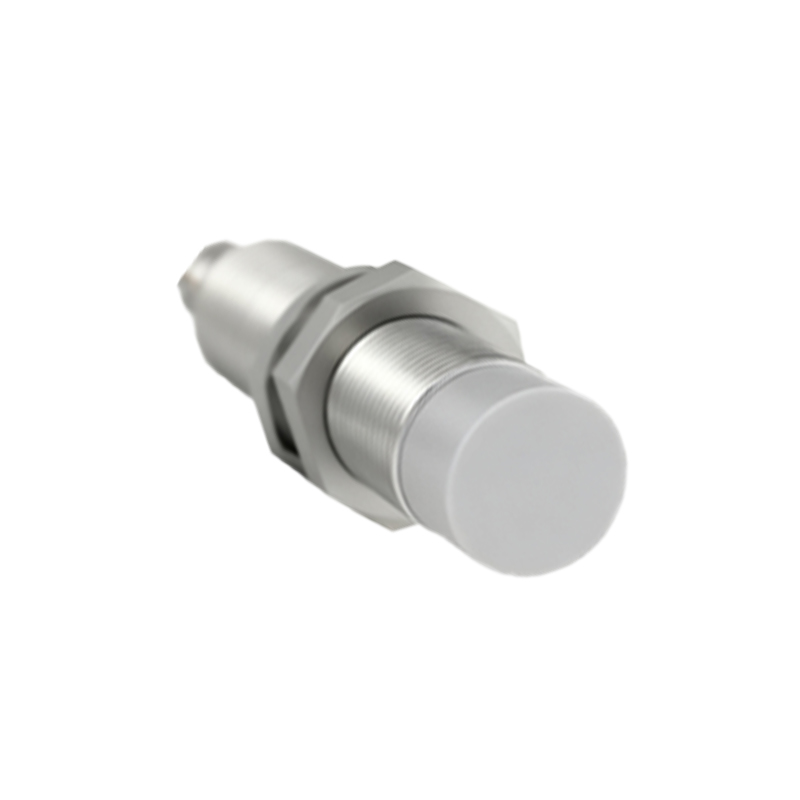
Photoelectric Sensors: Utilize a light emitter (usually LED) and a receiver. They detect objects by either the interruption (through-beam) or reflection (retro-reflective, diffuse) of the light beam. Effective for long-range detection and capable of sensing virtually any material, they are prevalent in packaging, bottling, and automated storage systems.
Ultrasonic Sensors: Work on the principle of sound wave echo. They emit high-frequency sound pulses and measure the time for the echo to return. Excellent for distance measurement, level control of liquids and bulk solids, and detecting transparent or variably colored objects.
The output from these sensors is typically a discrete DC signal (e.g., PNP/NPN, 3-wire DC) or a relay contact, signaling the control system that an object has been detected.
The Role of Relays
A relay is an electrically operated switch. It uses a low-power electrical signal (from a sensor, PLC, or controller) to control a separate, higher-power circuit. The fundamental components are a coil, an armature, and contacts. When the control voltage is applied to the coil, it generates a magnetic field that moves the armature, thereby opening or closing the contacts connected to the load circuit (e.g., a motor, solenoid valve, or lamp).
Key relay types relevant to this context include:
Electromechanical Relays (EMRs): Use physical movement of contacts. They provide complete electrical isolation between the control and load circuits and can switch AC or DC loads. However, they have moving parts subject to wear and arcing.
Solid-State Relays (SSRs): Use semiconductor components (like thyristors or transistors) to perform switching without any moving parts. They offer faster, silent operation, higher cycle life, and resistance to shock and vibration. They are ideal for frequent switching but require careful thermal management.
Relays are crucial for interfacing and amplification. A proximity sensor's low-current signal (often just 100-200mA) is rarely sufficient to directly power an industrial actuator. A relay acts as the intermediary, allowing the sensor's weak signal to safely control a motor drawing several amps.
System Integration and Best Practices
The typical connection involves wiring the output of the proximity sensor to the coil terminals of the relay. The load (e.g., a contactor for a motor) is then connected to the relay's contact terminals. This creates a robust control chain: Sensor detects object -> Sensor output energizes relay coil -> Relay contacts close/open -> High-power load is activated/deactivated.
Critical Considerations for Engineers:
1. Sensor Selection: Choose based on target material, required sensing distance, environmental conditions (IP rating), output type, and supply voltage. Inductive for metals, capacitive for non-metals or level, photoelectric for long range or precise positioning.
2. Relay Selection: Match the relay coil voltage to the sensor's output signal voltage. Crucially, the relay's contact rating (current and voltage, AC