In the rapidly evolving landscape of industrial automation and smart systems, proximity sensors stand as critical components for non-contact detection. A key, yet often under-discussed, element in their design and performance is the use of transparent plastics for protective housings and optical windows. This article delves into the engineering considerations, material science, and practical applications of these vital polymers.
The primary function of the transparent plastic component in a proximity sensor is to protect the sensitive internal electronics—such as the infrared LED emitter and phototransistor receiver in optical types, or the coil and oscillator in inductive models—from environmental hazards. These include dust, moisture, chemical splashes, and physical impact. However, this protection must not come at the cost of signal integrity. For optical sensors, the plastic window must exhibit high transmittance in the specific wavelength used by the sensor, typically in the infrared spectrum. Materials like polycarbonate (PC), polymethyl methacrylate (PMMA or acrylic), and cyclic olefin copolymer (COC) are industry favorites.
Polycarbonate is renowned for its exceptional impact strength and good heat resistance, making it suitable for harsh factory environments. Its optical clarity is good, though it can yellow over prolonged exposure to UV light, which may affect long-term performance in certain applications. PMMA offers superior optical clarity and UV stability compared to PC, with excellent light transmittance across visible and near-IR ranges. Its drawback is relatively lower impact resistance. For high-precision optical sensors, COC is gaining traction due to its extremely low water absorption, excellent transparency, and stable dielectric properties, which is crucial for maintaining consistent sensor calibration in humid conditions.
The design of the plastic housing is as crucial as the material selection. Engineers must consider factors like wall thickness, which affects structural rigidity and signal attenuation. Lens-shaped or domed windows can be molded to focus or diffuse the emitted light beam, tailoring the sensor's detection field. Anti-fogging and anti-static coatings are often applied to the interior or exterior surfaces to prevent condensation and dust adhesion, respectively, which are common causes of false triggers or failure-to-detect incidents.
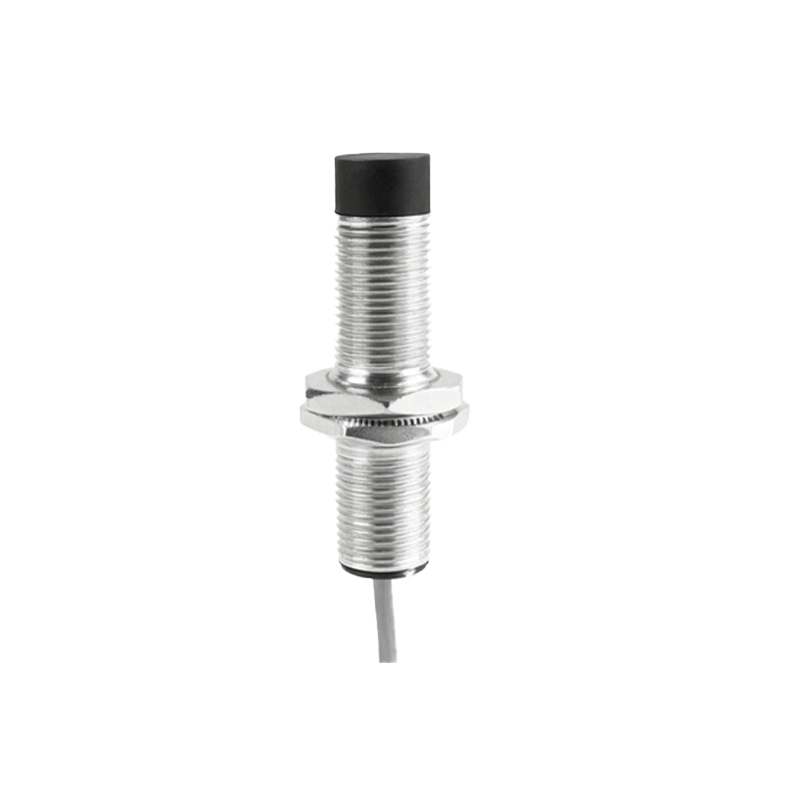
In capacitive proximity sensors, which detect any material that alters the dielectric constant of their field, the properties of the transparent plastic become part of the sensing system itself. The dielectric constant and loss tangent of the plastic must be carefully selected and kept stable to ensure the sensor's sensitivity and immunity to environmental interference like humidity fluctuations.
From an application standpoint, the choice of transparent plastic directly influences where and how a sensor can be deployed. In the food and beverage industry, sensors with PMMA or FDA-approved PC windows are essential for hygiene and washdown compatibility. In automotive assembly lines, where oils and coolants are prevalent, chemical-resistant plastics like specific grades of PC or polysulfone are mandatory. For outdoor applications, such as in automated guided vehicles (AGVs) or parking systems, materials with enhanced weatherability and resistance to UV degradation are specified.
Furthermore, the trend towards miniaturization and integration in Industry 4.0 pushes the limits of plastic molding technology. Micro-injection molding allows for the production of tiny, complex sensor housings with high precision, enabling sensors to be embedded into increasingly compact machinery and consumer electronics.
In conclusion, the transparent plastic in a proximity sensor is far from a simple cover. It is a sophisticated, engineered interface that balances optical, mechanical, chemical, and electrical requirements. The ongoing development of advanced polymer blends, nanocomposites, and surface treatment technologies continues to expand the capabilities of proximity sensors, allowing them to operate reliably in more demanding and diverse environments. As sensing technology advances towards greater precision and intelligence, the role of these specialized transparent materials will only become more pivotal, silently enabling the reliable detection that modern automation depends upon.